
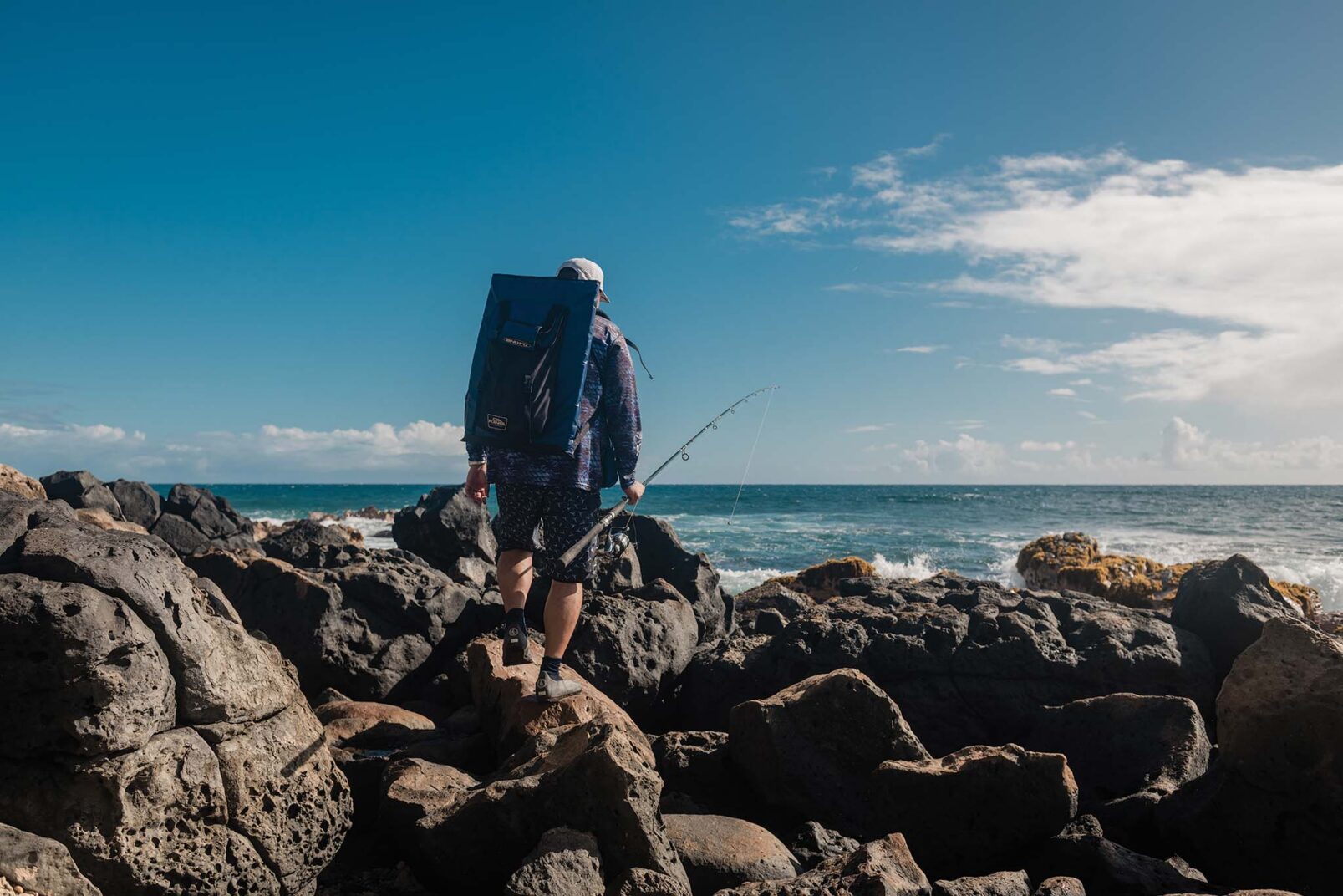
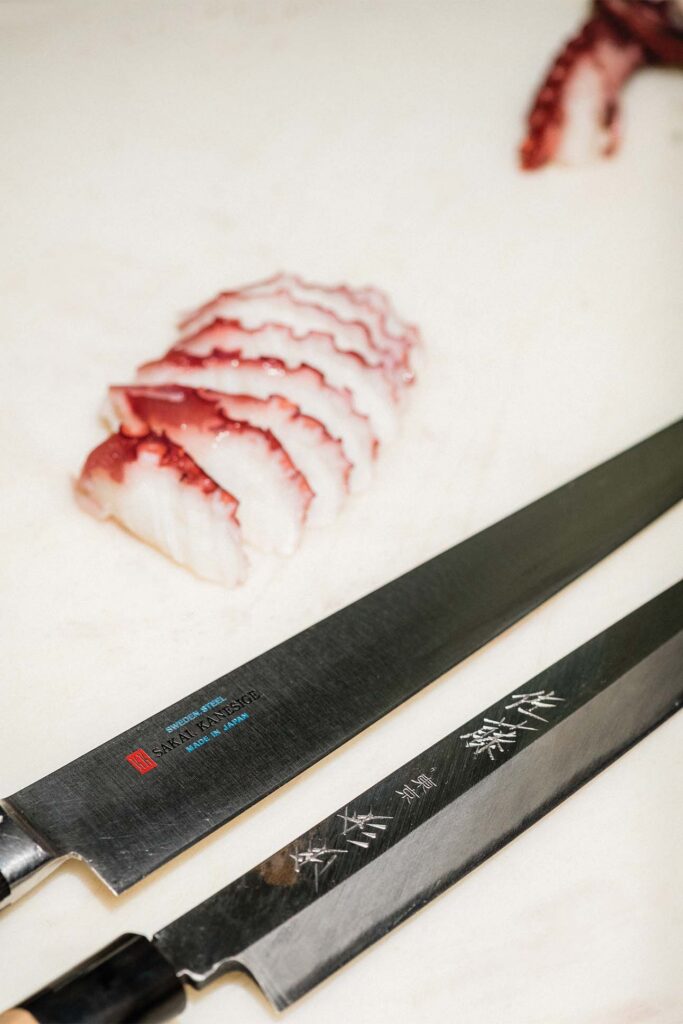
Inspiration often finds chef Shaden Sato on the shoreline. On at least one occasion, it took hold in the open water, when he was eye to eye with an octopus. “It’s like a giant ball of muscle,” Sato says, recalling the firm grip of limbs coiled around his arm while he captured the octopus freediving on the south shore of O‘ahu. Wrestling with it in the churning waves, “I swallowed two big gulps of salt water. That’s how I got the idea to create something with a really salty, oceanic taste.”
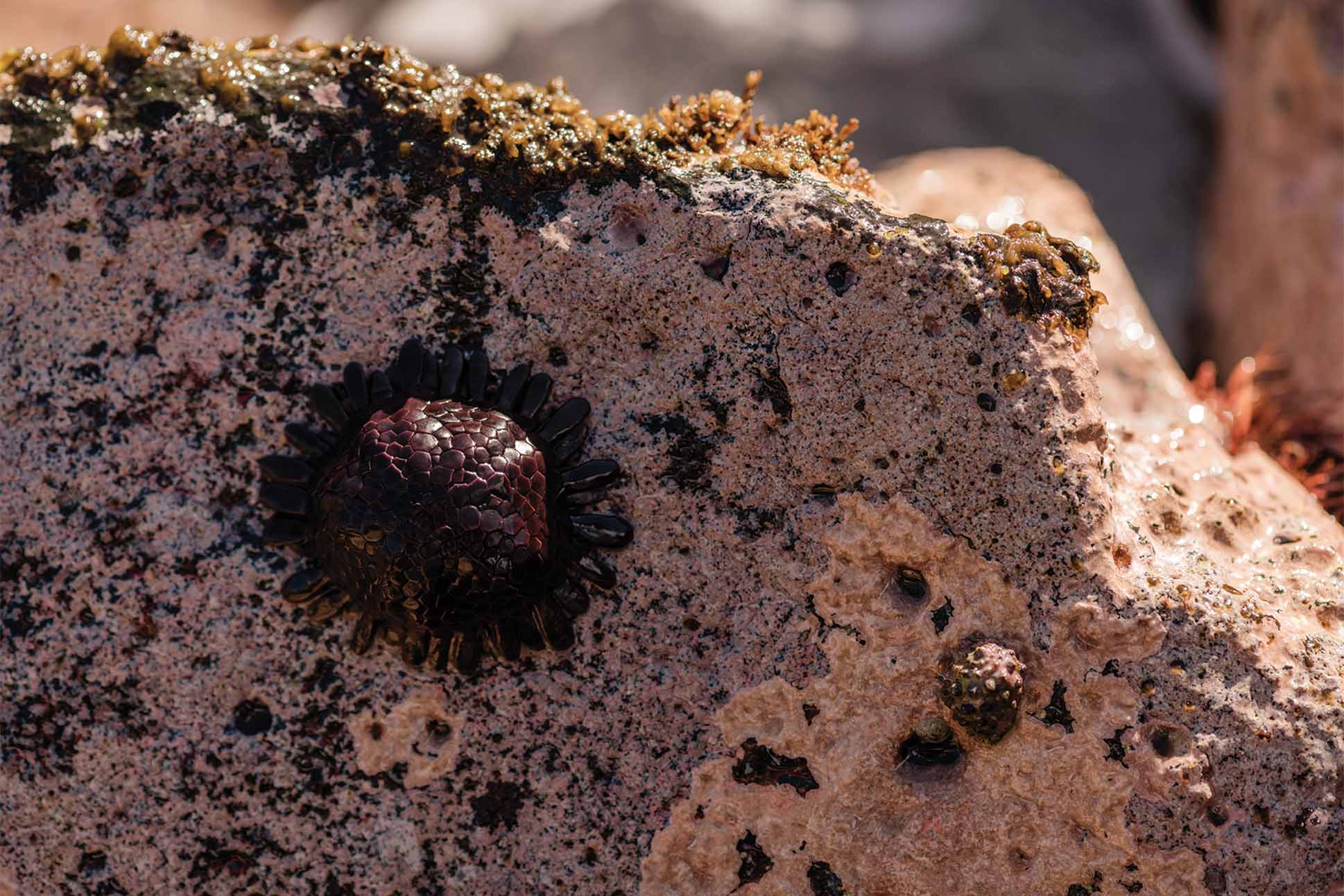
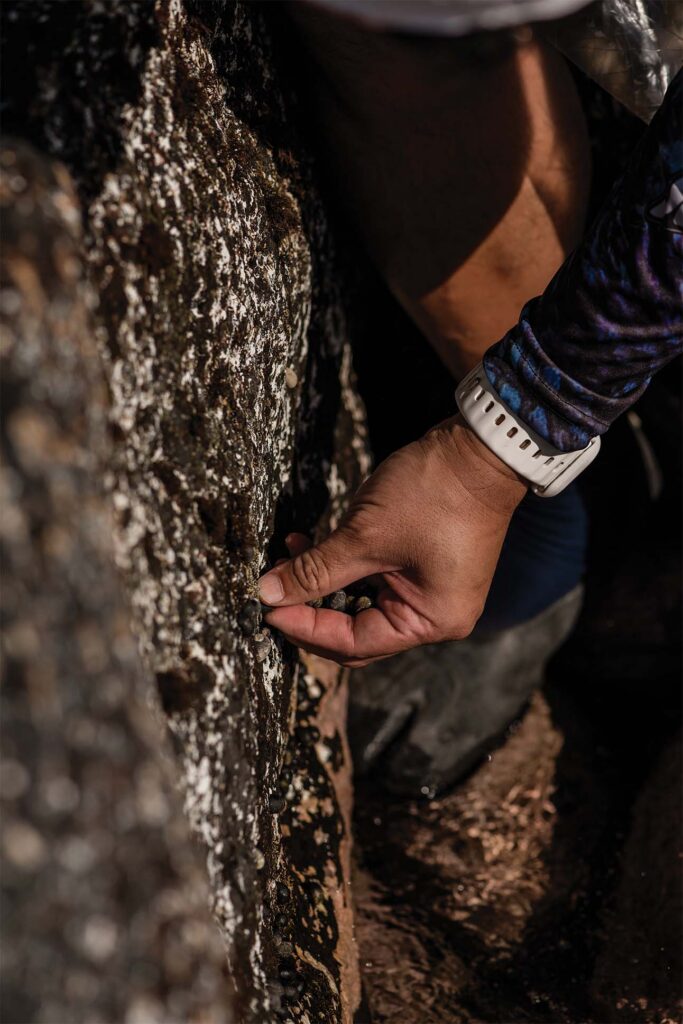
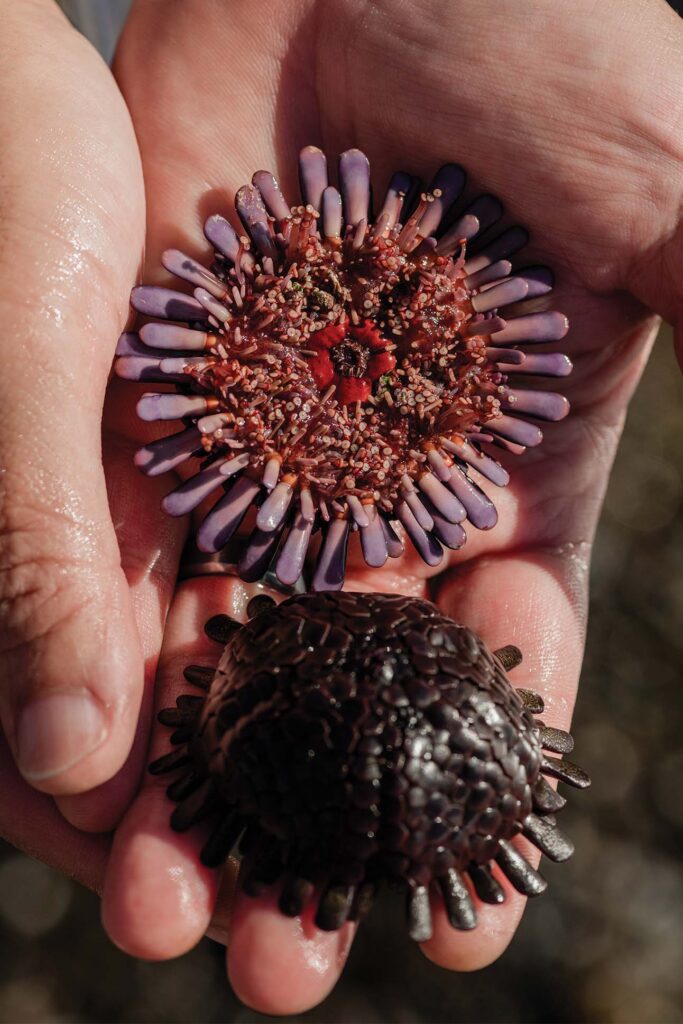
The encounter seeded one of many inventive dishes Sato has developed for Halekulani as the hotel’s banquet and special event chef. For an event at the Shangri La Museum of Art and Design, overlooking the waters where the octopus met its fate, Sato prepared a meal of charred octopus, poi-crusted moi fish, and pipipi risotto, made with endemic sea snails he picked from the rocky tidepools below the estate. “Majority of people at that event, it was their first time in Hawai‘i,” he says. “I wanted them to get an authentic representation of my style of cooking, something they might not get anywhere else.”
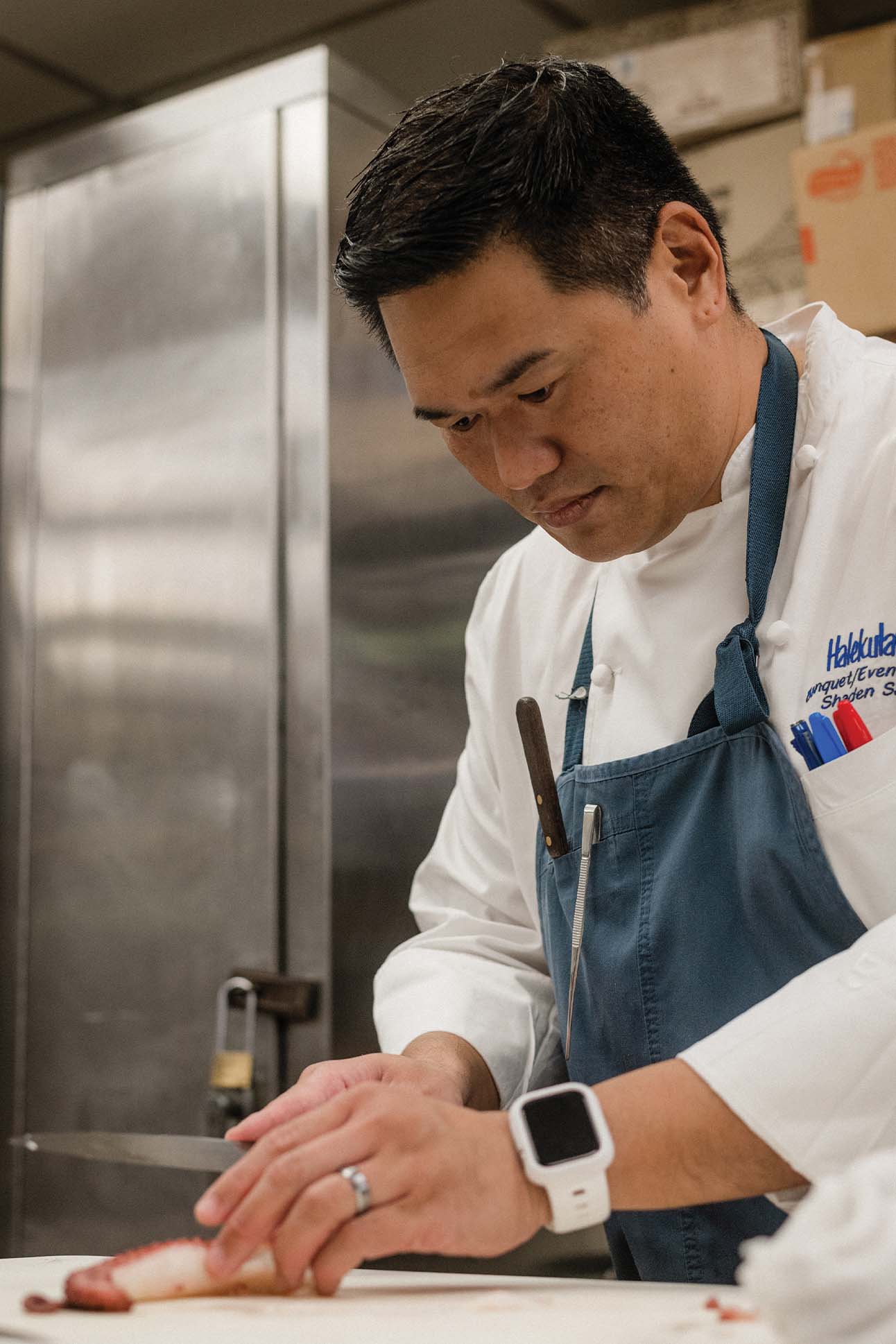
Every dish speaks of a memory, a place, a moment in time, revealing itself in flavors that evoke the vegetal brine of the sea, or the familiar sweetness of pineapple on Sato’s drives past the Dole Plantation fields to go surfing on the north shore. Many dishes carry the imprint of his travels, especially his honeymoon, where a passion for French and Italian cuisine blossomed at L’Atelier de Joël Robuchon in Paris and in the markets and trattorie of Italy.
Beneath it all, a quiet throughline persists. “Secretly, I’m always cooking Japanese food,” he says. “Even if you’re eating French cuisine, there will be Japanese ingredients. You don’t know it, but there’s kombu in there, or white soy or sake.”
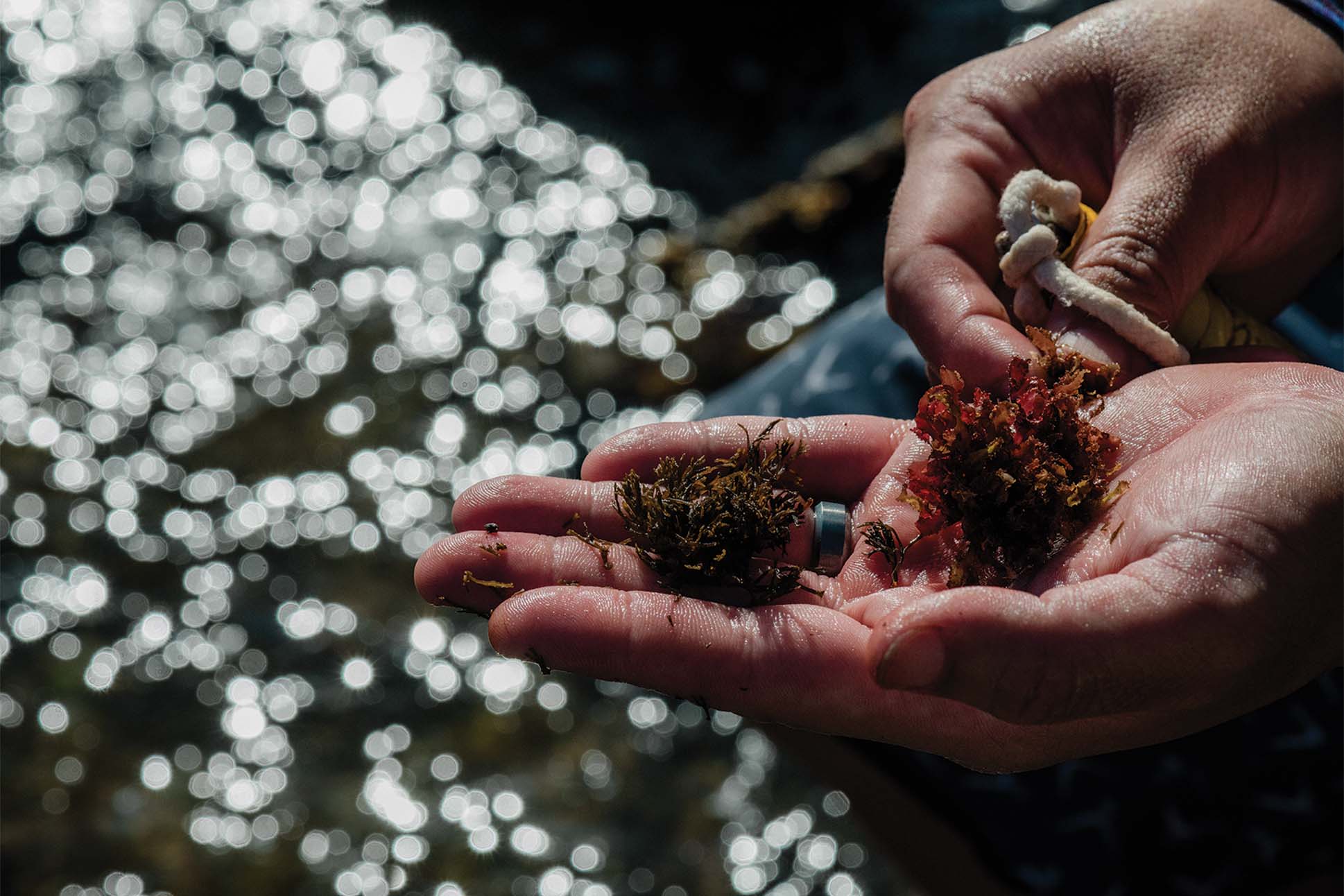
Lately, though, Sato has been bringing more of his Hawaiian heritage to the plate, motivated by a desire to instill in his daughters a connection to both their Japanese and Hawaiian roots. This year, lū‘au leaf has made repeat appearances on his menus at Halekulani, showing up in dishes such as deconstructed laulau and creamed lū‘au, a riff on the creamed spinach he learned to make at Ruth’s Chris Steak House early on in his career as a chef.
Working his way up the ranks at Halekulani over the last 23 years, Sato says, “I’ve been very fortunate, so I’m always trying to give back.” For nearly a decade, Sato has invited aspiring chefs to join him in the kitchen as part of an externship program he established at Halekulani in partnership with Leeward Community College, where he attended culinary school and now sits on the advisory board.
Some of these culinary students go on to earn a place on Sato’s team. “Any time I hire somebody new, I tell them, I don’t need you to wow me—I want to see progression,” he says. “If a person is trainable, if they’re resilient, humble, and can take criticism, that’s key to being successful as a chef. More than talent, attitude is the biggest thing.”
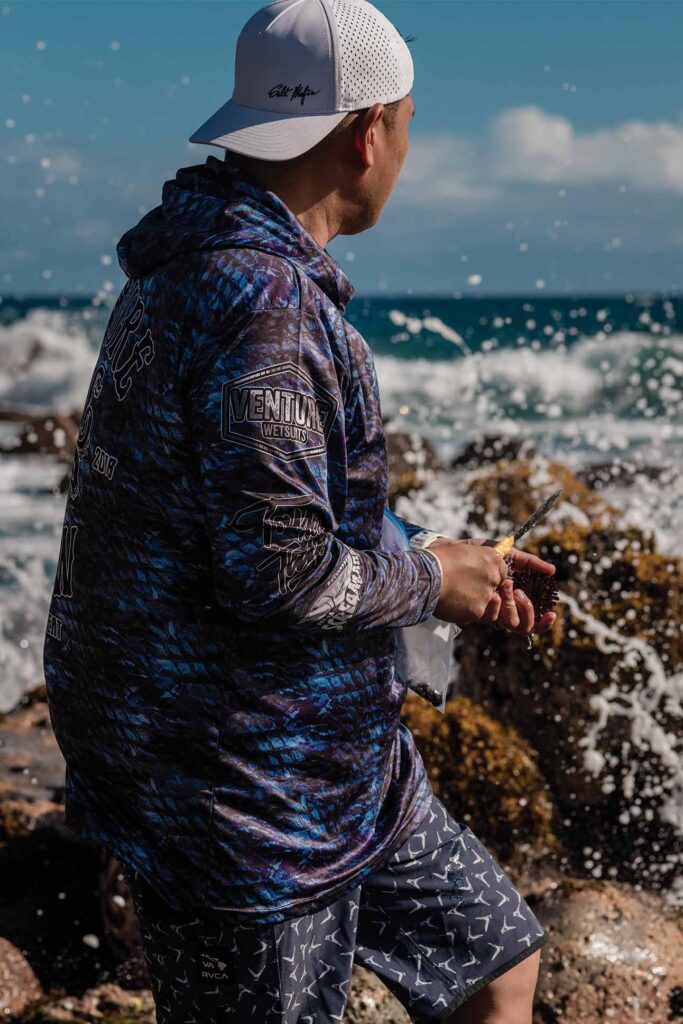
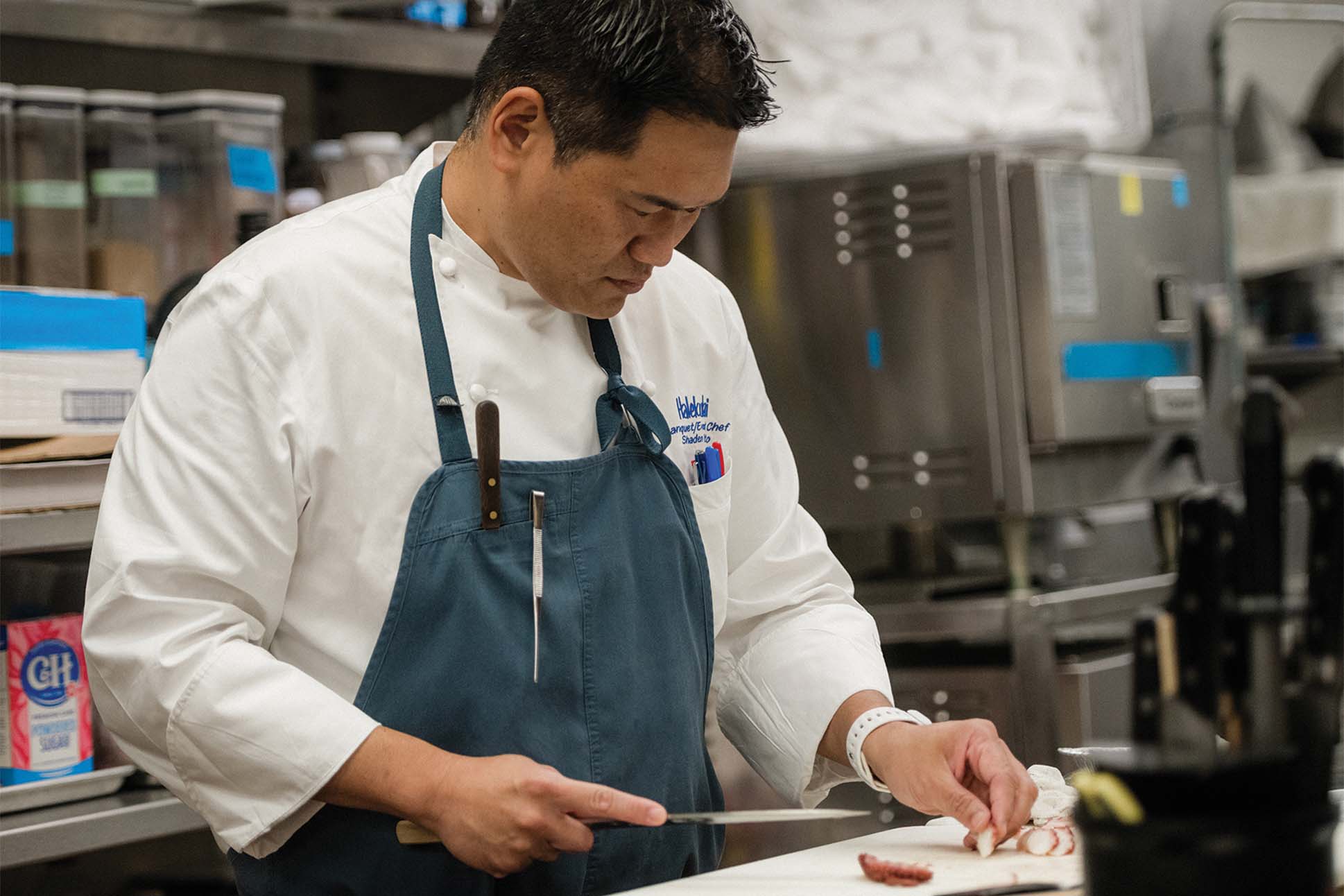
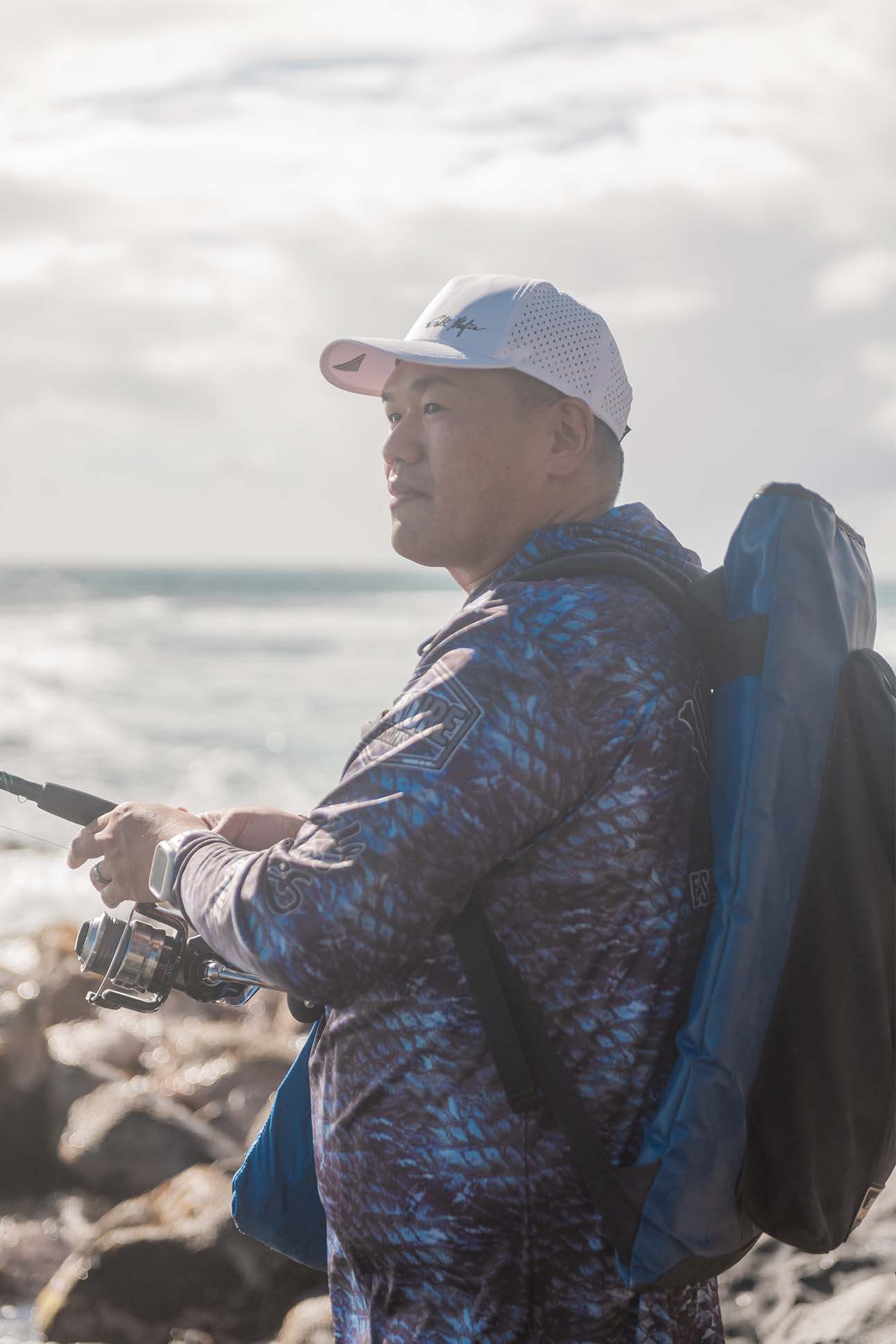
Sato was later approached by the Hawai‘i Culinary Education Foundation to serve as a chef mentor in various culinary programs across the state. At the University of Hawai‘i Maui College, he recently led a cooking demonstration inspired by his nights of freediving for lobster. “We always catch one per person to grill on the fire and save the heads to make soup the following day,” he explains.
The bodies were used to make poached lobster risotto; the heads, a coconut bisque, a dish Sato originally conceived for Halekulani Okinawa after experimenting with adding coconut to lobster soup on a camping trip. “Every time I go to Japan to create dishes for Halekulani, I take it super seriously,” he says. “I make sure the menu tells a story.”
