
A delicious turndown amenity may be de rigueur for luxury hotels, but the treat Halekulani guests discovered on their pillow over the winter holiday season held another sweet surprise: a taste of something rooted in the land. Custom-made by Puna Chocolate Company, the chocolate peppermint bar boasted chocolate created exclusively from Hawai‘i Island cacao beans, grown on small farms using regenerative practices.
“We have 18,000 trees maintained by just six to seven people, and the only reason we can do it is regenerative farming and the plants in the cacao ecosystem that work together,” says Adam Potter, who founded the company with husband Ben Vanegtern in 2012. “They’re doing a lot of work for us.”
Although Potter notes he “always had an affection for botany, food, and chocolate,” and Vanegtern has “a Wisconsin farmer background,” the couple never envisioned a future as cacao farmers or chocolate makers—or, more recently, cafe and restaurant owners. Potter, now a lieutenant colonel in the U.S. Marine Corps Reserve with almost 27 years of service, and Vanegtern, a former U.S. Navy communications electrician, were living in San Diego when they started looking at large tracts of land on Hawai‘i Island in 2011. “I thought maybe in 10, 20, or 30 years, we’ll square away enough money to do something while we do our day jobs, ” Potter says.
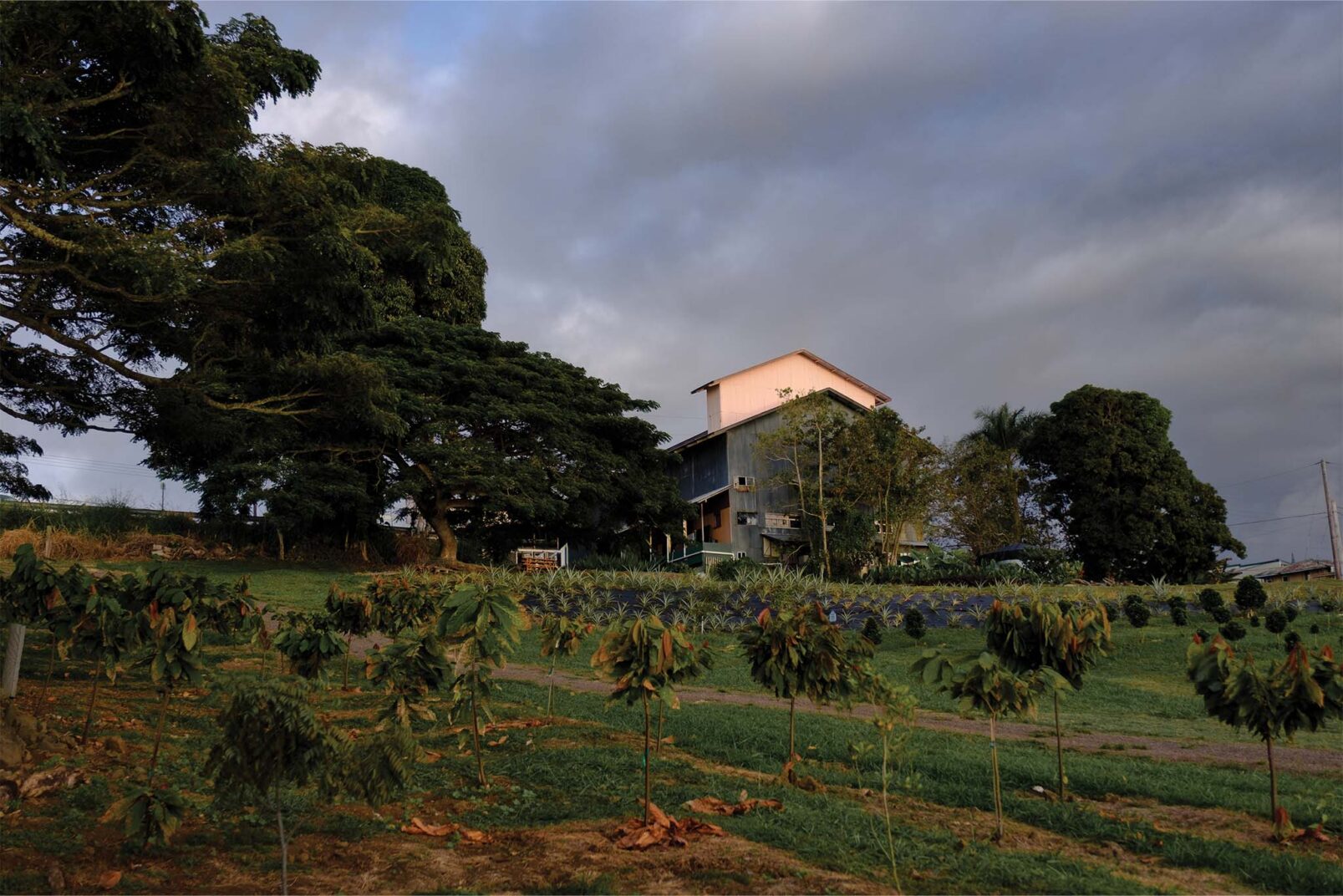
When a 65-acre lot in Pāhoa came up for sale for $110,000, they snapped it up. “We didn’t know what to do with it for two years—we knew [not to] build houses, since there was still the 30-year lava flow going into the ocean, which we thought could go on forever,” Potter says. A year or so later, he spotted “football-shaped squash” at The Locavore Store in Hilo, which he learned were cacao pods. “The owner said, ‘These grow here, but you’ll need thousands of trees, and you’re not going to open them up and have Hershey’s Kisses pop out—you have to ferment them right,’” Potter recalls. “I also learned [cacao trees like being] in a jungle, so I don’t have to clear everything. We started planting seedlings every month.”
They also cultivated their expertise: Vanegtern moved to Honolulu to earn a bachelor’s degree in tropical plant and soil sciences from the University of Hawai‘i at Mānoa in late 2015. After a “wake-up call” from a Pāhoa lava flow that threatened their farm earlier that year, they started planting thousands of seedlings on other farms around the island, too. “We said, ‘Pay us to plant it, and we’ll just visit the trees when we can, and then they’re your pods to sell to us.’ We grew to six or seven farms, two of which we pretty much operate completely.”
A Central and South American native whose Latin genus name of Theobroma means “food of the gods,” their cacao now thrives under a tree canopy of native rainforest and introduced tropical fruit species. It also flourishes with help from gliricidia, a companion tree known by its Spanish moniker madre de cacao (mother of cacao), “a giant legume that pulls nitrogen from the air and feeds it to 10 to 20 trees around it,” Potter explains.
Chickens play a similarly symbiotic role at the farms. “The trees will produce dense leaves on the ground that will pack with water, so you’ll get mold and fungus, and Chinese rose beetles will hide under the leaf litter by day. But if you have chickens, you won’t have the beetles or the moisture that gets retained. They will eat the beetles and circulate the leaves, pushing them around and adding air.”
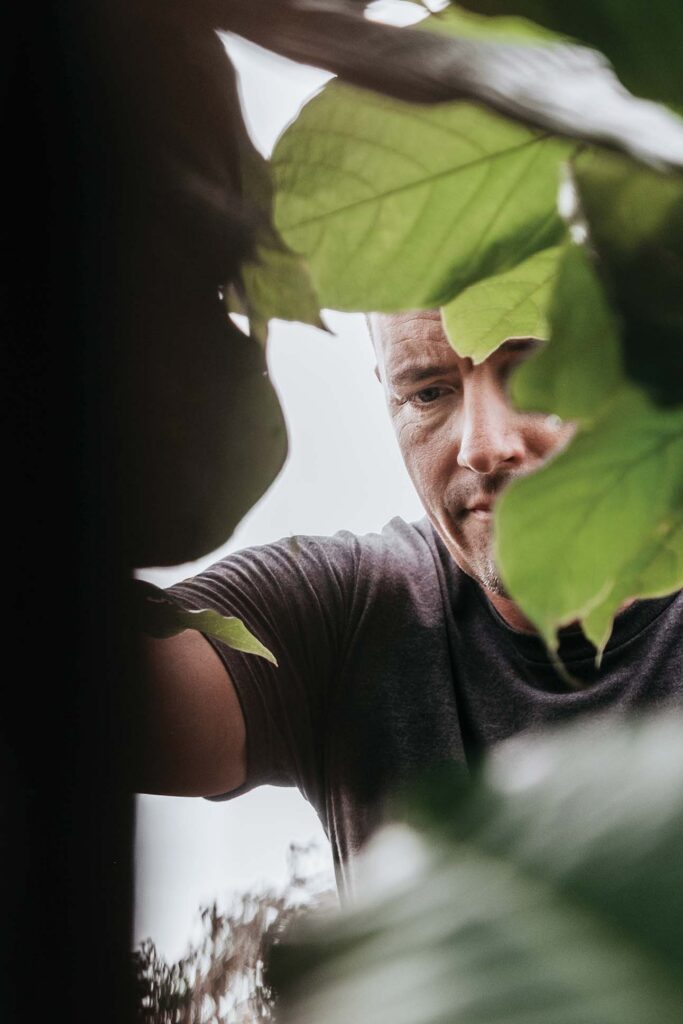
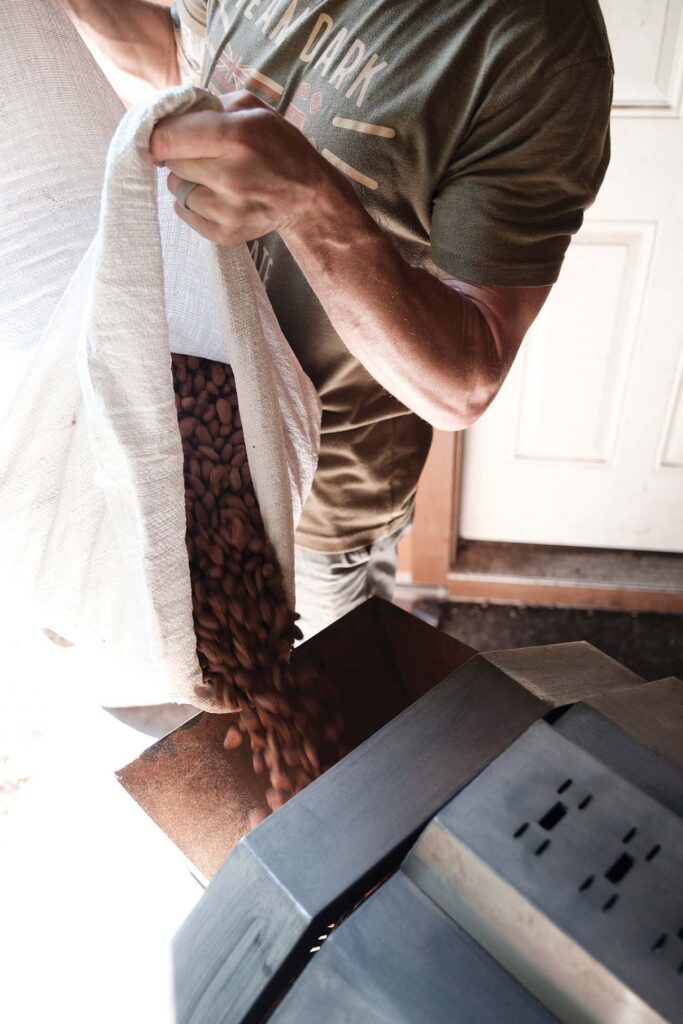
In addition to reducing the need for pesticides, the free-roaming fowl also provide free organic fertilizer. “We might add some fertilizer or compost each year, but once those trees form their canopy, it’s not much [that is needed],” Potter adds.
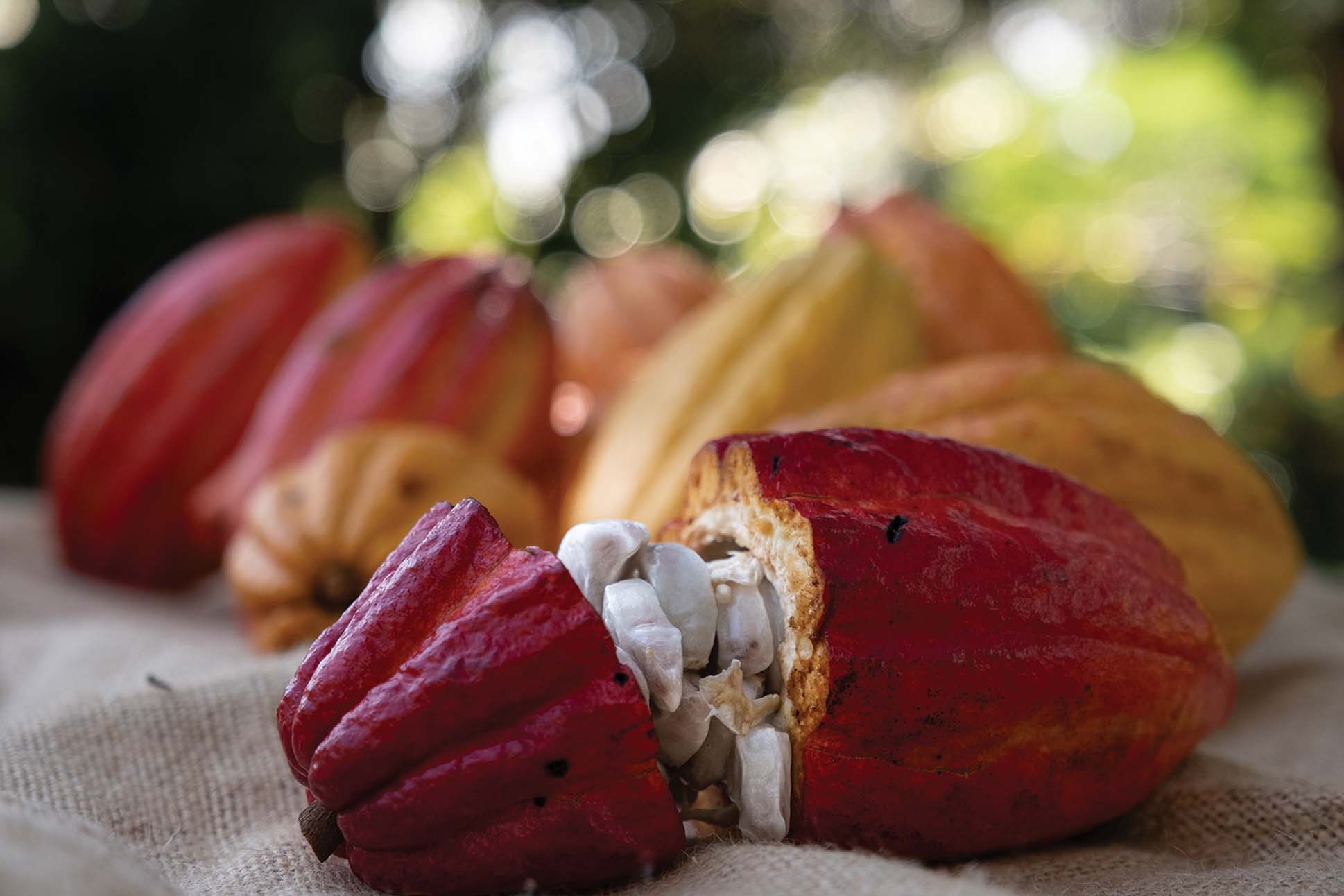
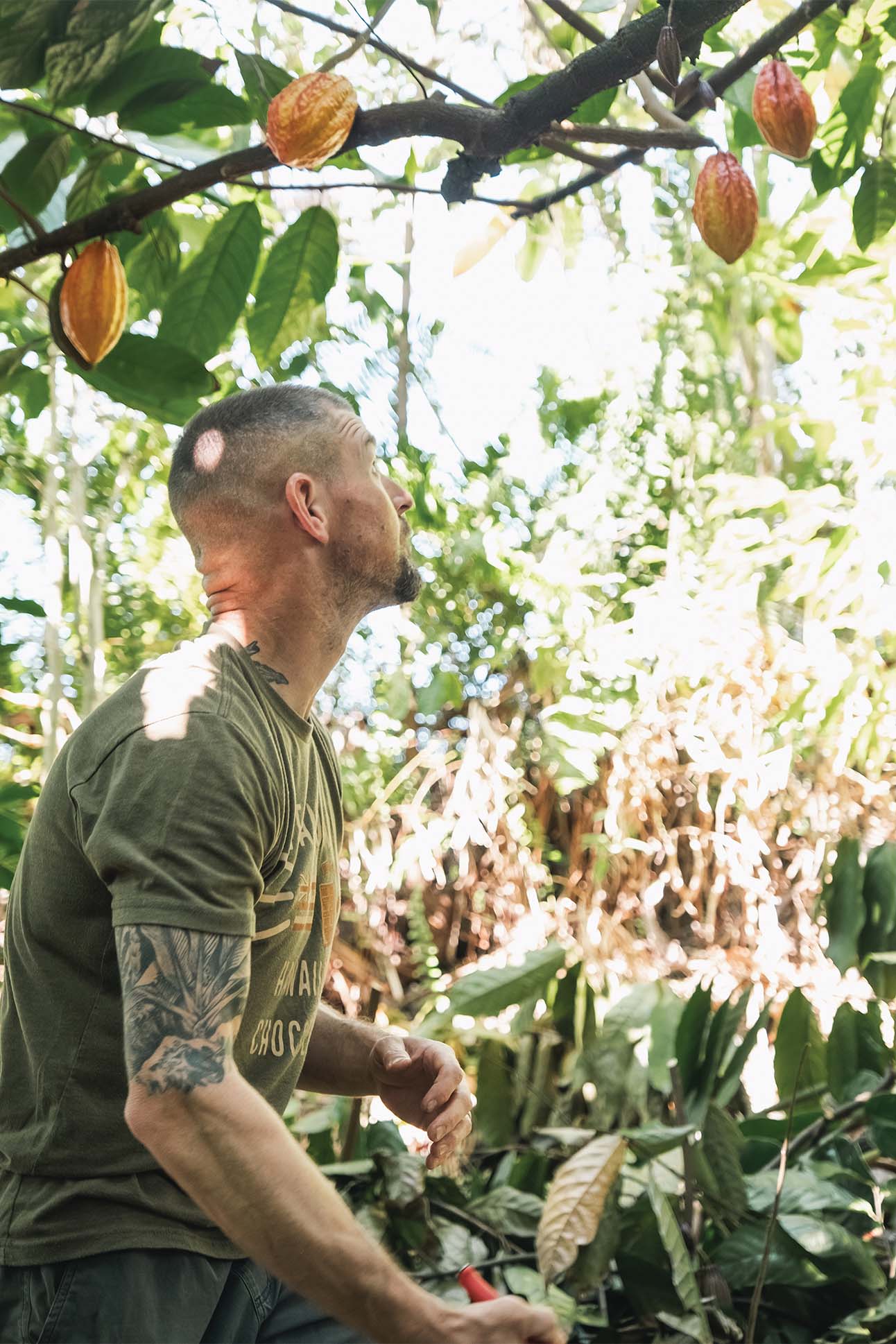
As cacao pods sprout directly from the tree trunks and older branches, maturing into painterly hues of canary yellow, raw sienna, and burnt umber, they, too, go on to nourish the system as a whole. “We crack all the pods where we pick them, and then leave two of the pods at the base of each tree to provide nutrients,” Potter says.
Each pod contains 30 to 40 seeds, or beans, covered in a gelatinous, fruity pulp, which must be fermented for the beans to begin their flavor transformation from bitter to earthy chocolate notes. The duration and temperature of fermentation, drying, and roasting all play a role in how the resulting cacao nibs, and the chocolate created from them, will taste. Similar to wine and coffee, the terroir of the areas from which Puna Chocolate Company sources its cacao—Pāhoa, Hilo, Waipi‘o Valley, Hōlualoa, Kealakekua, and Nīnole—also affects the flavor. “We have about 10 different labels, including single-district and single-farm chocolate, and it all tastes very, very different,” Potter notes. He and Vanegtern live on the Hōlualoa farm, not far from their 14-acre site in Kainaliu, home to farm tours and their Hale Cocoa cafe and Theatery restaurant.
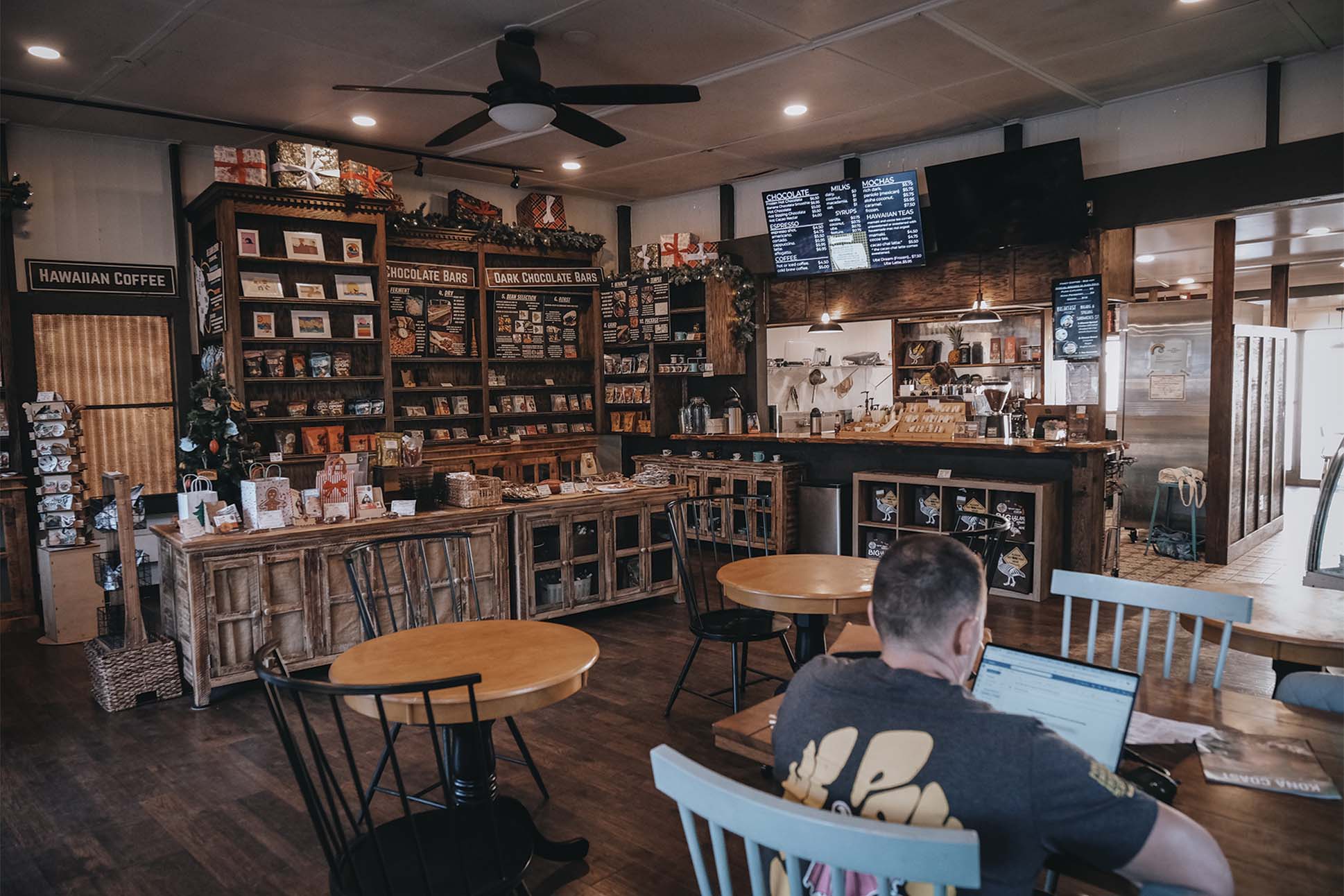
The company strategically sources its cacao beans from around the island. “Survivability is really the name of the game here,” he says. “Island farming is about being prepared for natural disaster—in any year, we could lose 20 percent [of our supply] because of drought or wind. In 2018, if the eruption had gone on one more month, the Pāhoa orchard would have been dead. Farms will eventually recover, but in the meantime, we have all these others growing.”
Found amid former pasturelands and rocky lava fields, some of the farms have required substantial soil regeneration. An innovative Hawai‘i County program that redistributes green waste from landscapers, hotels, and resorts, among other sources, “allows us to build up our soil naturally,” Potter says.
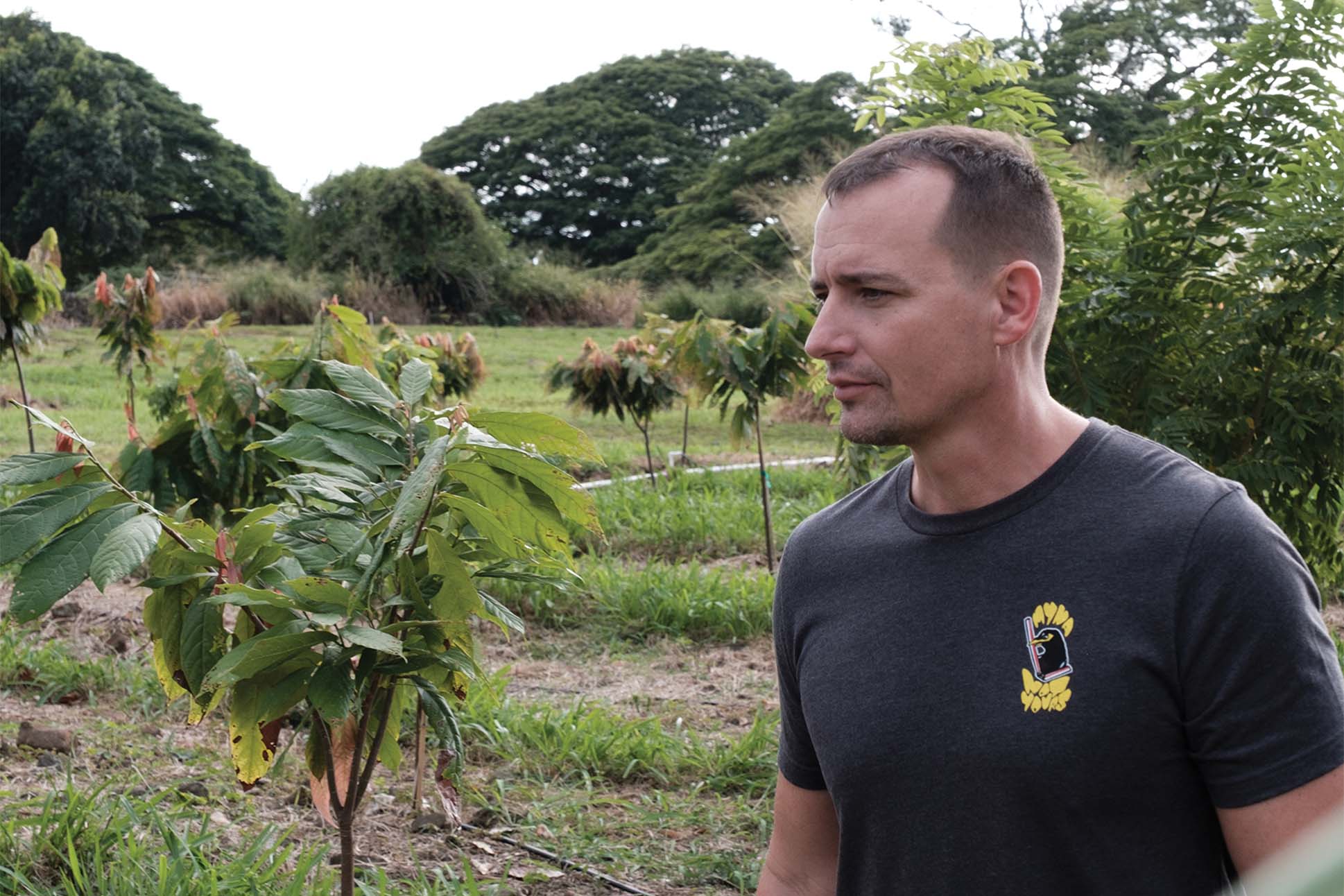
At Puna Chocolate Company’s original farm in Pāhoa, for example, the topsoil is now 10 inches deep, continually replenished over the years with renewable waste. “When the next hurricane comes, the trees are going to have deep roots and be able to withstand that disaster, Potter says. “And to beat drought? Deep soil again. Every year, we have to make it a little deeper than the year before.”
Although cacao was introduced to Hawai‘i in the mid-1800s, when German doctor William Hillebrand presented it to King Kālakaua and began growing it in what is now called Foster Botanical Gardens, commercial-scale farming only began in the late 1990s, initially on O‘ahu and Hawai‘i Island. Today, Puna Chocolate Company sources beans from both islands, carefully noting the origin on its deliberately minimal packaging, made from recycled paper. “There’s no frills to anything,” Potter says. “It’s really about the chocolate.”
