
If you’ve ever spent a summer in Hawai‘i, you know about mango season. It’s the time of year when soft, fragrant mangos appear at your front door, left by neighbors with trees producing more than they could ever eat. Tables overflow with a rainbow of varieties at the farmers market. Restaurants, pastry shops, and cafes incorporate the juicy fruit into every drink and dessert they can. Mango bread becomes the new banana bread. But despite everyone’s best efforts, we can’t eat them all.
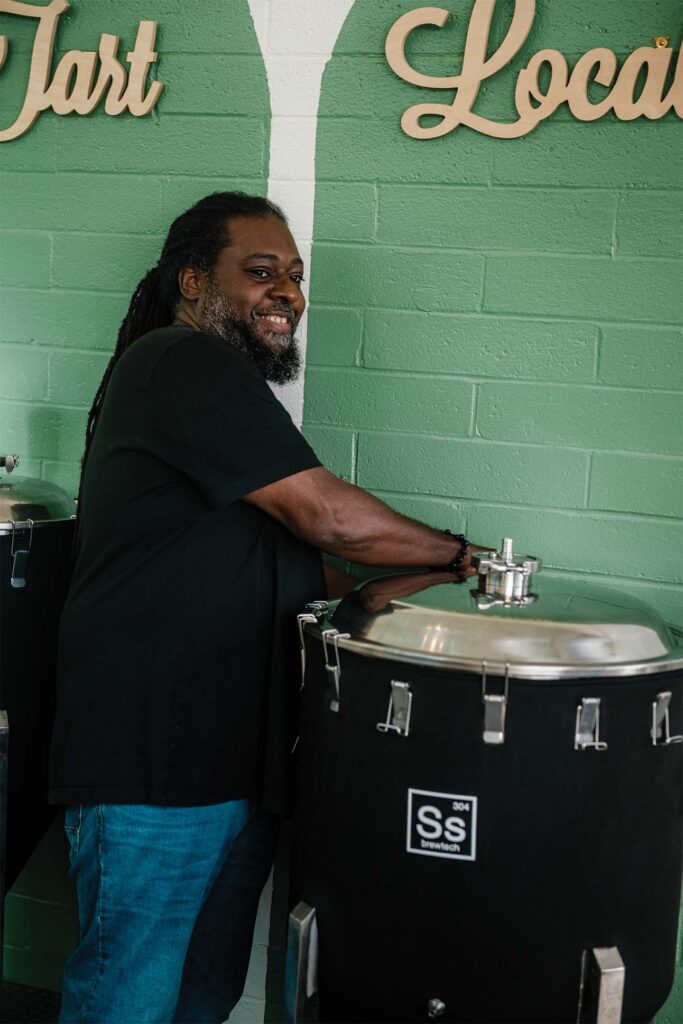
This is where Hawaiian Vinegar Company comes in. In summer 2024, the O‘ahu business turned 200 pounds of mango destined for the trash into a tangy vinegar launching spring 2026. “Our mission is to rescue fruits and vegetables from farmers,” says co-founder Brandon Askew. “We’re juicing them, and then we’re brewing wine. And then with that wine, we’re brewing vinegar.”
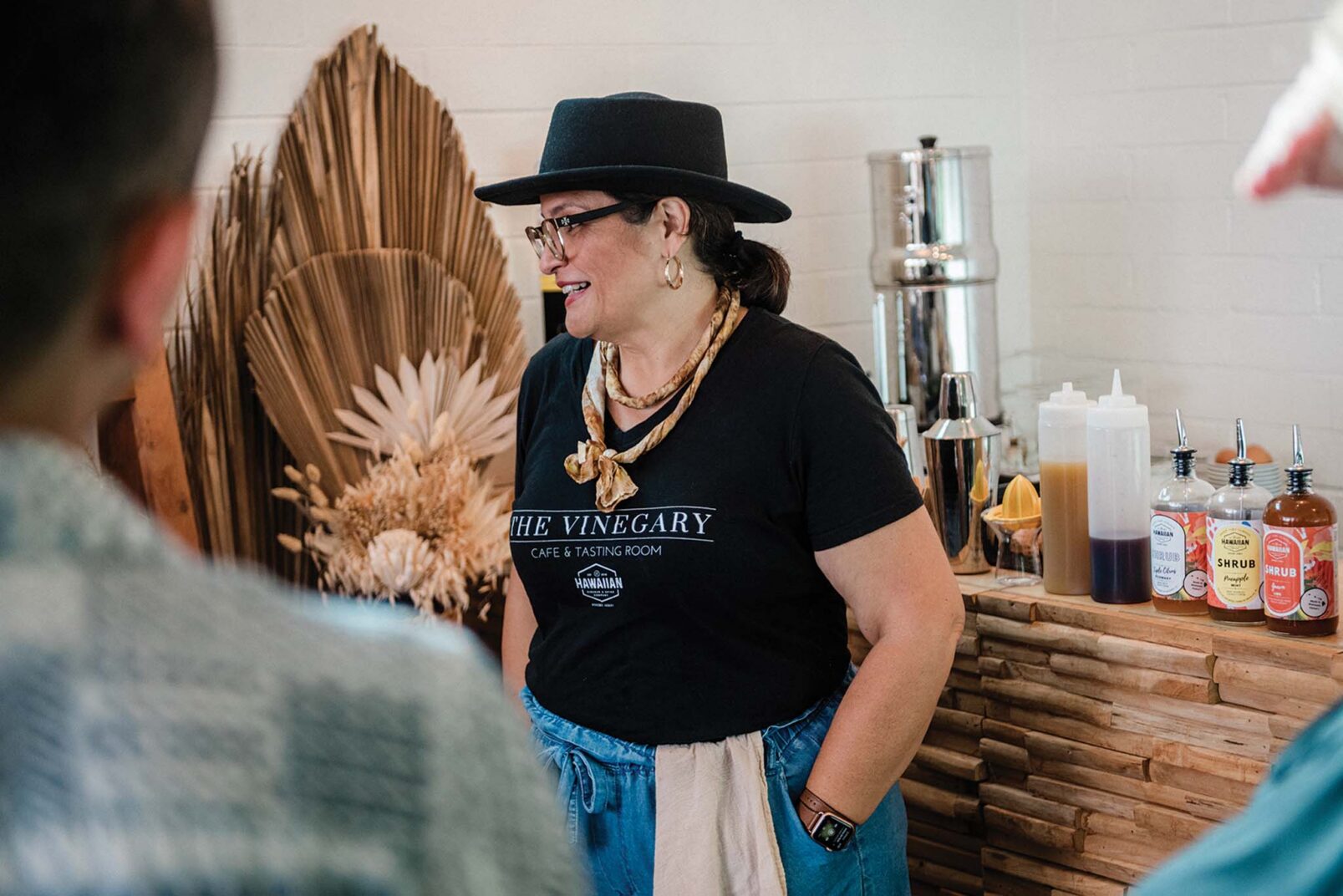
Just off Wahiawā’s main drag, Brandon and his wife and co-founder, Poni, transform off-grade produce into artisanal vinegars and shrubs in a tiny storefront called The Vinegary. Guests are welcome in Thursday through Saturday from noon to 5 p.m. for samples and the opportunity to have their purchases shipped home.
The impetus for Hawaiian Vinegar Company came in 2018, after seven years of entrepreneurship in Honolulu’s culinary scene. The Askews’ previous company, Street Grindz, was behind several landmark events for local food vendors: Eat The Street, Taste Table, and Honolulu Street Market. Taste Table, which they hosted with Chef Mark Noguchi and his wife, Amanda Corby Noguchi, served as a pop-up incubator for restaurants that are now renowned throughout the country, such as The Pig and the Lady and MW. Over the past 15 years, Poni estimates they have supported about 500 small businesses.
During that time, the Askews worked to facilitate relationships between vendors and island farmers, providing them with local alternatives to big-box suppliers such as Costco or Sam’s Club. Digging into the logistics and complexities of small farming, they began to understand the flaws in Hawai‘i’s food system.
“Everybody likes to talk about how we import 90 percent of all of our goods,” Poni says. “Nobody talks about the fact that our farmers throw away nearly 40 percent of everything that they grow.”
This statistic, combined with Brandon’s passion for winemaking, spawned the idea of producing vinegar—essentially wine further fermented into acetic acid—primarily because it can be made from a wide range of ingredients and serves as the foundation of many other food products. Maybe, they thought, instead of Hawai‘i importing its vinegar, they could make it right here in Wahiawā, where Poni was born. After five years of production and market testing, The Vinegary opened in 2023.
The Askews especially like working with Hawai‘i’s cacao farms, an industry that is steadily growing in Hawai‘i. What they are rescuing, in this case, is the nectar from fresh cacao pods before the cacao is fermented for chocolate. The company’s cacao nectar vinegar has been so well-received, it won a bronze medal in 2025 at the US International Vinegar Oil Competition.
Bananas have also proved to be a viable base for vinegar. Not only does it extend the fruit’s short shelf life, crafting banana-based vinegar also gives the Askews an opportunity to introduce lesser-known varieties, such as Namwa bananas, to customers who may not have been familiar with them before. This awareness can lead to market demand, which leads to plant diversity on farms, which leads to better soil health.
Recently, the Askews discovered they could use a byproduct from local distilleries called “tails,” the undesirable final portion of alcohol that is usually discarded during spirit distillation. They have partnered with local distilleries, including Kō Hana Distillers, which distills fresh sugarcane juice into award-winning agricole rum, to turn their “tails” into craft distilled white vinegar. “Our mission with this one is to scale it up to compete, not necessarily in price, but for the same shelf space as a gallon jug of white vinegar,” Brandon says.
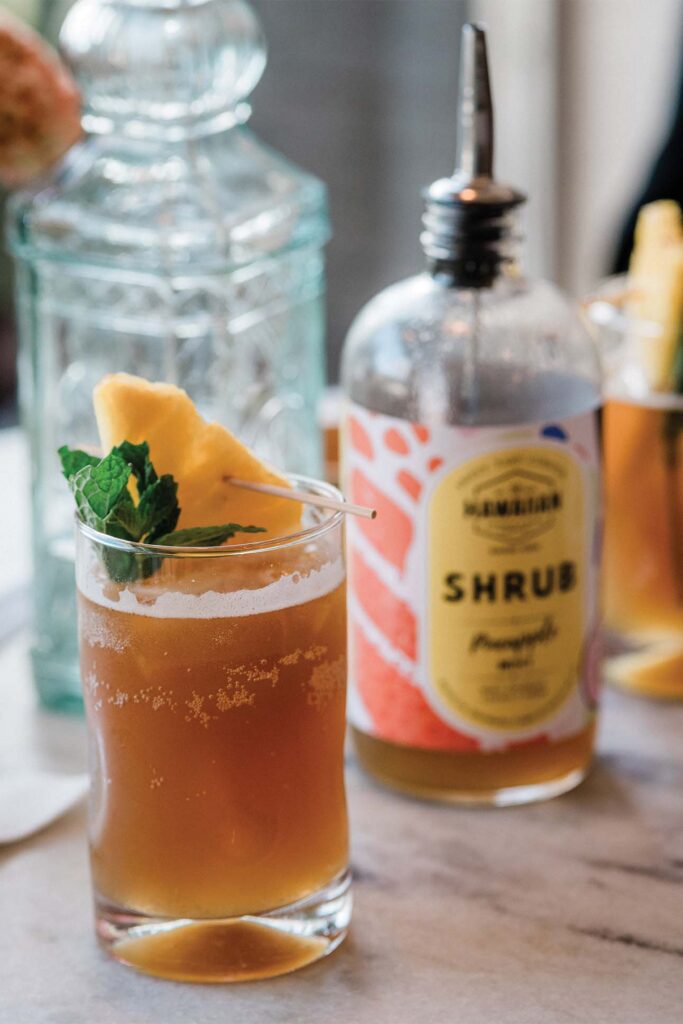
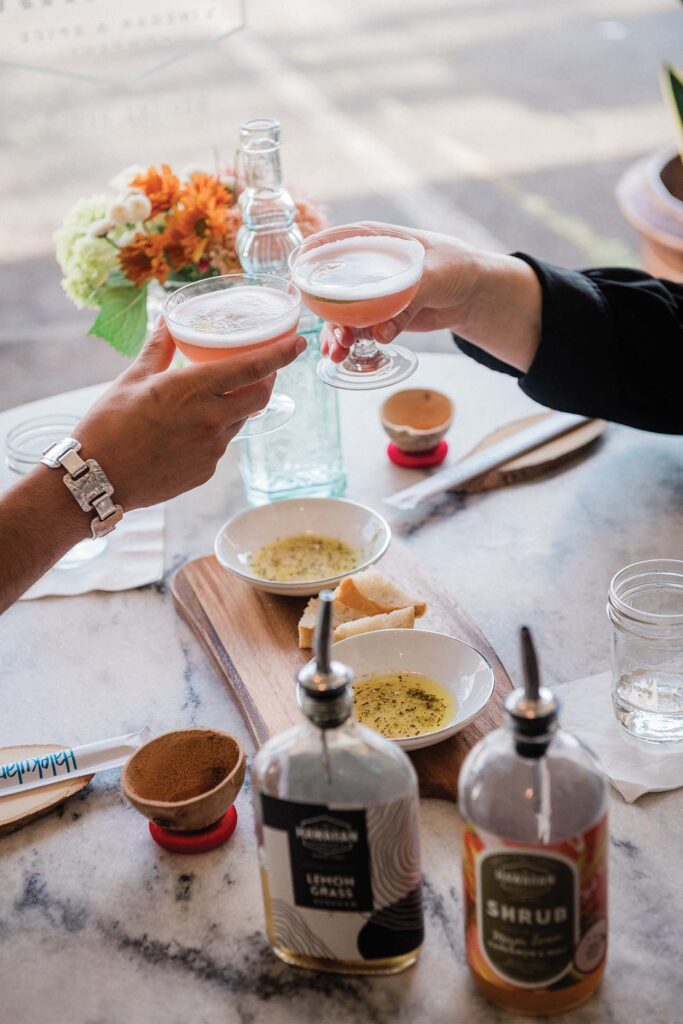
In addition to reducing waste and increasing food security, the vinegars—when diluted—are also consumed for their purported digestive benefits as living ferments. The tastiest way to reap these benefits is to add a shot of one of Hawaiian Vinegar Company’s shrubs, or “drinking vinegars,” to a glass of chilled sparkling water. With flavors such as triple citrus rosemary and pineapple mint, vinegar becomes a gourmet elixir.
