
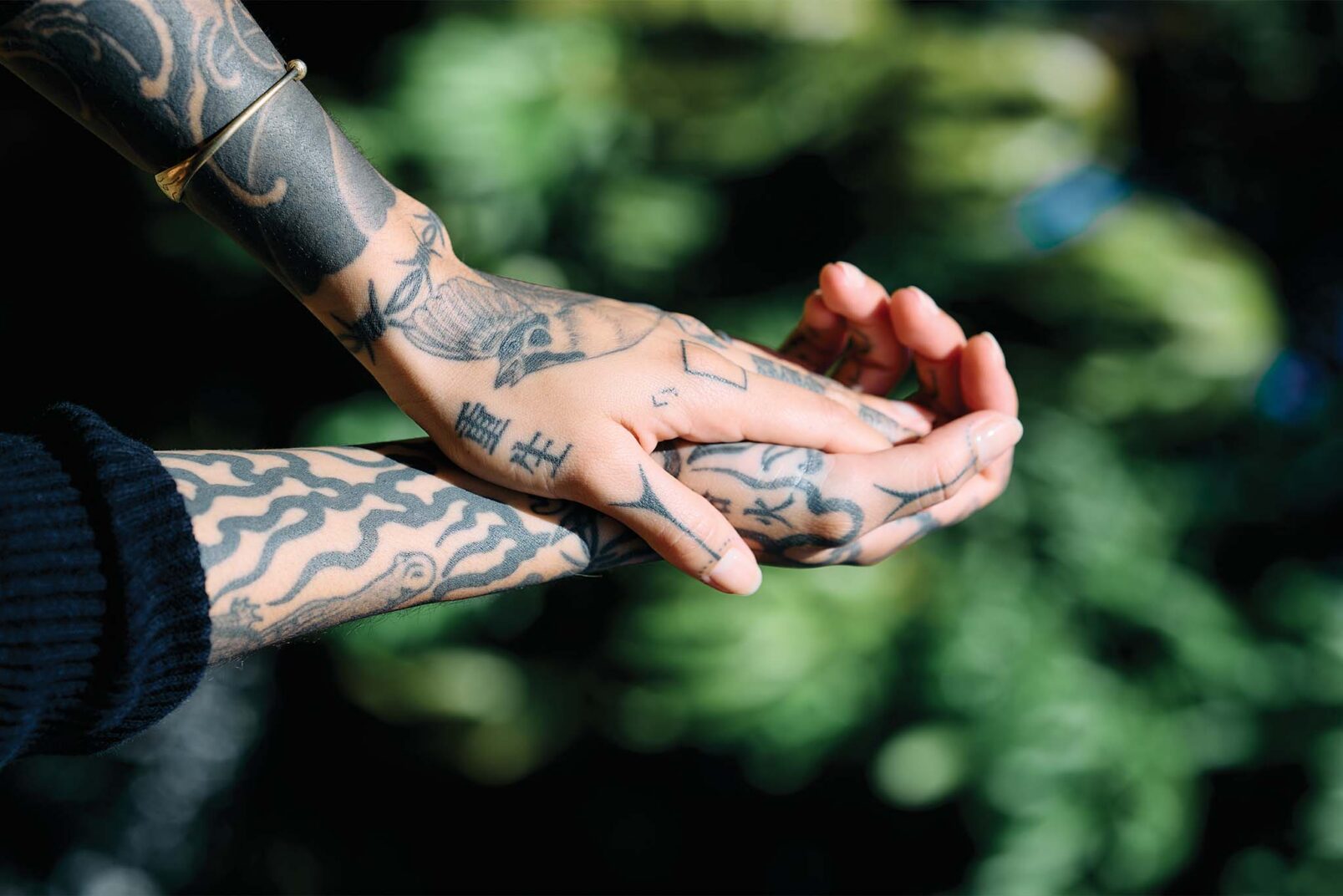
Once upon a time, in a kingdom of islands in the Pacific, there once ruled a kikoe-ōgimi, or high priestess. The most venerated woman in the royal court and consequently in all the land, she served as the king’s spiritual protector and oversaw the local priestesses from villages dotted across the Ryūkyūan archipelago. Villagers and royalty alike saw the priestess as a deity incarnate, a mediator between the spiritual world of their ancestors and the physical world of their reality.
Legend has it that one day, the kikoe-ōgimi was captured and forced to marry. Determined to repel her betrothed, the cunning kikoe-ōgimi secretly tattooed the backs of her hands, using ink, a few needles, and a steady, patient grip. (In other versions of the story, she is aided by her handmaiden.) On the day of the marriage ceremony, the kikoe-ōgimi concealed her hands beneath the heavy folds of her sleeves. When delicate cups of sake were brought out for the bride and groom, she extended her hands and unveiled her tattoos to the unsuspecting groom. The sight of her marked hands caused her captor to spill his sake, a bad omen that ended the ceremony at once. Tainted by such strange and grotesque designs, the kikoe-ōgimi was deemed unfit for marriage and returned home to the royal court, where she lived out the rest of her days.
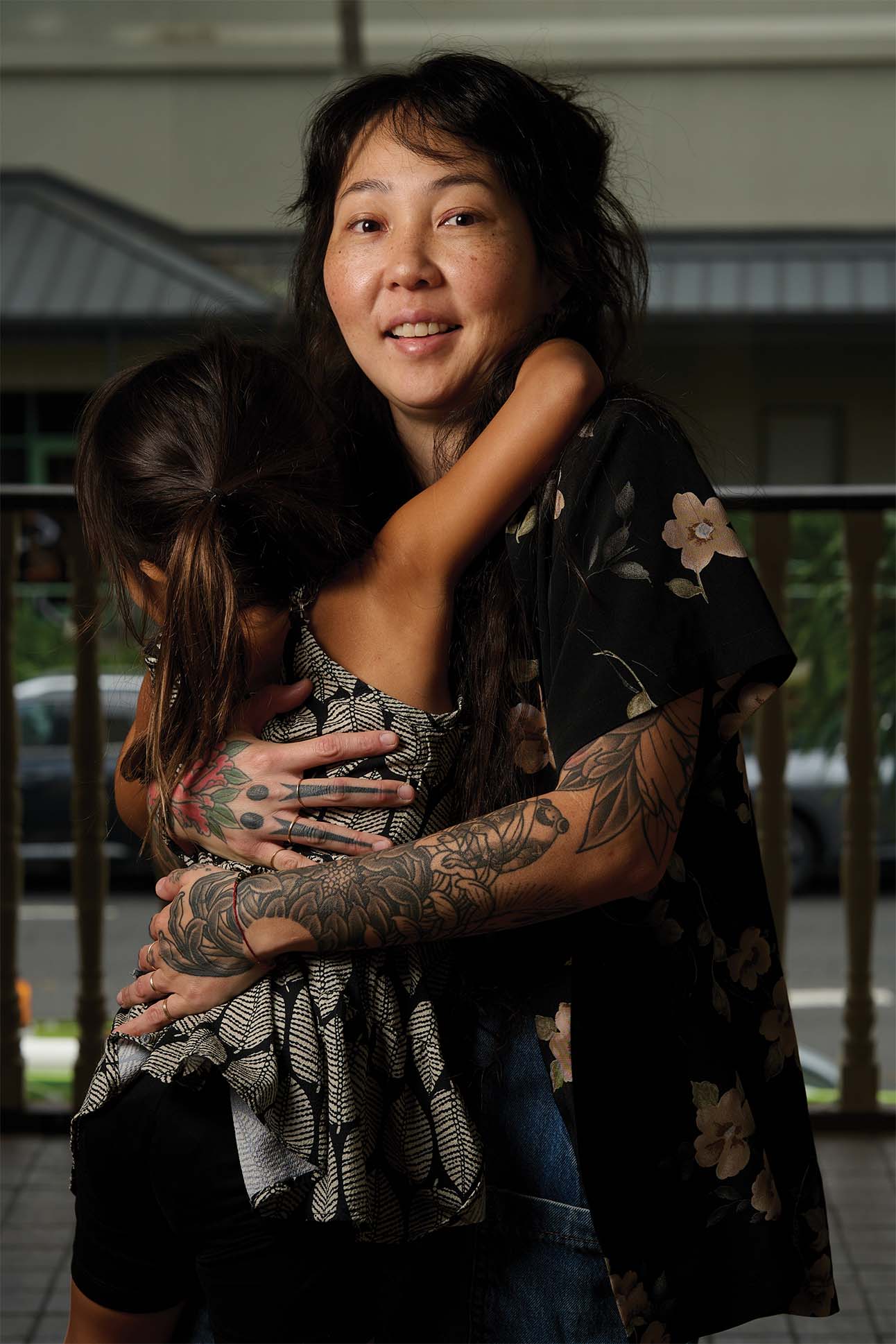
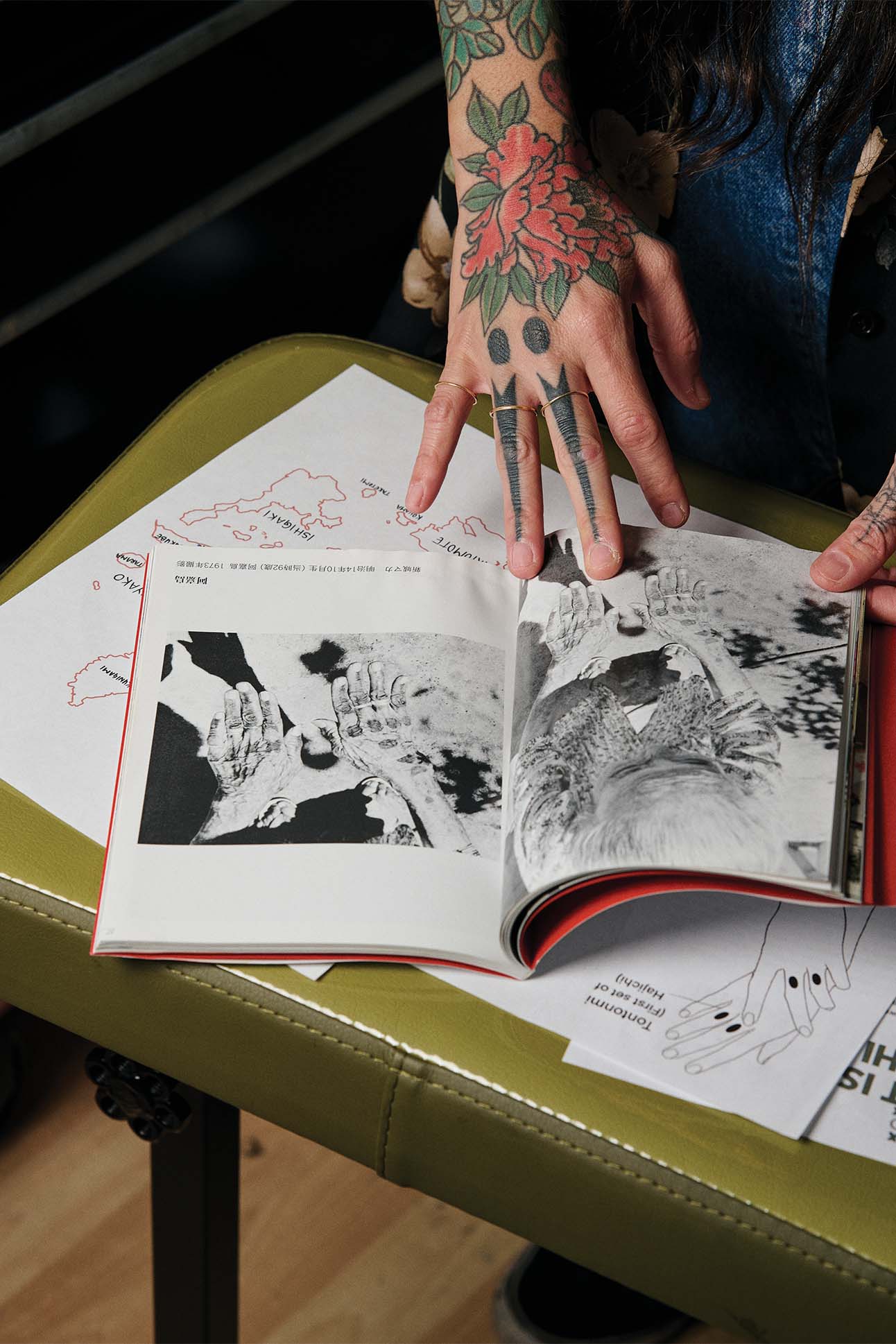
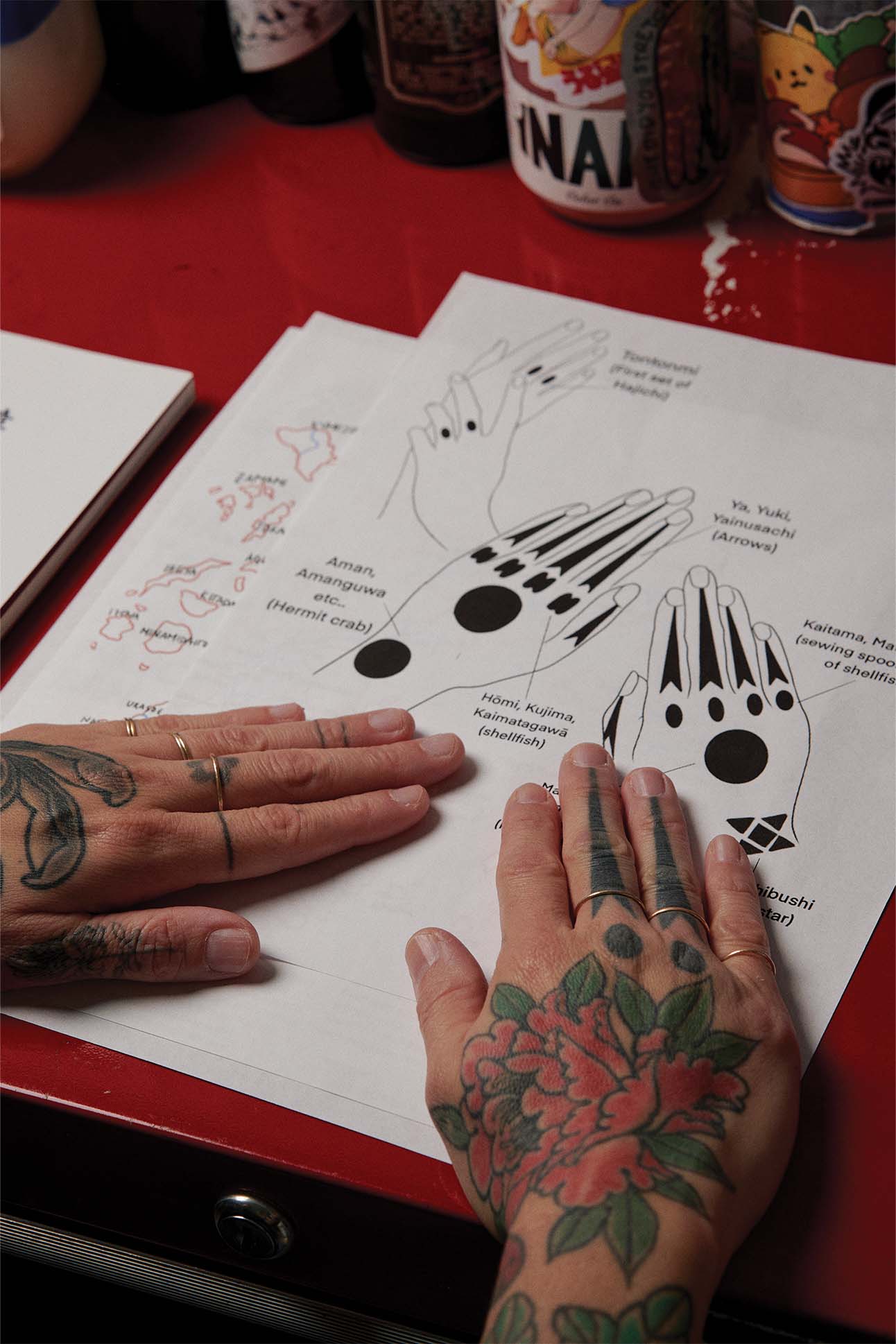
In time, these distinctive tattoos, known as hajichi, became a deeply rooted tradition in Ryūkyūan society. What sparse literature exists on hajichi indicates that the custom was exclusive to women, a distinction in keeping with the Ryūkyūan belief that all women possessed spiritual power. Fittingly, most tattooists, called hajichā, were women, making sessions an intimate, gendered, and often intergenerational exchange. Hajichi marked significant moments in a woman’s life: puberty, marriage, the birth of a child or grandchild. A full set of hand tattoos represented a life well lived. The designs themselves held different interpretations based on the region, and thus hajichi took on various meanings. Whether an arrow or a spear, a moon or a stone, hajichi was regarded less by its individual components and more by what it mapped as a whole. On a pragmatic level, the overall appearance linked her to the village and island of her upbringing. (Rare hajichi designs common to Miyako Island, for instance, were more linear and less uniform in appearance, with an assortment of simple symbols scattered on the backs of the hands.) When her hajichi wrinkled with age and dulled like bruises, and the matriarch had accomplished all that she wished, her hajichi would have one last purpose: reuniting her with her ancestors in the afterlife.
Under Japanese rule, however, this important marker of Ryūkyūan identity came under threat. In 1899, two decades after the Ryūkyū Kingdom was annexed by Japan, the Meiji government outlawed the practice of tattooing, enforcing the ban especially among its colonial subjects. By the time the first women from the Ryūkyūan Islands immigrated to Hawai‘i in 1905, following husbands, brothers, and fathers, they carried with them a tradition already in decline. Of the over 40,000 Okinawans in Hawai‘i today—now commonly called Uchinanchus—the practice survives among only a few descendants.
Among those carrying the custom forward is 37-year-old tattoo artist Bee Tanji, a yonsei (fourth-generation) Uchinanchu and esteemed hajichā on O‘ahu. Though she spent her early childhood in Arizona, Tanji made frequent trips to O‘ahu with her family, often shadowing her late grandmother in the kitchen as she prepared goya dishes and reminisced about her immigrant upbringing in Hawai‘i. After permanently settling down on O‘ahu in middle school, Tanji accompanied her grandmother to picnics with her Uchinanchu club and helped prepare andagi at the Okinawan Festival in Kapi‘olani Park.
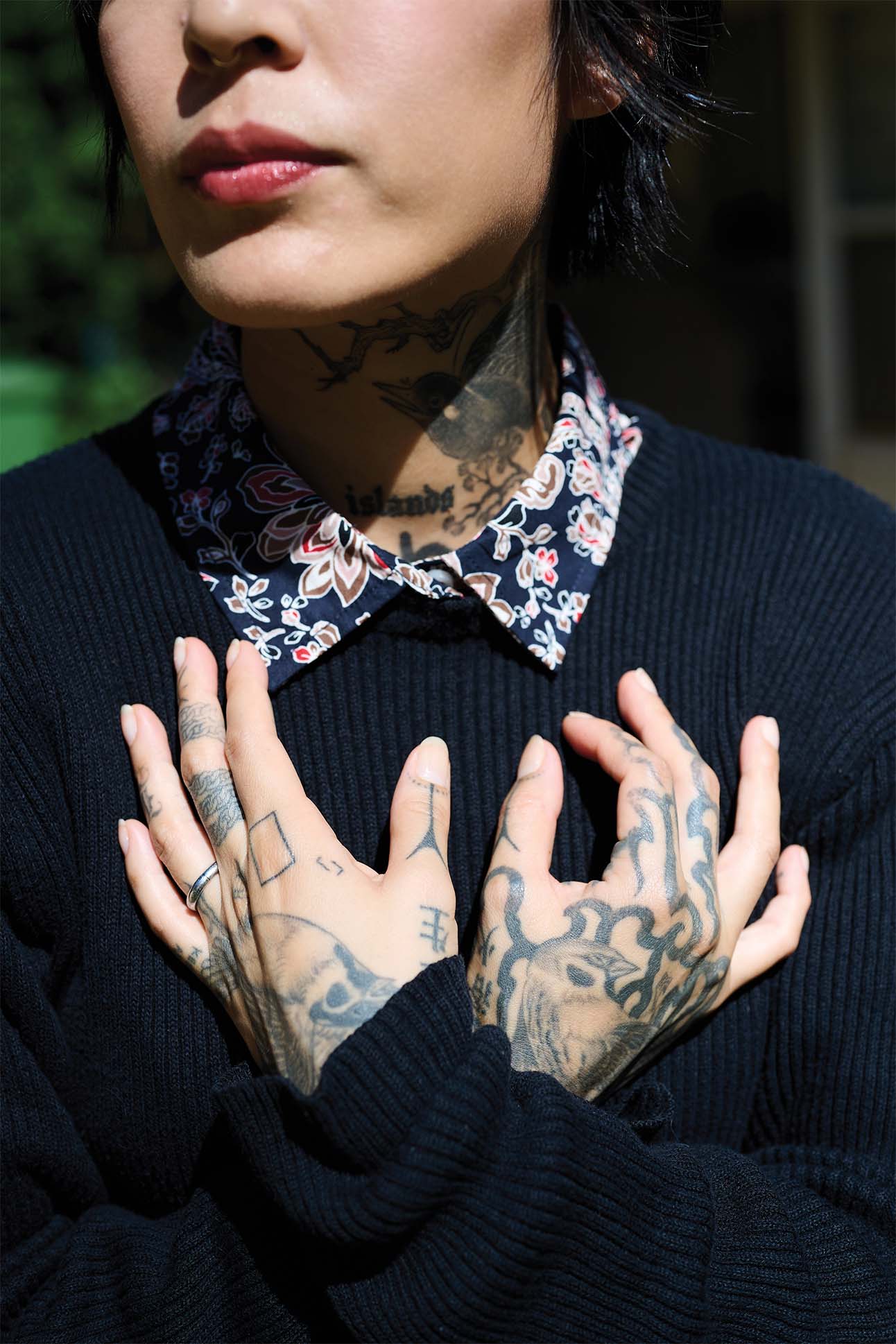
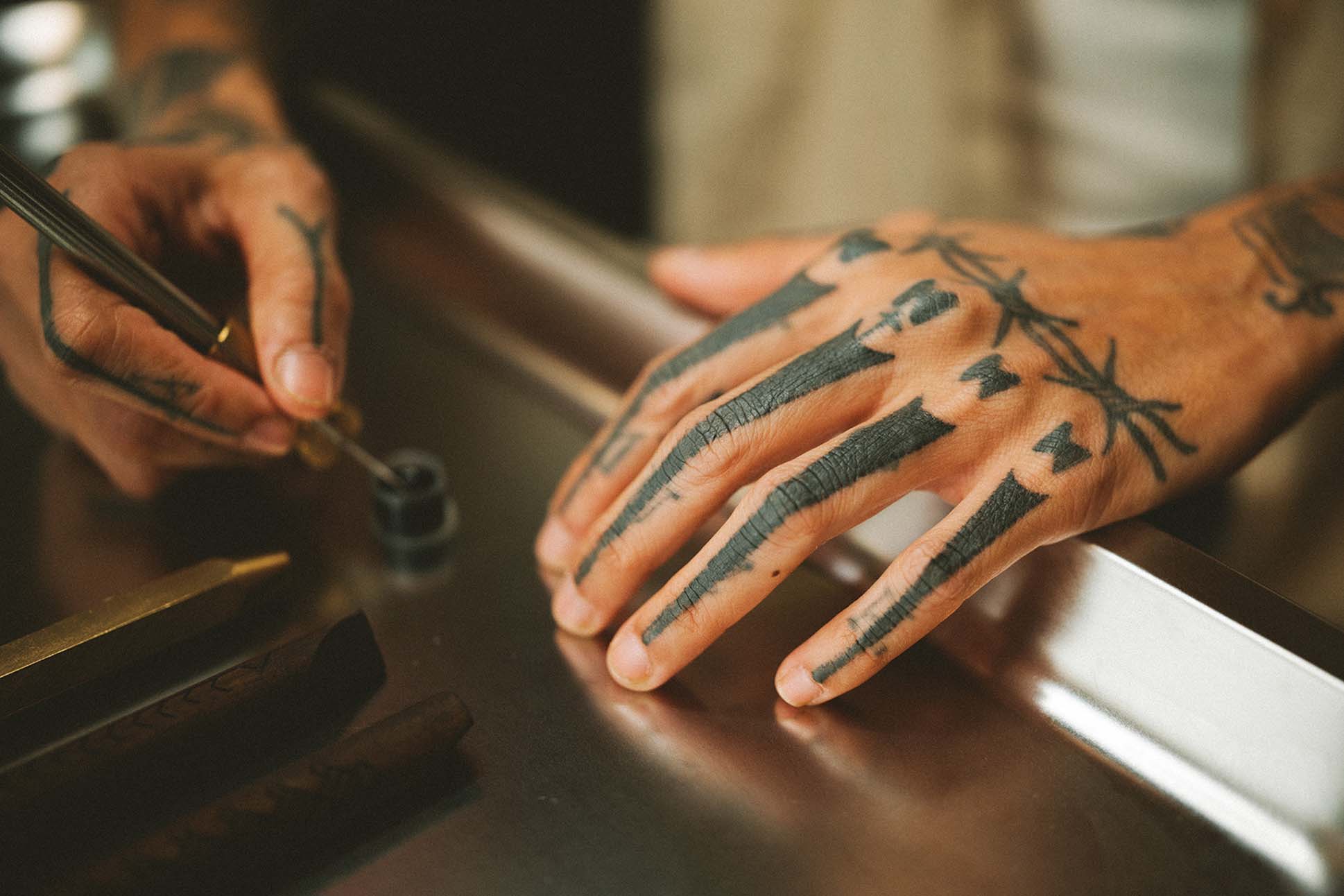
Around 2023, a couple of years into Tanji’s career as a tattoo artist, an Uchinanchu mother and daughter came to her requesting hand-poked hajichi. At the time, Tanji only knew of hajichi from a portrait of her great-great-grandmother Nabe from Motobu, Okinawa Island, hands in her lap with her palms facing down, proudly displaying her hajichi. These clients later turned Tanji on to the work of Moeko Heshiki, a second-generation hajichā pioneering a revival of the art form in Naha, Okinawa. Heshiki had been extensively documenting her hajichi assignments on the Instagram account @hajichi_project since January 2021, along with reference images and documents from her research.
Later that year, Tanji received the first of her hajichi—a few arrows and kaitama, or sewing spools, on one hand—from fellow hajichā Kiyanna Gloriani Hamamura of Chopstick Tattoo Hawai‘i. Unlike Tanji, Hamamura didn’t grow up with a strong connection to her Ryūkyūan heritage. For most of her childhood, the Filipina-Uchinanchu artist considered herself Japanese, a sentiment passed down by the ancestors of many present-day Uchinanchus in the wake of colonization. For Hamamura, discovering hajichi, and especially learning that her great-grandmother Kami from Haebaru, Okinawa Island, wore it, was the first step to reclaiming her Uchinanchu identity.
“In my head, I grouped Japanese and Okinawan culture together,” Hamamura admits. “Tattoos really separated it for me historically.” In 2021, she booked her first client as a hajichā, an intimidating prospect despite her tattooing experience. Hamamura couldn’t help but wonder, “Should I be doing this? Am I doing this right? How close should I stick to tradition?” But upon further research, she sadly realized how much of hajichi’s history had been lost to time on both skin and paper. “We don’t know exactly what went down or what went through [Ryūkyūan] people’s minds,” Hamamura says. “So when I do [hajichi] now, I ask [the client] what feels right, what feels natural.”
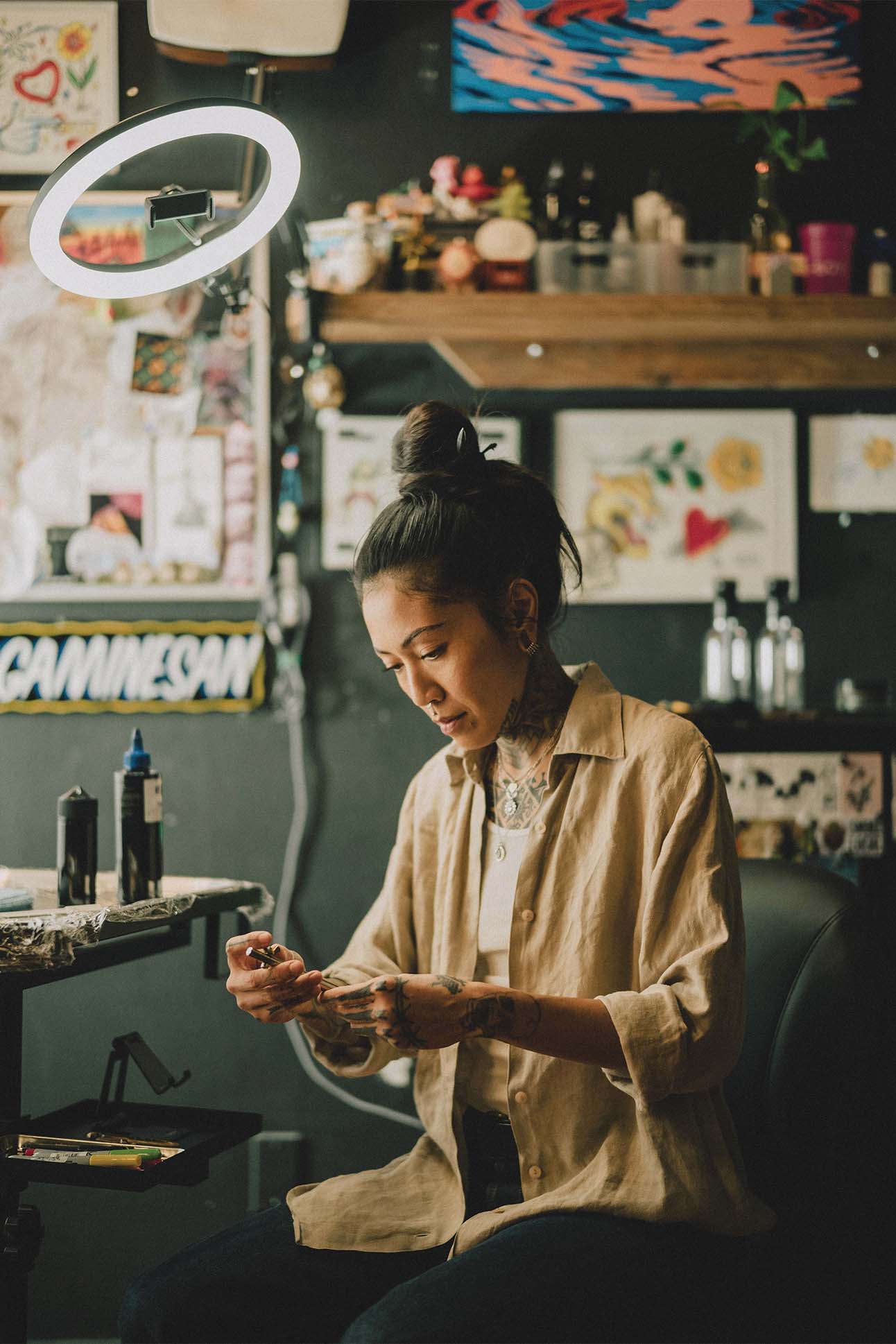
With this learned confidence, Hamamura encouraged fellow shop artist Erin Nagamine, another Filipina-Uchinanchu, to begin taking on hajichi clients. It wasn’t Nagamine’s first introduction to hajichi, which came almost a decade prior through her Uchinanchu hair stylist while she was living in Los Angeles. “I had taken a break from tattooing,” shares the ‘Ewa-born artist. “I wasn’t sure if it was what I wanted to do. But after [my stylist] introduced me to hajichi, that’s what started sparking my interest again. Maybe this isn’t just an occupation that I chose. Maybe this is some divine thing that’s supposed to happen. What are the chances that I’m from a culture that has a very important history of tattoos?”
For Tanji, Hamamura, and Nagamine, hajichi is a form of “time travel,” as Hamamura describes it, connecting them to their Ryūkyūan ancestry. “I read that there’s a lot of songs in which women used to say that they weren’t beautiful until they got hajichi, and I feel like I can understand,” Tanji says. “Even though I have a lot of tattoos, when I look at my hajichi, it makes me happy. I feel beautiful—proud to be Uchinanchu.”
