
When I think of home, I sometimes think of Maui-born artist Hon-Chew Hee’s sculptural mural The Golden Days of Hawai‘i. Carved in deep green marble and accented by rich, earthy red-browns, its strikingly stylized patterns and abstractions depict scenes of labor, learning, and life in ancient Hawai‘i.
To me, the piece is deeply formative, if only because it was part of my childhood growing up in Mililani. My father used to load my sister and me onto his bike and tote us to Mililani Public Library, where Hee’s mural spans an exterior wall. A small, unremarkable suburban neighborhood in central O‘ahu, Mililani is as far from the beach as you can get, and further still from the island’s urban core, but it was the place that made me. The mural recalls a version of myself that existed before self-consciousness, before I had language for identity or ambition.
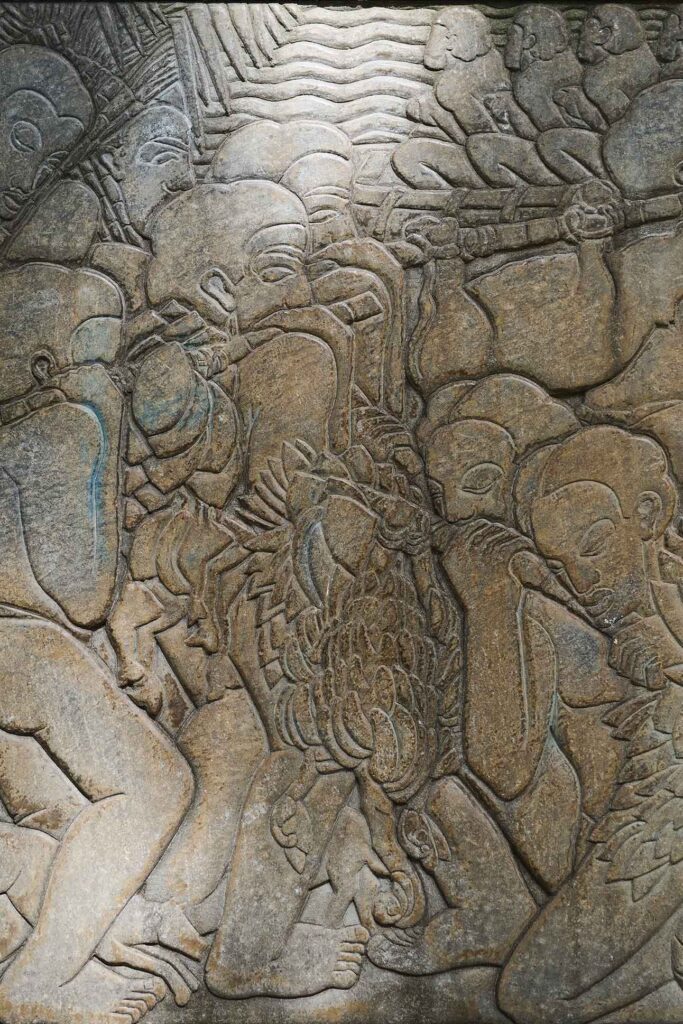
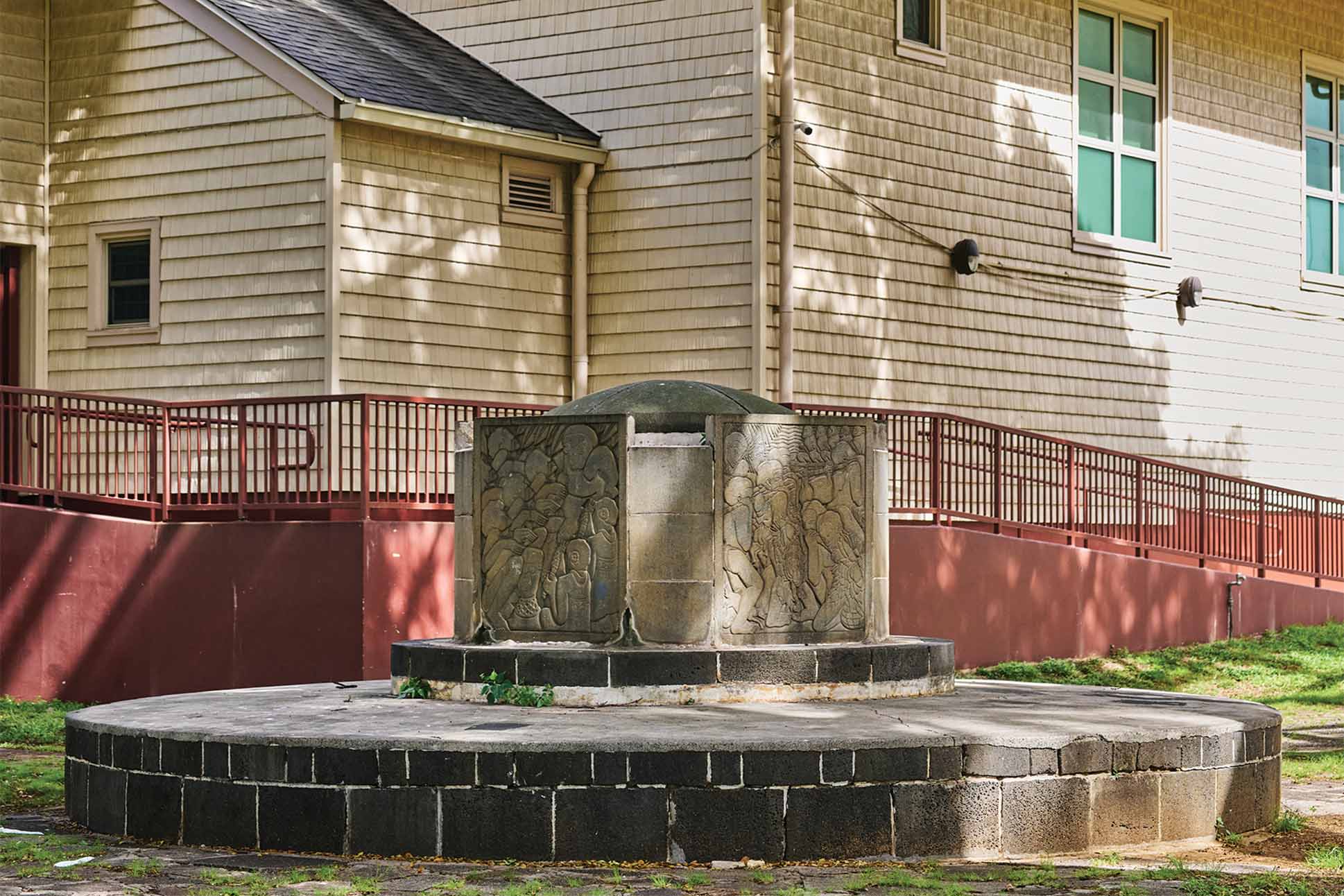
Libraries in Hawai‘i are often overlooked troves of public art. But pay attention and you’ll find art demurely woven into the fabric of daily life everywhere you look: At Kawānanakoa Playground near Prince David Kawānanakoa Middle School, Native Hawaiian cultural practices are rendered in bas-relief on a decagonal fountain by artist Marguerite Blasingame. Perhaps the imagery will embed itself in the memories of the children who play there, as Hee’s mural did in mine—a narrative absorbed before it was ever understood.
In the 1930s and ’40s, Blasingame left her mark on infrastructure throughout Honolulu, adorning the city’s public spaces as a founding member of the Hawaiian Mural Arts Guild established in 1934 with artists Isami Doi, Madge Tennent, and others. Her murals and bas-reliefs—among the longest-standing works associated with the Guild—were not framed or elevated within the walls of an institution. They were carved into the stone and concrete of parks and civic buildings, meant to be encountered up close, leaned on, and worn down by time.
One of Blasingame’s most prominent commissions, Ka Wai a ke Akua (The Water of the Gods) at the entrance of the Board of Water Supply building in downtown Honolulu, tells the story of the gods Kāne and Kanaloa, water-finders who opened springs across the islands. This is not art without use or function. It is art that endeavors to explain a Hawaiian worldview. At its most enduring, this is what public art does: It creates a collective sense of who we are and where we are, often before we have the words for it.
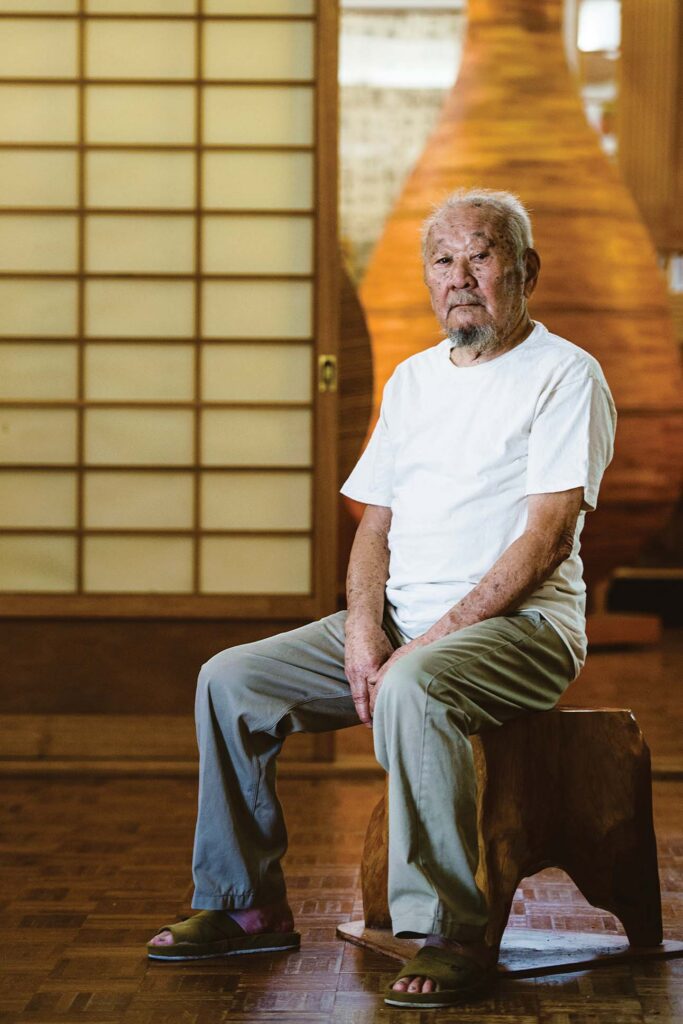
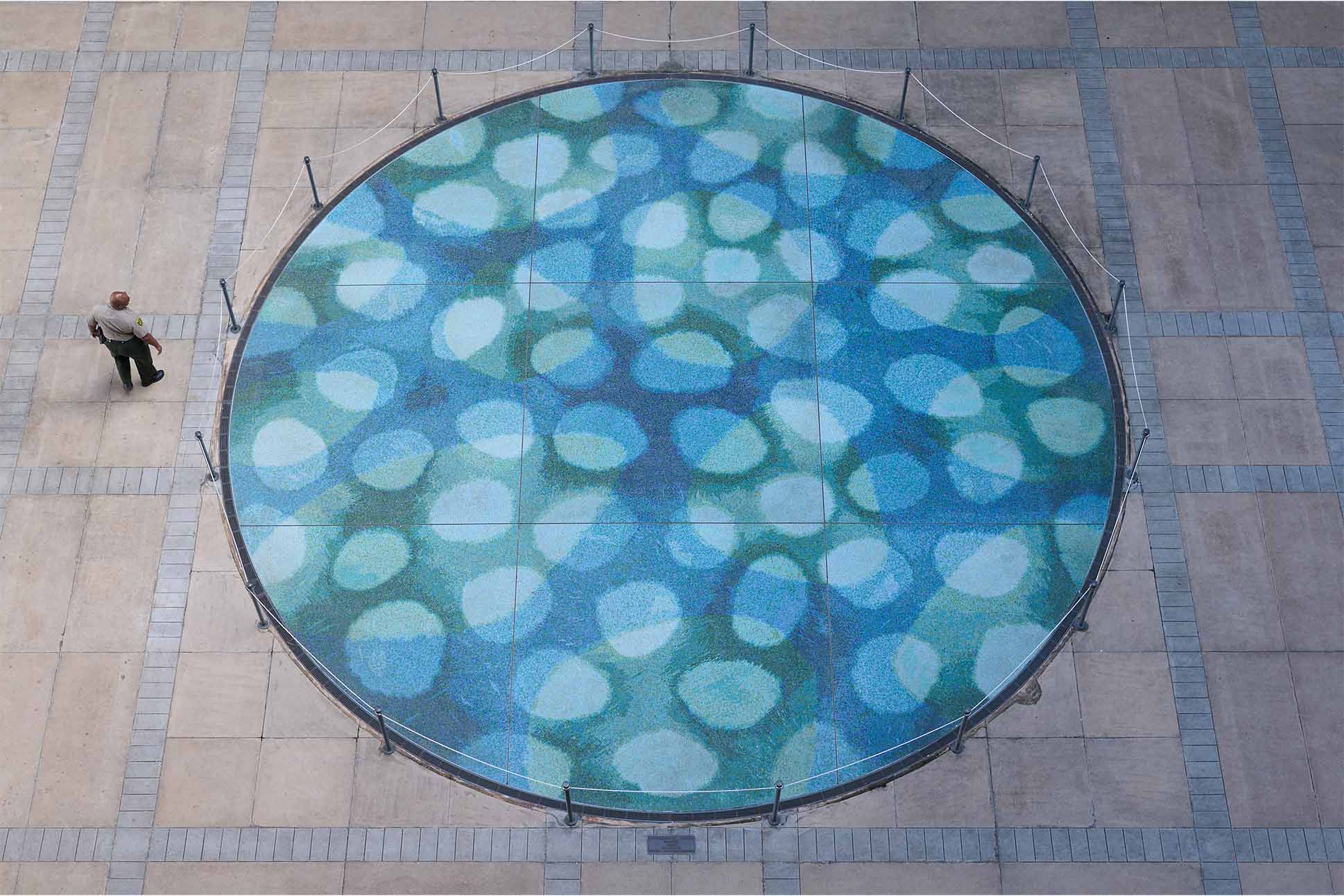
For some of Hawai‘i’s most significant artists, it was often in the public sphere that their visual language resonated the loudest. Satoru Abe and Tadashi Sato, central figures in Hawai‘i’s modernist art movement, both found a mentor in Guild co-founder Isami Doi and left behind iconic public works such as The Seed, Abe’s fantastical, sinuous forest of gold and iron that rises haunting and hopeful in front of Farrington High School, and Aquarius, Sato’s serene mosaic at the Hawai‘i State Capitol, which conjures submerged rocks in the cerulean waters around Hawai‘i and is arguably his most well-known work.
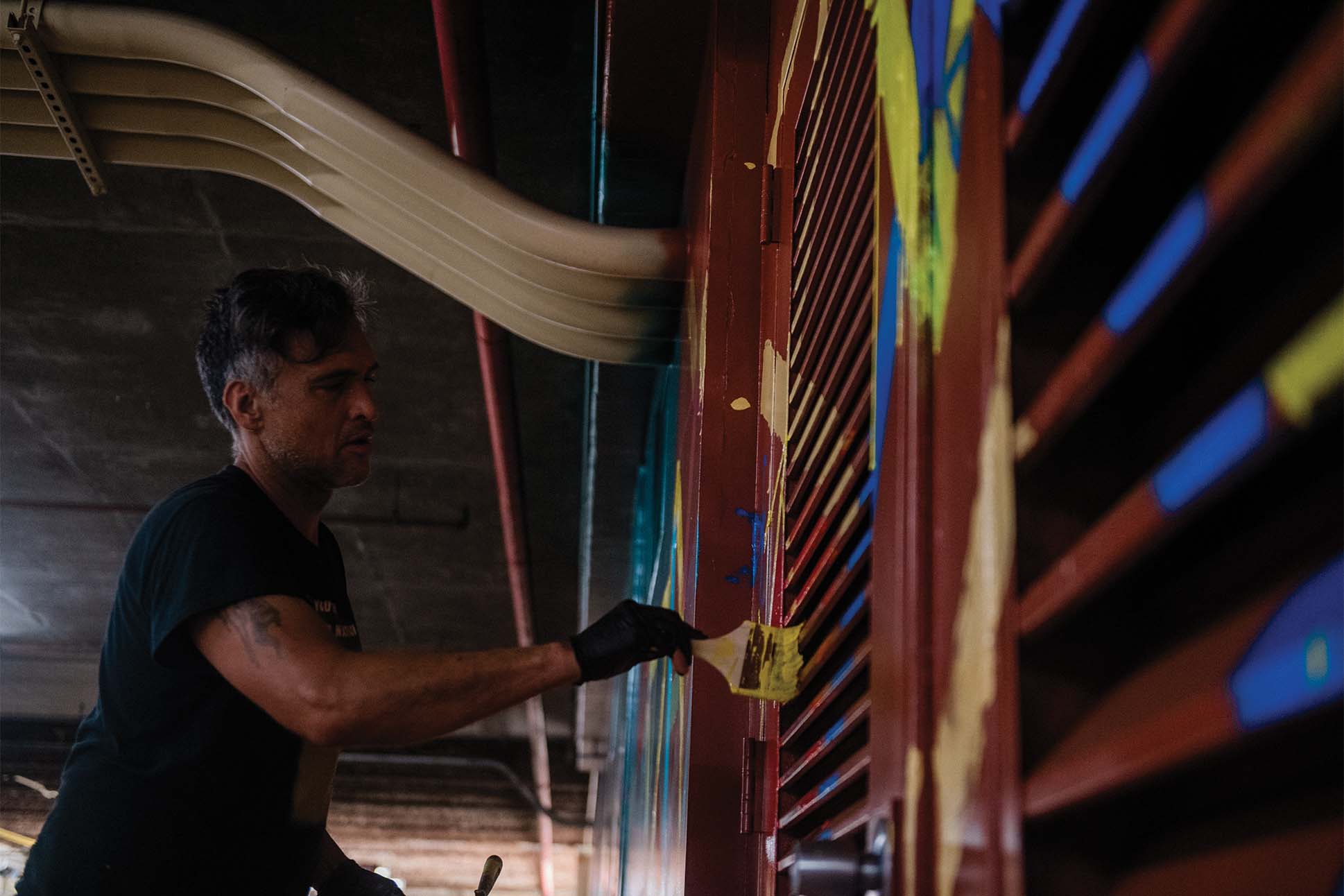
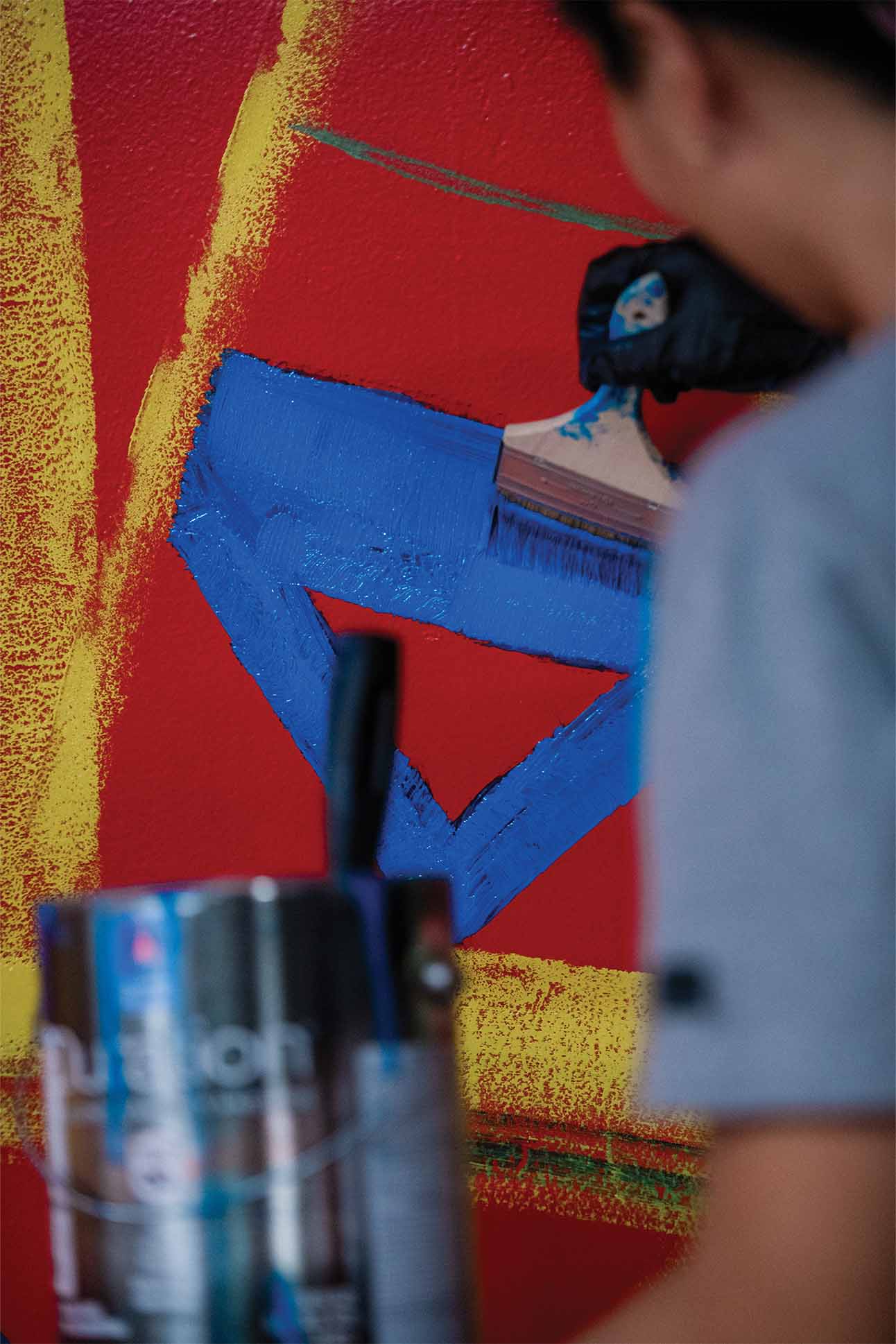
Today, artists in Hawai‘i uphold this legacy of making their stories of place visible, even as their forms and concerns evolve. Their work looks different because, after all, this place is different, shaped by time and circumstance, by loss and renewal, by generations coming and going. They bare themselves differently, yet the impulse to offer something of oneself not in private, but for and with others, remains the same.
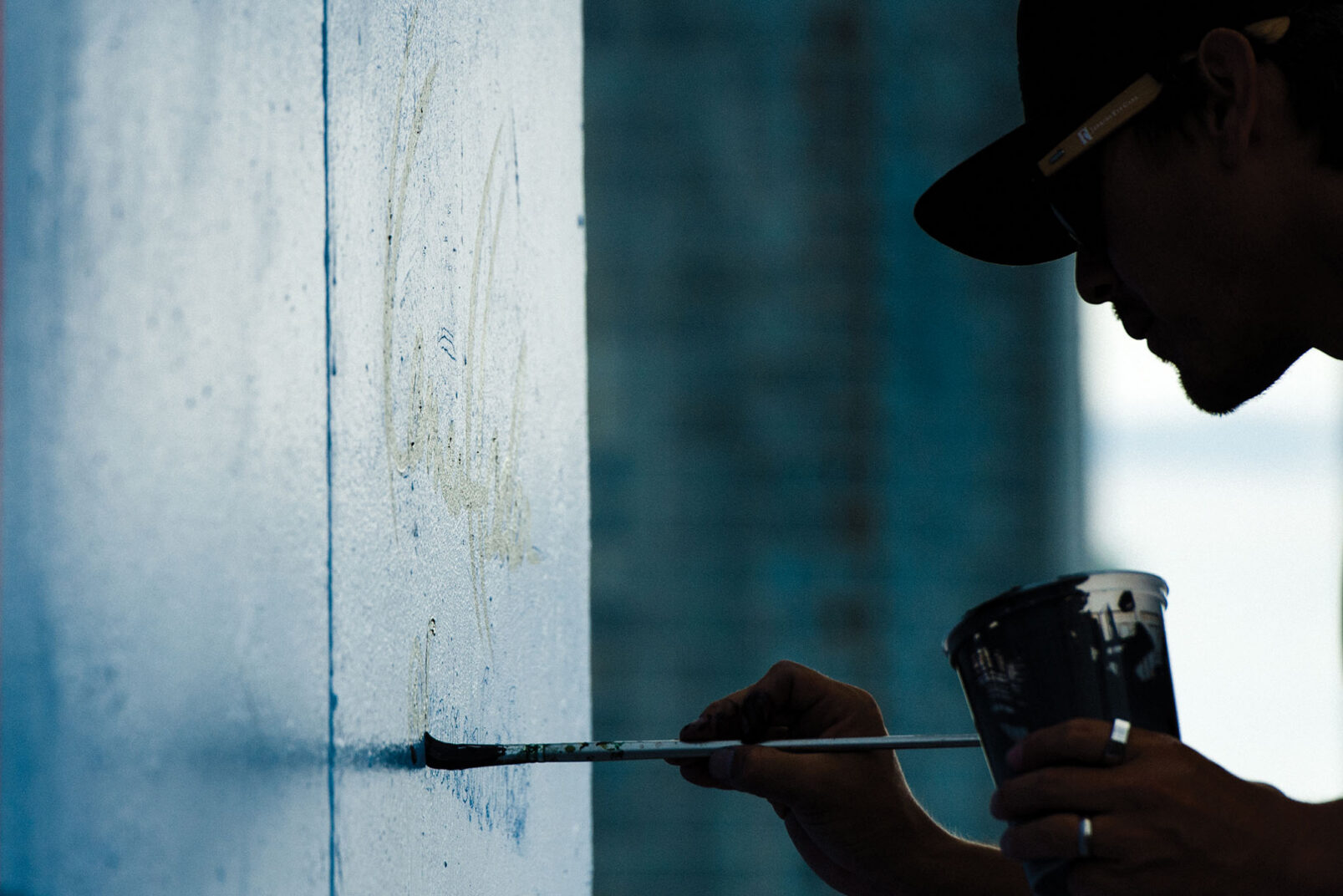
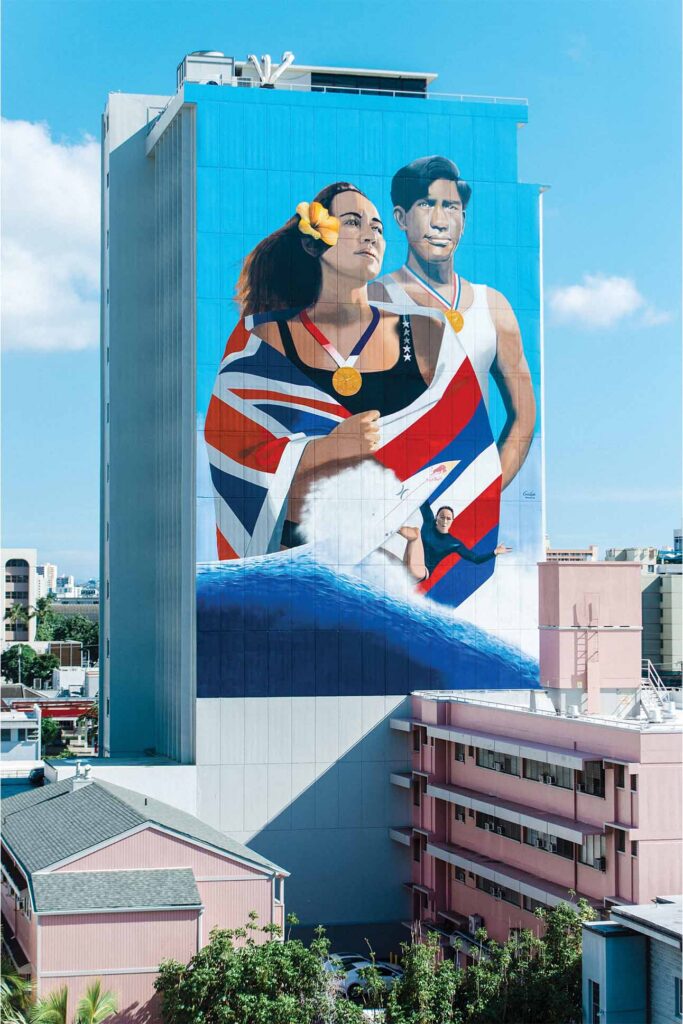
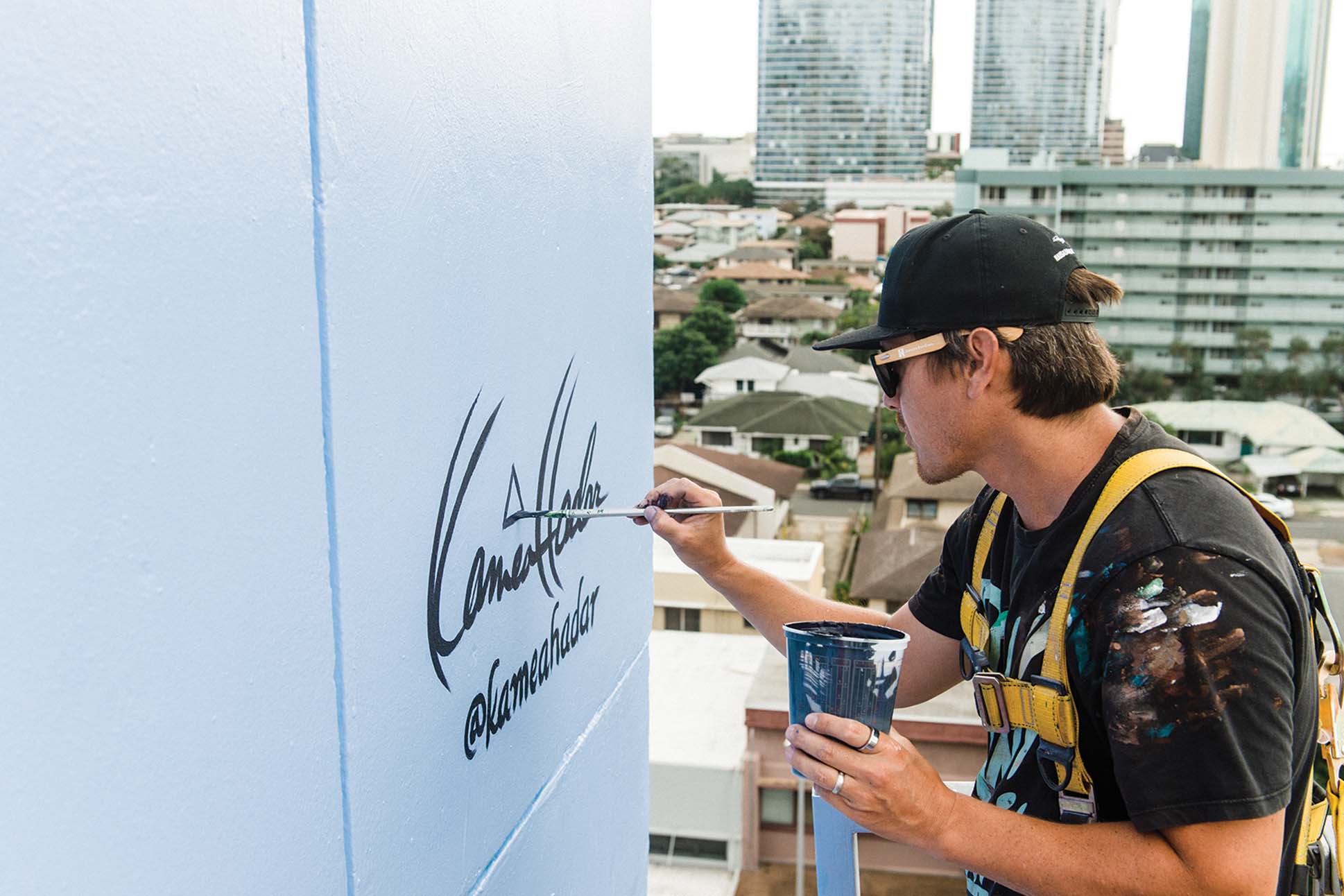
Honolulu is a living canvas in the hands of Kamea Hadar, artist and former director of the public arts organization now known as Worldwide Walls. There’s his enormous mural of an ‘iwa bird soaring along the 25-story facade of Nāulu Tower, an affordable housing project completed in ‘Aiea in 2025, or his monumental portrait of surfer Carissa Moore pictured alongside a young Duke Kahanamoku, painted the year after Moore claimed the sport’s inaugural gold medal at the 2020 Summer Olympics. Hadar’s murals tell a story of the city as it unfolds, filling its streets with not just color, but identity.
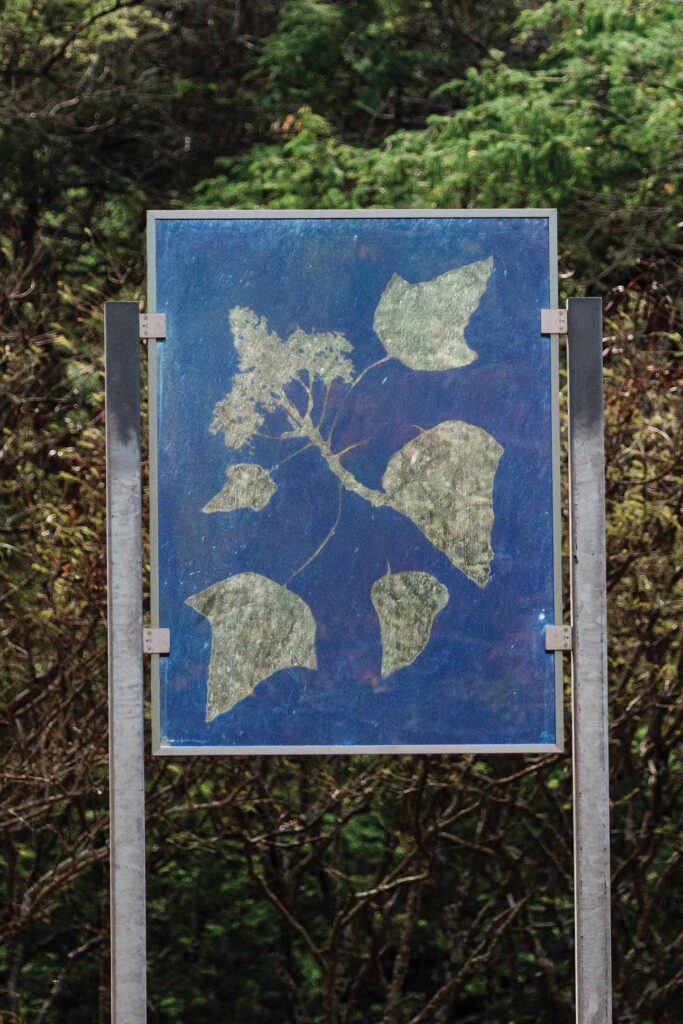
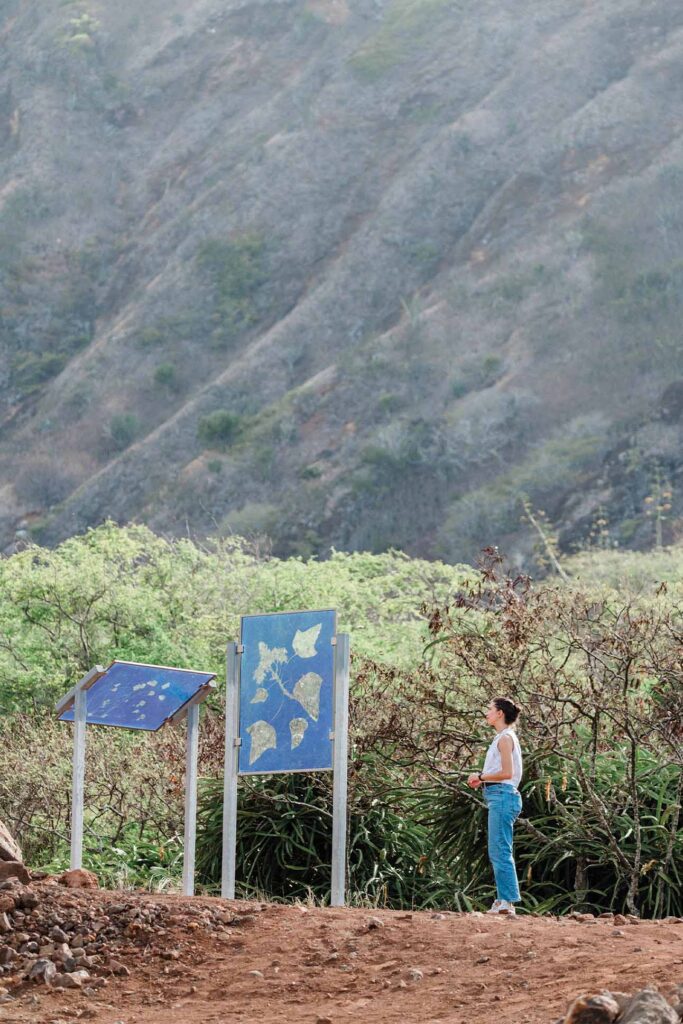
Building on this momentum is Wahi Pana: Storied Places, a three-year public art project launched in 2025 that situates site-specific installations throughout O‘ahu. Bringing together Native Hawaiian and Hawai‘i-based artists, storytellers, and community members, the initiative honors the complex histories of each site, using diverse media to create a dialogue between place and people. In Ka Pā‘ū Ehuehu o Hi‘iaka (The Animated Skirt of Hi‘iaka), artist Cory Kamehanaokalā Holt Taum transforms three city buses into moving works of art, wrapping their exteriors in flowing pā‘ū patterns and interactive QR codes that connect bus riders with the legend of Hi‘iakaikapoliopele. Ualani Davis’s cyanotype installation at Koko Crater Botanical Garden reimagines the garden as a site of resistance and reclamation, evoking the spirit of Queen Lili‘uokalani’s gardens at Paoakalani and Uluhaimalama.
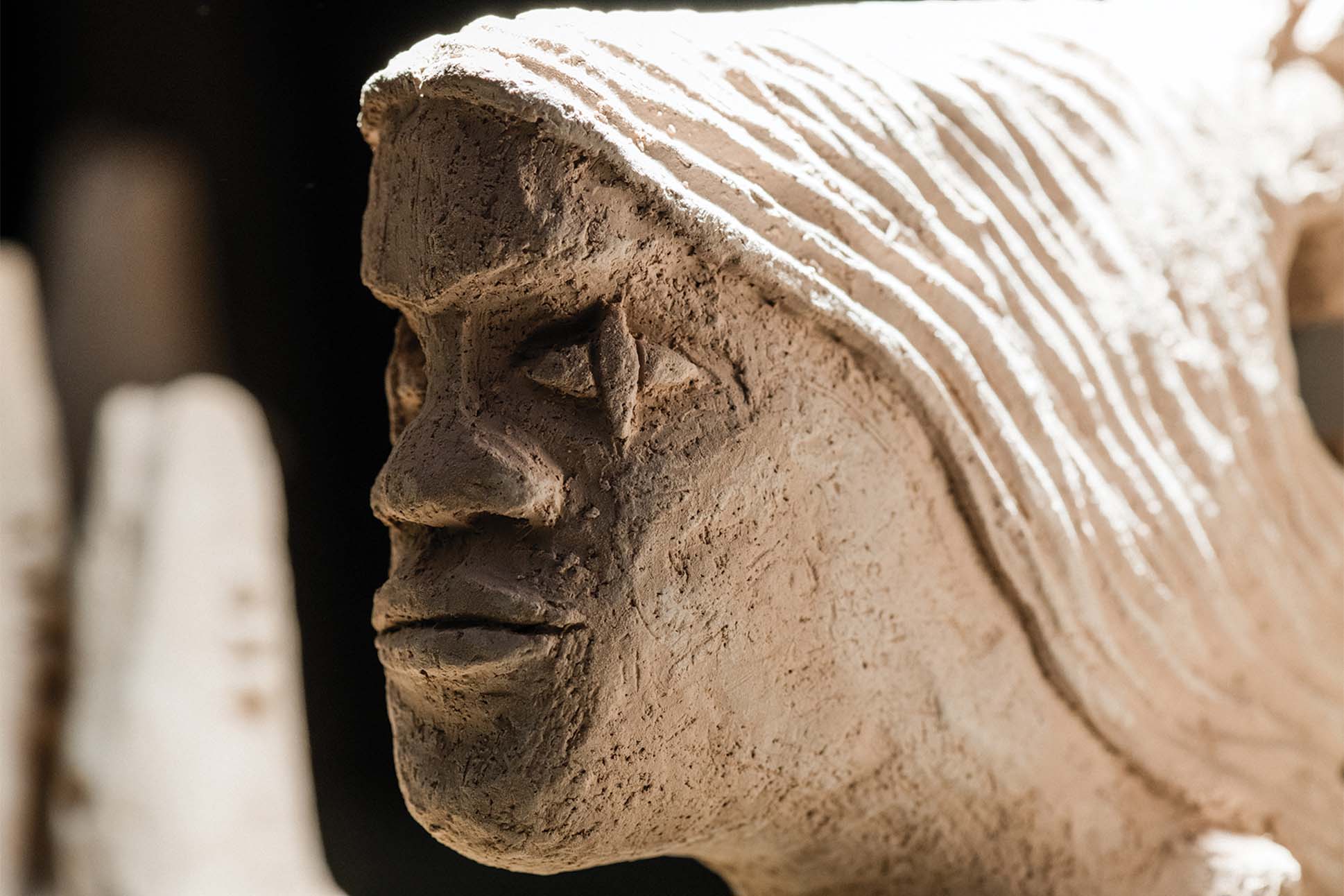
All art involves risk; public art makes that risk visible to the world. To create it is to risk being seen too clearly, to subject oneself to whatever might be revealed if every corner of us were held up to the light. It invites a collective gaze that refuses to look away. It insists on connection, not despite discomfort or imperfection, but because of it.
There is courage in that insistence, and in believing in the beauty of such exposure. There is faith in imagining that a community might recognize itself in stone, pigment, or concrete. There is resolve in staying visible even when what is revealed is complicated or uncertain. Yes, public art is confronting, but its bold conviction lives on in marble and wood, in iron and gold, in memory.
