
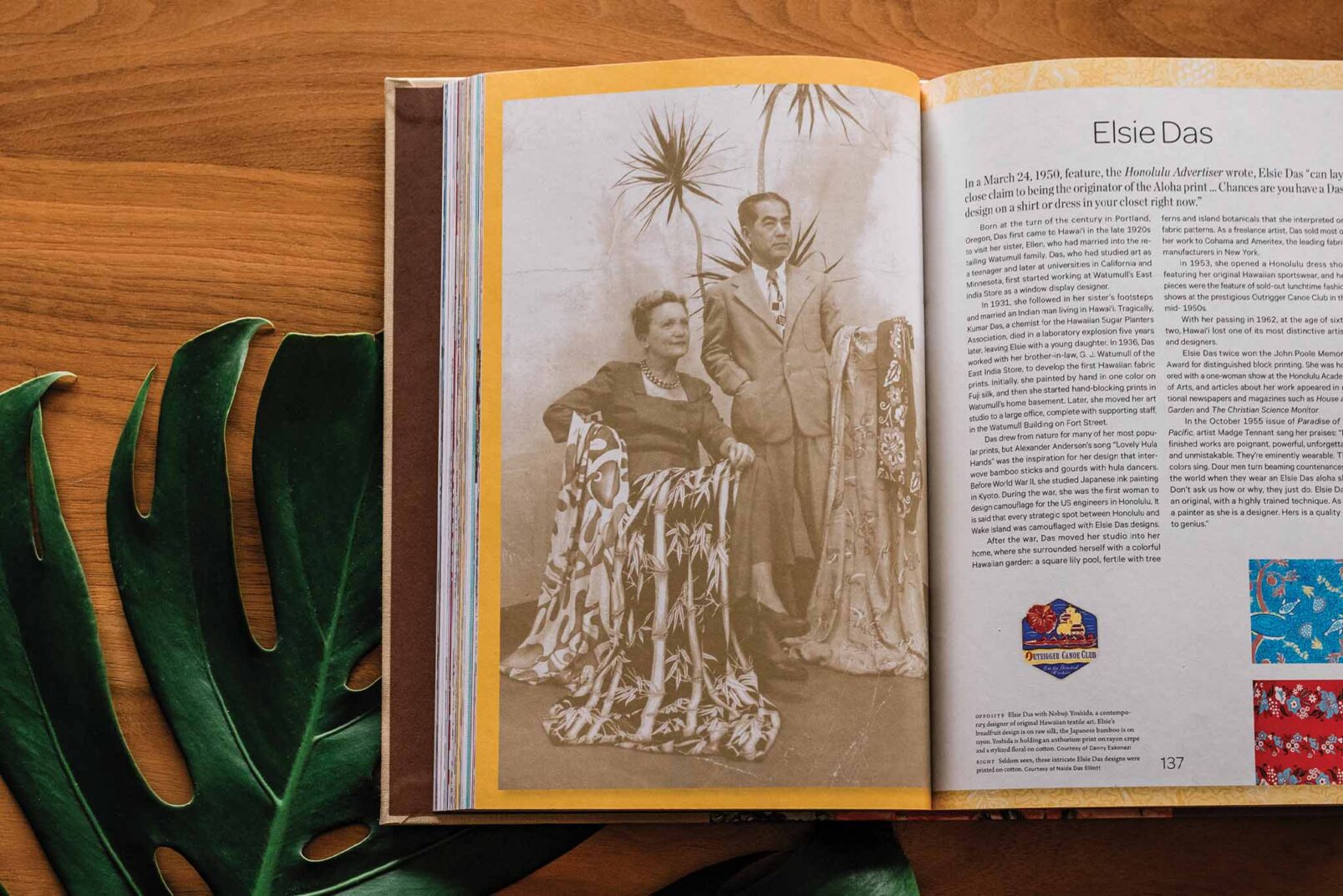
Arriving on O‘ahu from Portland, Oregon, in 1928, Elsie Das stepped into a landscape of lush vegetation and vibrant color. Prior to that fateful visit to see her sister, Ellen, the then 25-year-old had studied art at the University of California at Berkeley. Hawai‘i’s natural beauty and way of life deepened her burgeoning passion for painting, textile design, printmaking, and sculpture and served as an ongoing source of creative inspiration when Das eventually made the islands her home.
Because of her eye for color and composition, Das was soon dressing windows for a dry goods shop in Honolulu run by Ellen’s husband, Gobindram Watumull. Watumull’s East India Store sold wares and apparel from Asia and the Pacific Rim, and it sought to become a retail destination anchored by the emerging trend of aloha wear; in 1936, Watumull commissioned Das to design 15 Hawai‘i-inspired prints that would be sold at the store.
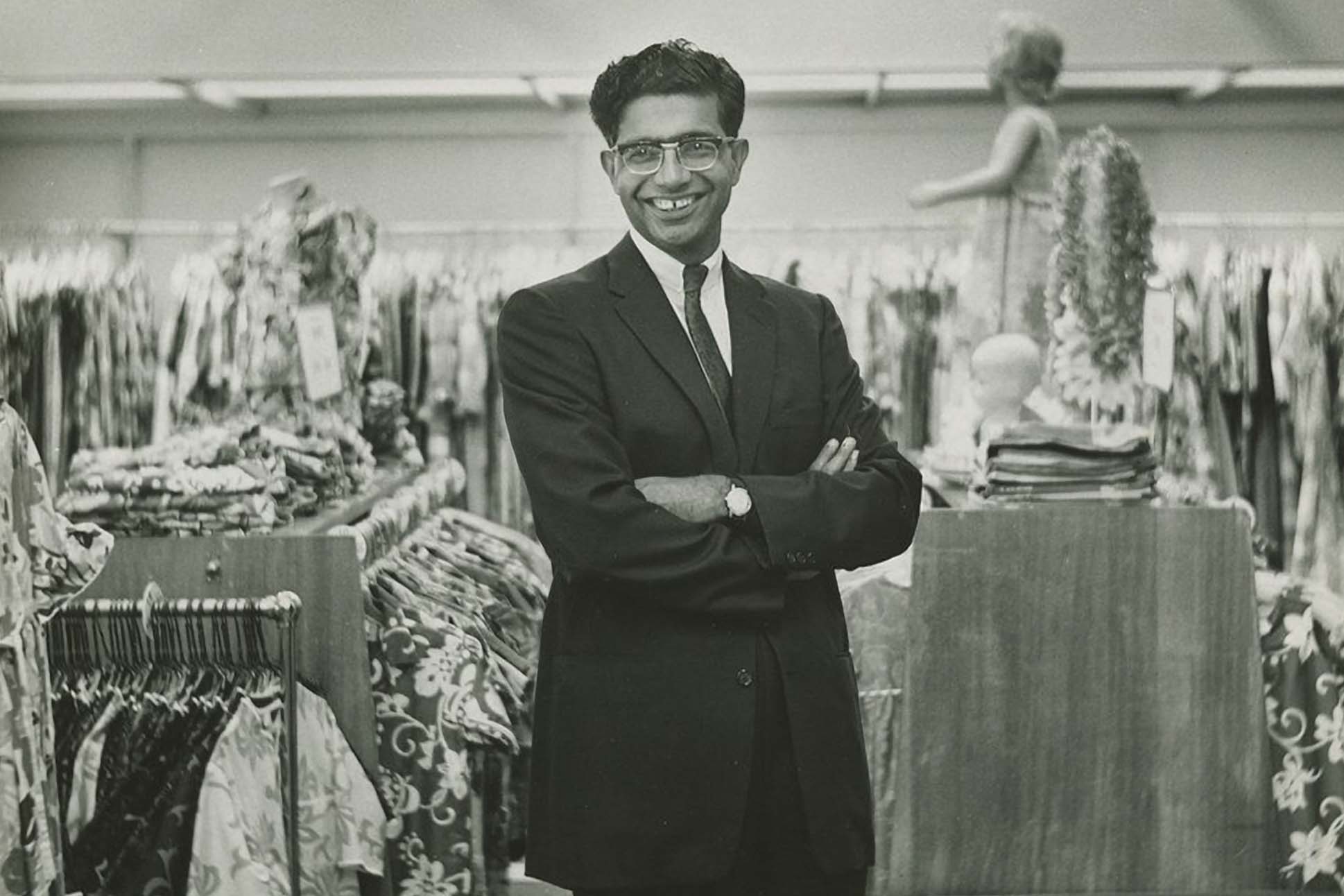
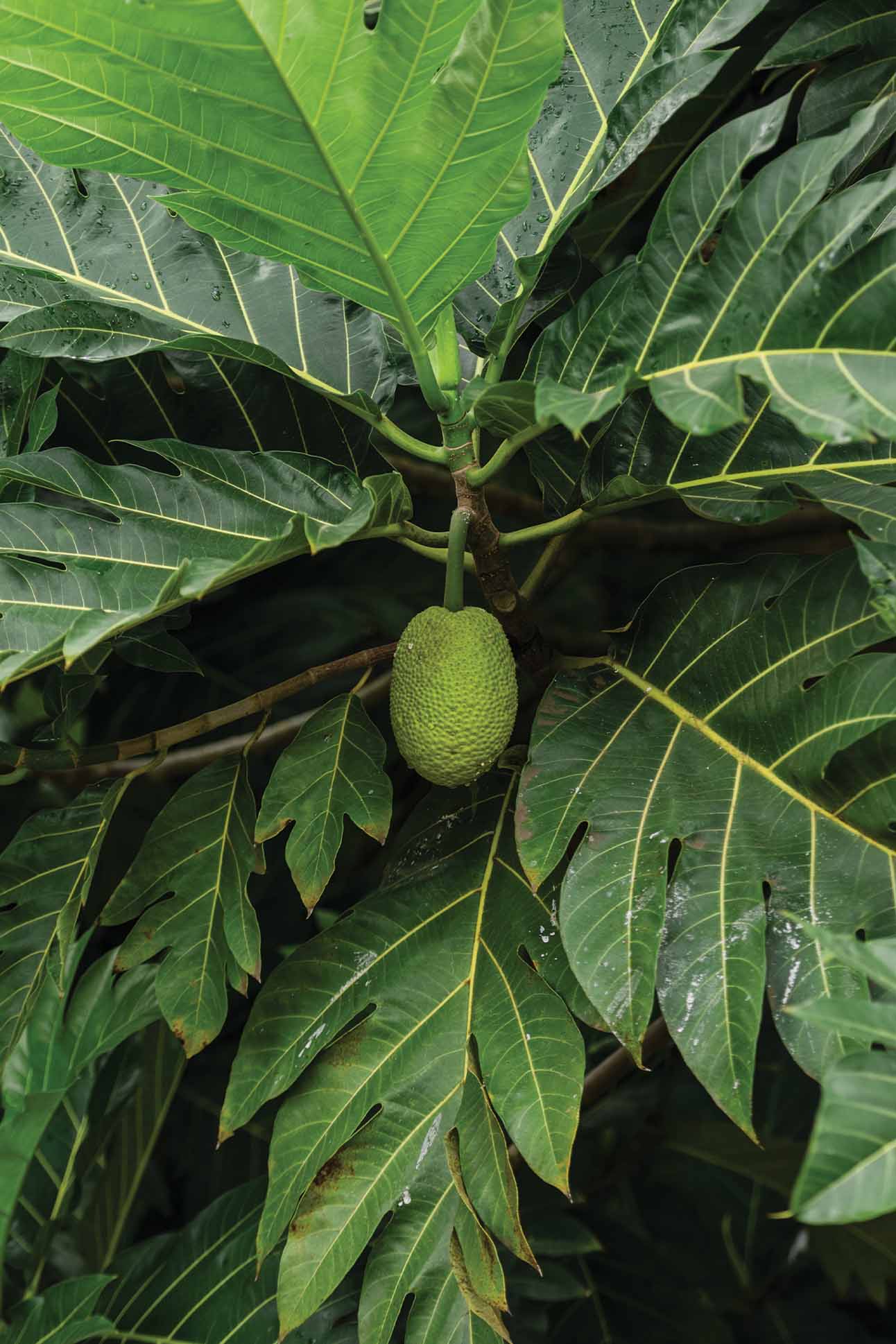
The commission proved to be influential. Her single-color illustrations highlighted local flora—hibiscus, night-blooming cereus, breadfruit, ginger—all hand-painted on raw silk and cotton, sent to Japan for printing, then hand-blocked on aloha shirts and other apparel. While competitors were advertising aloha attire adorned with traditional Japanese or Asian Pacific motifs, Das’ evocative prints instead drew inspiration from life in the islands. A series of additional designs followed, including hula dancers, tropical fish, coconut trees, and Hawaiian kapa-style prints, elevating the aloha shirt into a playful badge of pride for residents and a billboard of island leisure for visitors.
As aloha shirts permeated mainstream culture, popularized by style icons like Elvis Presley, Frank Sinatra, and John Wayne, Das continued to expand her repertoire. She studied ink painting in Kyoto, Japan, taught pottery classes at the Honolulu Academy of Arts, painted portraits of Hawai‘i’s people, and designed camouflage prints for the U.S. Army Corps of Engineers during World War II. Following the war, she took a pilgrimage to New York City to refine her pattern-making technique, and she traveled through Europe and India collecting exotic natural fabrics.
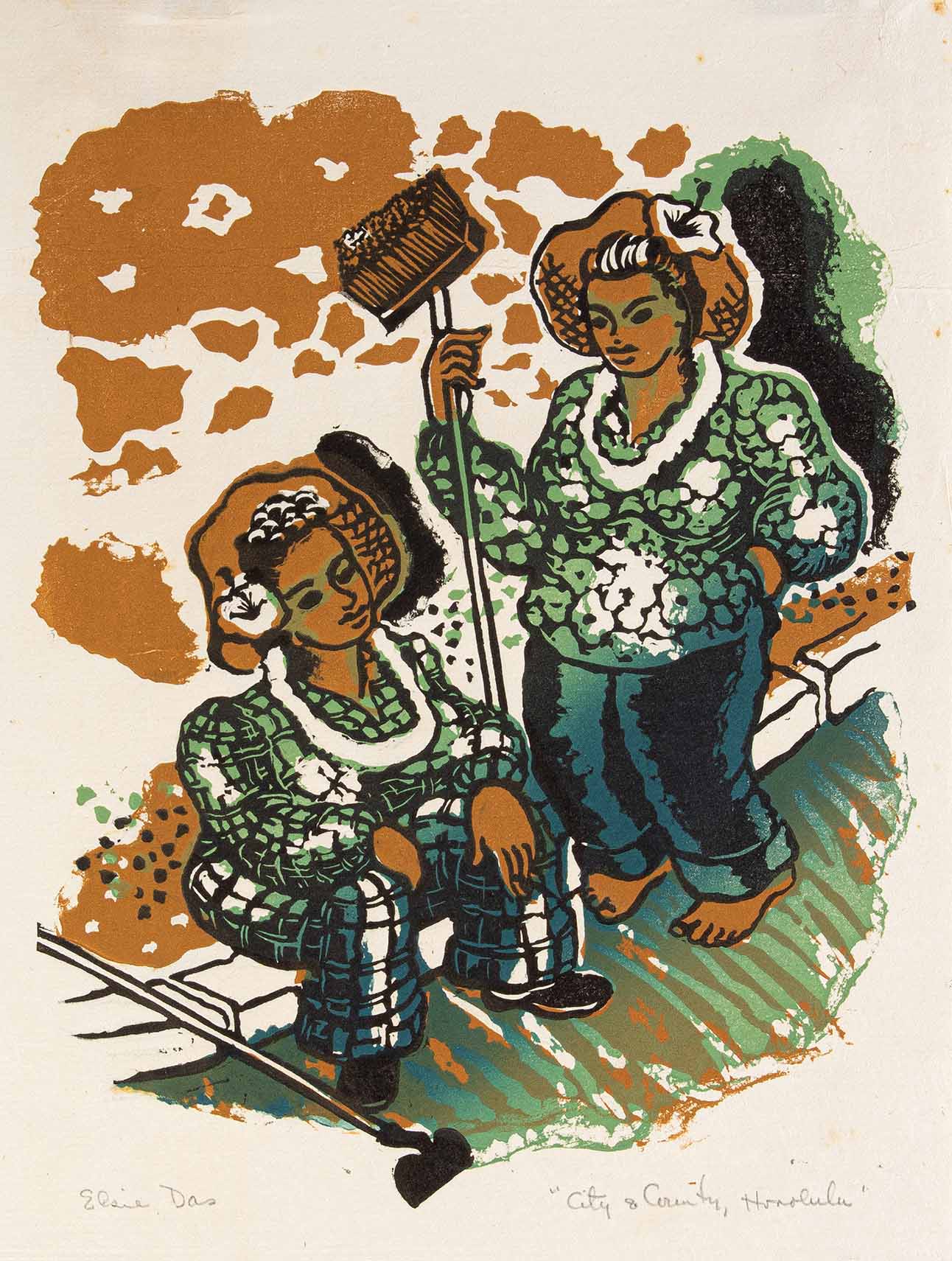
Though Das favored bold graphics and solid backgrounds for her textile prints, she embraced opportunities to explore cultural themes in her artwork, for example, a linocut print, City and County, Honolulu, commissioned for the Honolulu Printmakers gift print of 1945. Unique in its level of detail and depth, the print portrays fashionably dressed local women working outdoors, their complexions mirroring the shade of the surrounding soil. “Rather than framing them as ‘island beauties,’ Das depicts her subjects actively caring for the land,” says Katherine Love, associate curator of contemporary art at the Honolulu Museum of Art. “With the men called to war, it is the women who Das celebrates for their dedication to Hawai‘i’s public parks and spaces.”
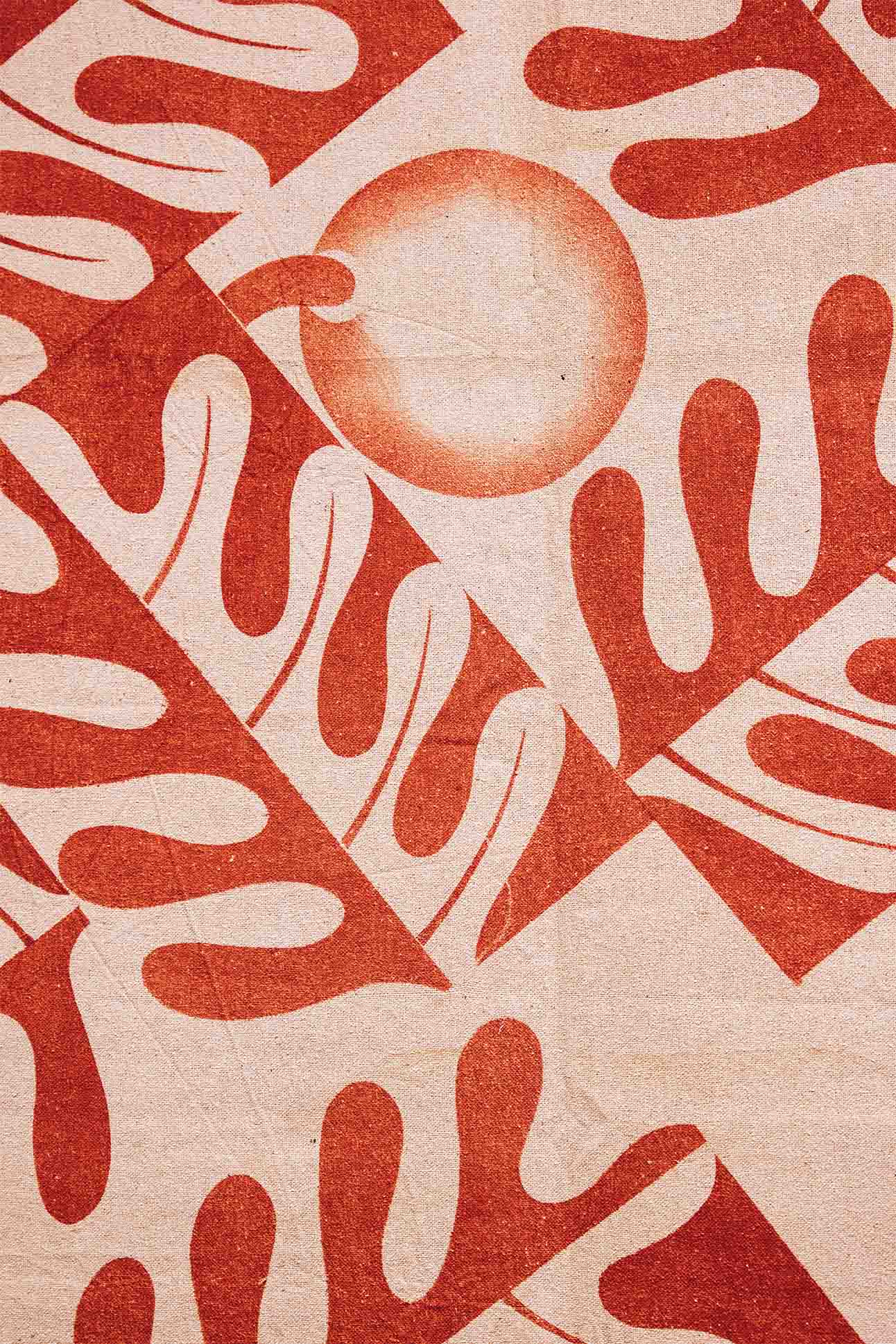
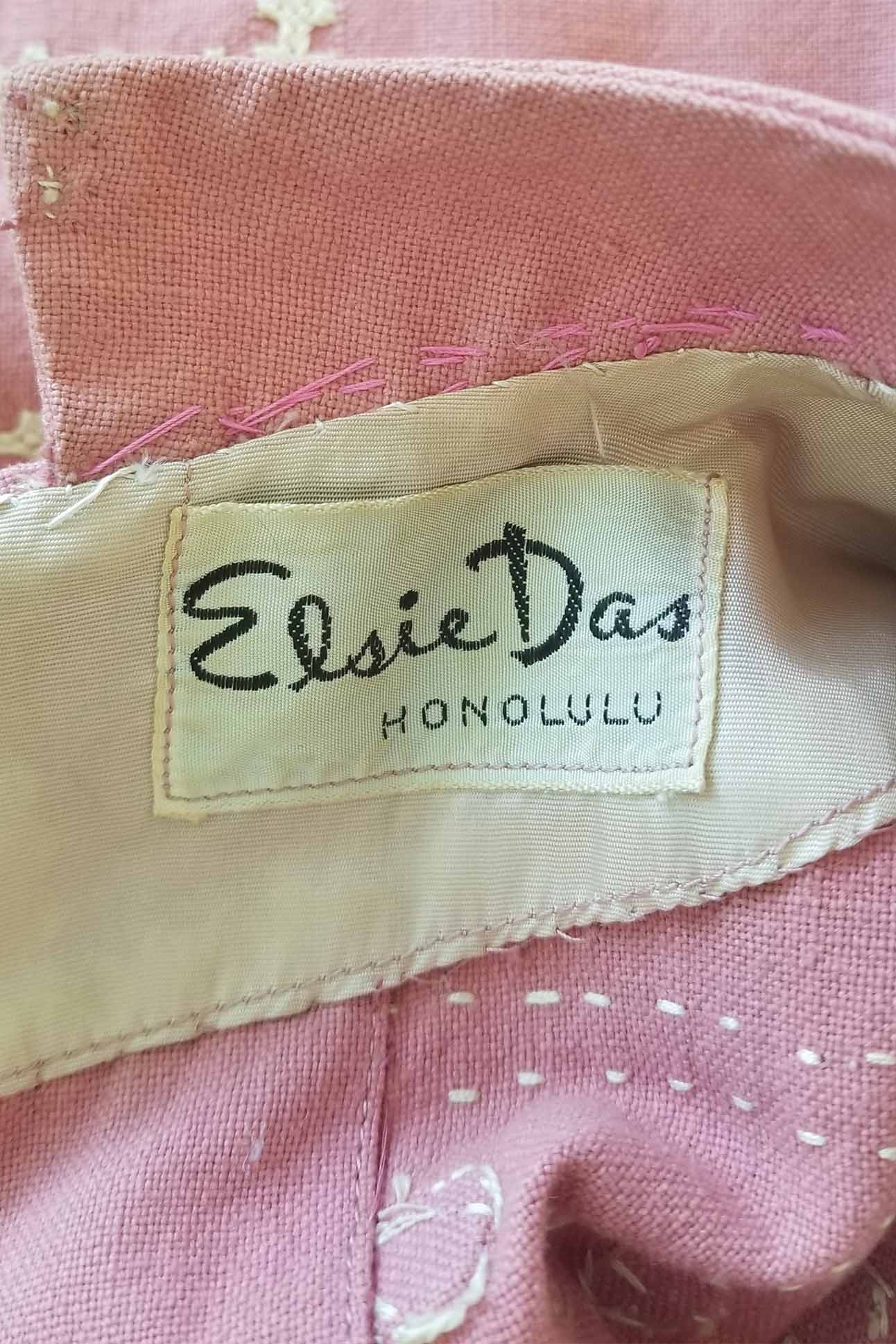
In 1952, Das realized her dream of opening a dress shop in Honolulu. Bearing a distinct East-meets-West aesthetic, polished yet understated, Das’ original designs included organic knits and relaxed silhouettes tailored to Hawai‘i’s tropics. She introduced casual yet elegant mu‘umu‘u and variations of the holokū, a formal gown Hawaiians adapted from missionary attire, bringing Hawaiian dress traditions to a wider audience. Her designs often incorporated South Asian influences, including Indian-inspired mandala motifs and shisha embroidery. An “Elsie Das” label became a coveted addition to wardrobes in Hawai‘i and beyond, debuting at sold-out Waikīkī fashion shows, captivating local and mainland critics, and prompting design schools to add her prints to their textile collections.
“I belong to the school of belief that clothes should be comfortable,” Das told Honolulu Advertiser writer Peggy McKenzie in 1960. “The body should be able to move freely. In composing a painting, consciously or unconsciously, the artist controls the movement within the frame of his painting. The same applies to clothes.”
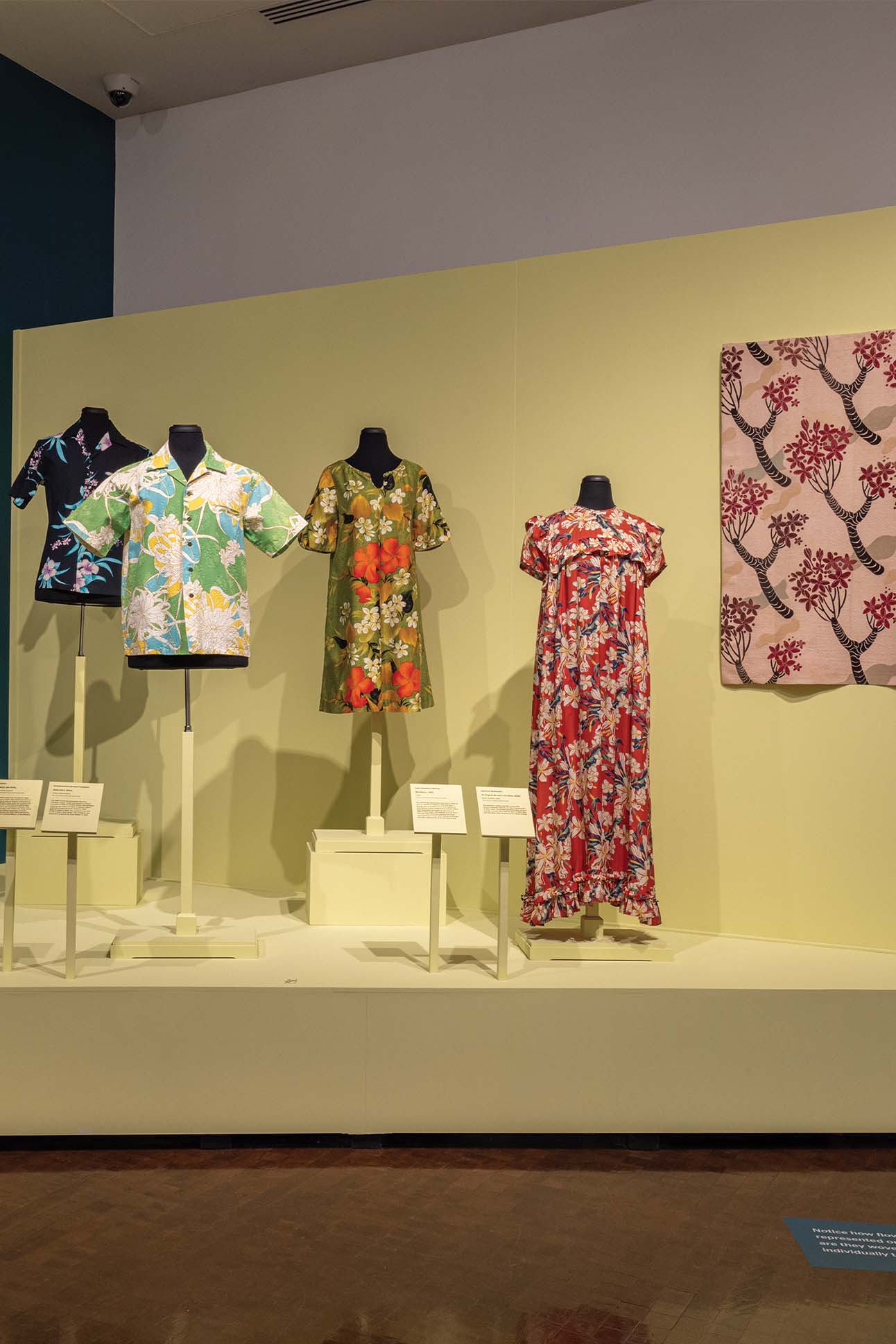
Das died in 1962, at the age of 59, but her artistic imprint endures. “I don’t think you have aloha wear without Elsie Das,” says Tsia Carson, founder and creative director of Honolulu-born fashion label Language of the Birds. “She combined a modernist European approach to form-making with the large scale and fluidity of Japanese textiles, and her DNA is still informing what we consider a Hawaiian print now—the local content, the scale, the modern visual language. She synthesized a lot of different design thinking at the time and encoded them into the Hawaiian print.”
Like many of Hawai‘i’s enduring ambassadors of aloha wear—Tori Richard, Reyn Spooner, Sig Zane, Kahala Sportswear—Carson continues to draw inspiration for her modern mu‘umu‘u designs from Das’ pioneering prints. “I had always wondered why Hawaiian prints were so sophisticated,” she adds. “I think it all started with her. She took them seriously.”
