
Shortly after leaving his native Japan to start a new life in Hawai‘i, Yuki Uzuhashi met a beekeeper who changed his life. Uzuhashi had run a small beekeeping business in Hyōgo Prefecture and, arriving on O‘ahu in 2009, soon found work with Michael Kliks, owner of Mānoa Honey Company.
With a background in medical parasitology and entomology, Kliks brought a scientist’s curiosity to beekeeping. “Sometimes I sit down by my colonies with a glass of wine and watch little golden flickers of light come in and out, and I can’t help but marvel at them,” said Kliks in a 2008 newspaper article about his passion for the craft.
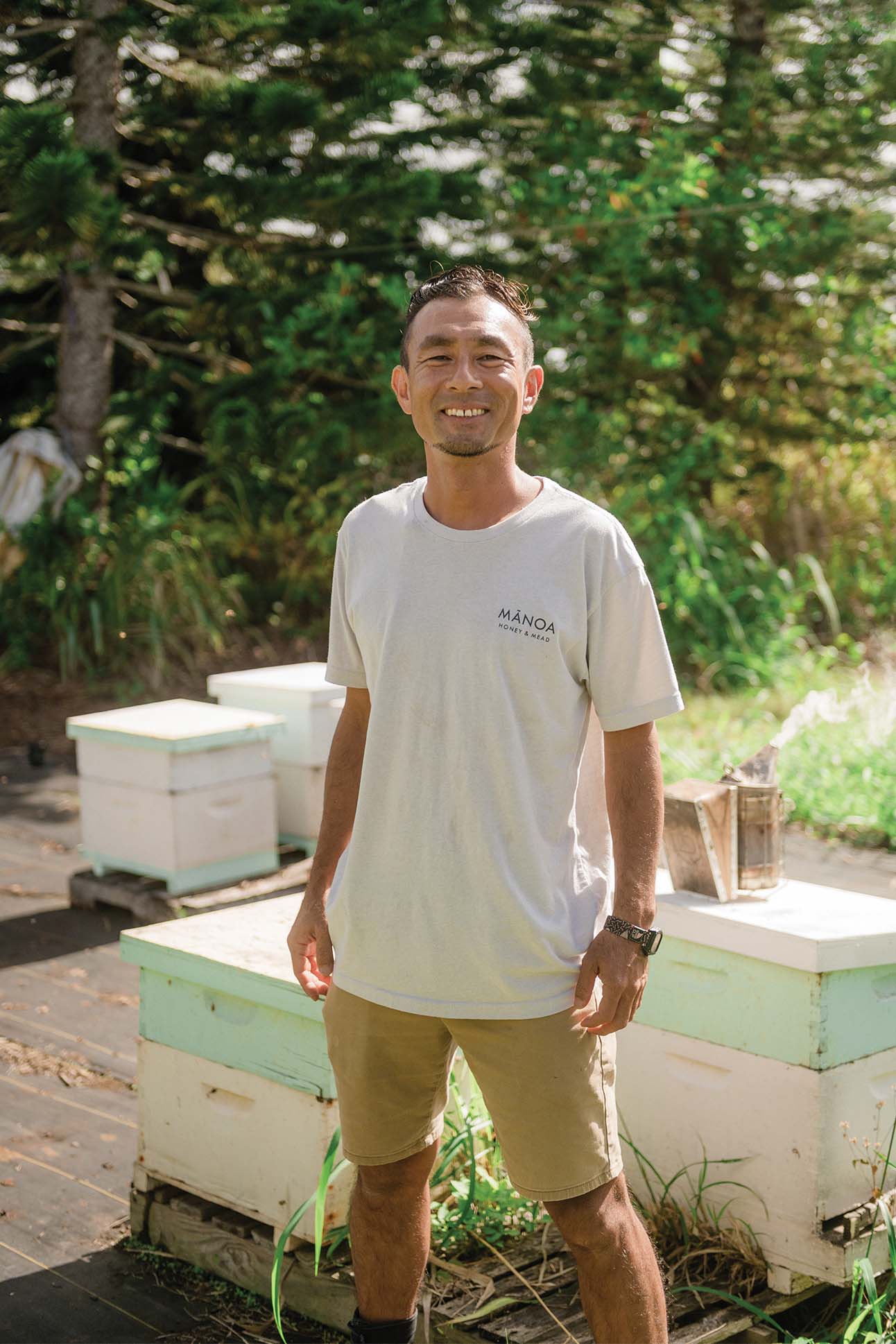
A sculptor fresh out of art school, Uzuhashi thought about the materials he once used to make sculptures: rebar, fiberglass, plastic. He was struck by the idea of working with something natural yet everlasting, “a golden elixir that would never go bad for thousands of years.” He began to see beekeeping as an art form. “It’s like a beautiful performance, chasing the flowers,” Uzuhashi says. “More beautiful than any other art that exists.”
It’s like a beautiful performance, chasing the flowers. More beautiful than any other art that exists.
Yuki Uzuhashi, beekeeper
Upon taking over the company from Kliks, who retired in 2014, Uzuhashi and his wife, Erika Ota, moved the operation from Mānoa to Wahiawā. For the first six years, Uzuhashi focused on honey, producing about 20,000 pounds a year. Then, during the pandemic, he began experimenting with fermenting the honey and distilling it with water, yeast, and local fruit to produce mead.
Today, mead production is a flourishing part of the business, and Uzuhashi and his crew continue to do everything by hand, from scraping honey from the hives to picking fruit off the trees to bottling and labeling the finished product. He built a retail shop known as the Honey House out of reclaimed wood, hanging a corrugated metal roof above an outdoor bar area and installing 12 taps. The Honey House serves as a hub for the company’s tastings, educational experiences, and meadery tours.
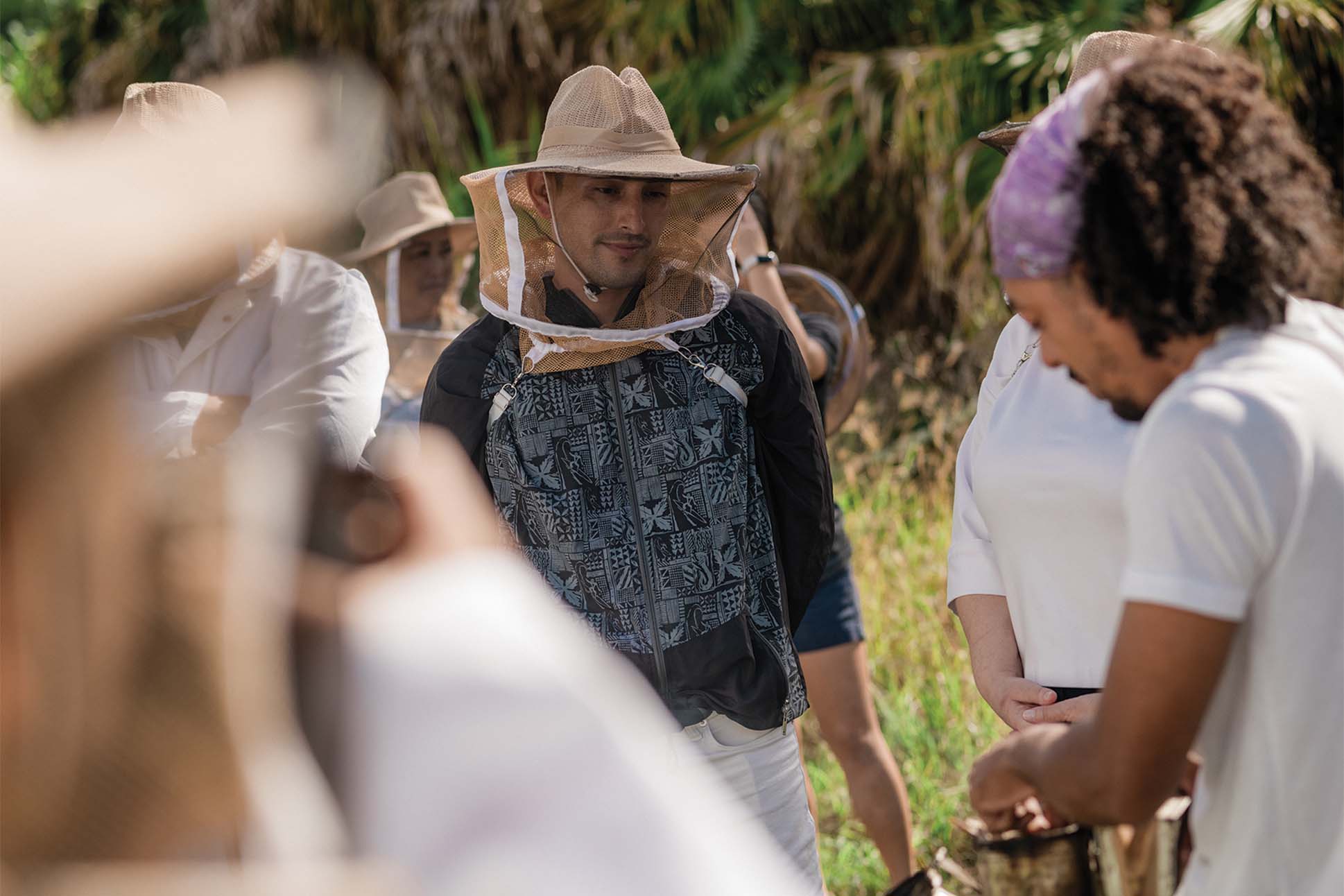
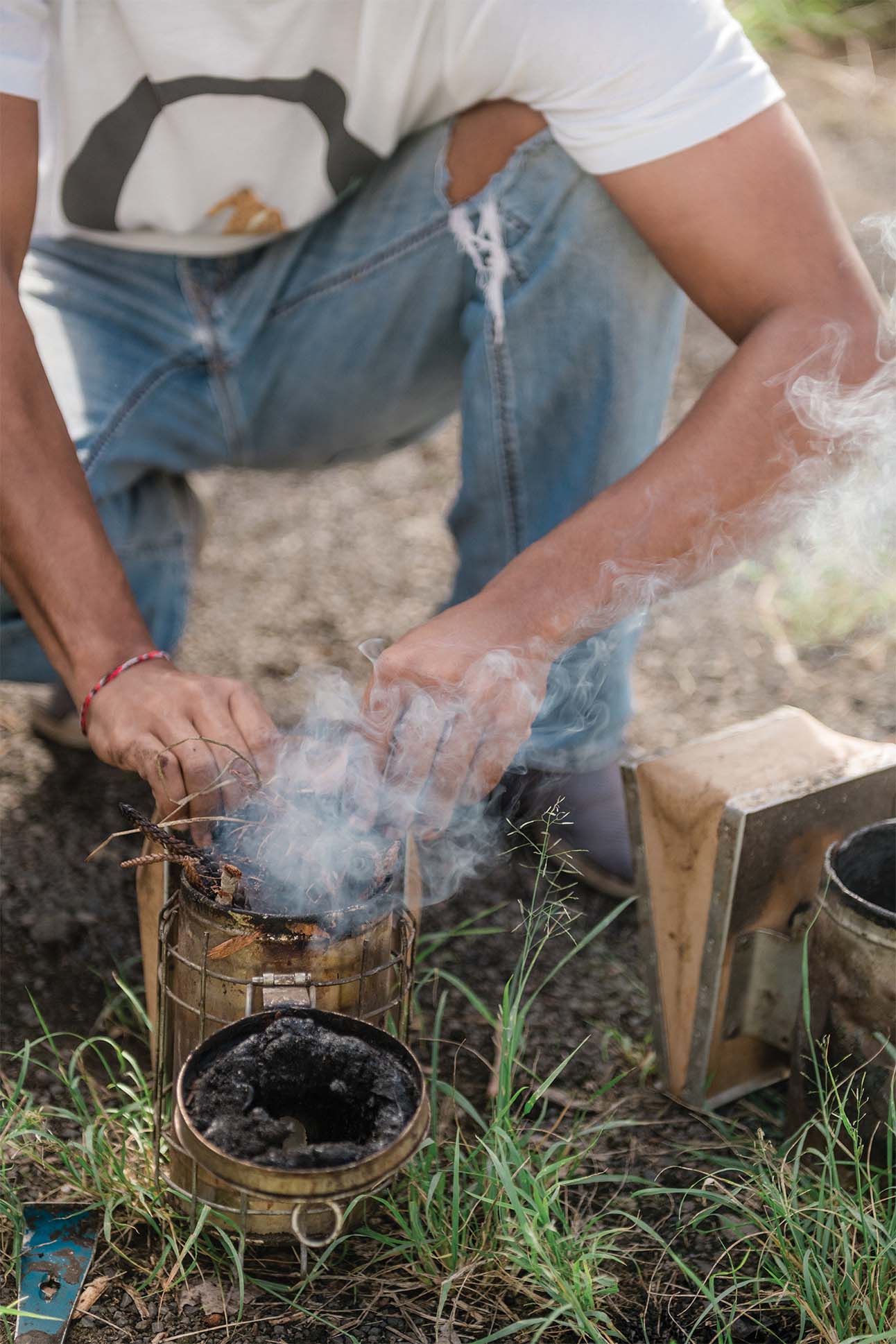
Mānoa Honey & Mead has 100 hives in four locations around the island, including Mililani, Waipi‘o Heights, and near Hale‘iwa on the North Shore. Tour groups visit the fourth location, a farm in Whitmore Village, about eight minutes from the meadery. There, the bees pollinate Christmas berry, or pink peppercorns, along with albizia and an array of flowers from neighboring gardens and farmland, to produce a mixed-bloom honey that Uzuhashi calls Pele’s Gold.
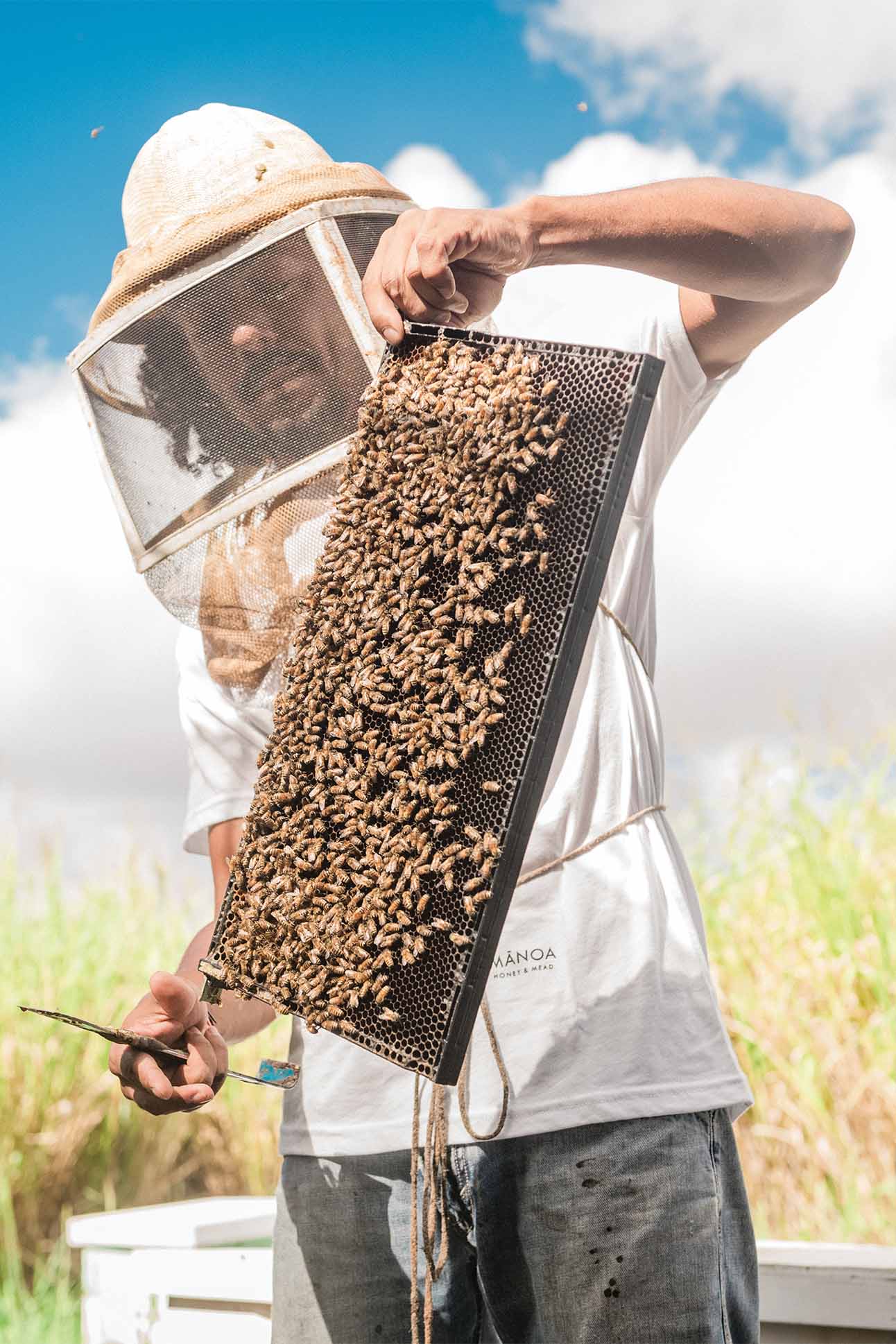
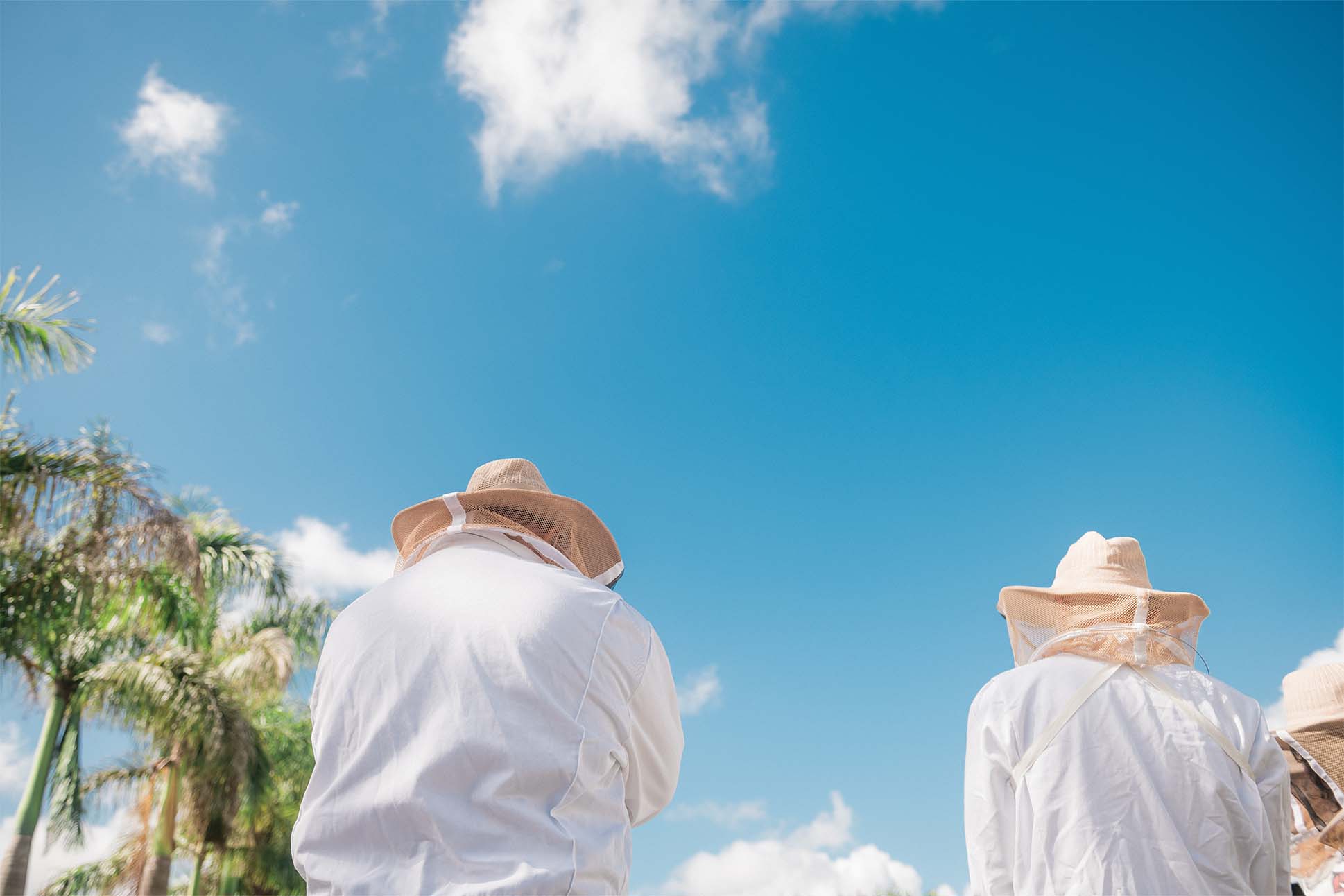
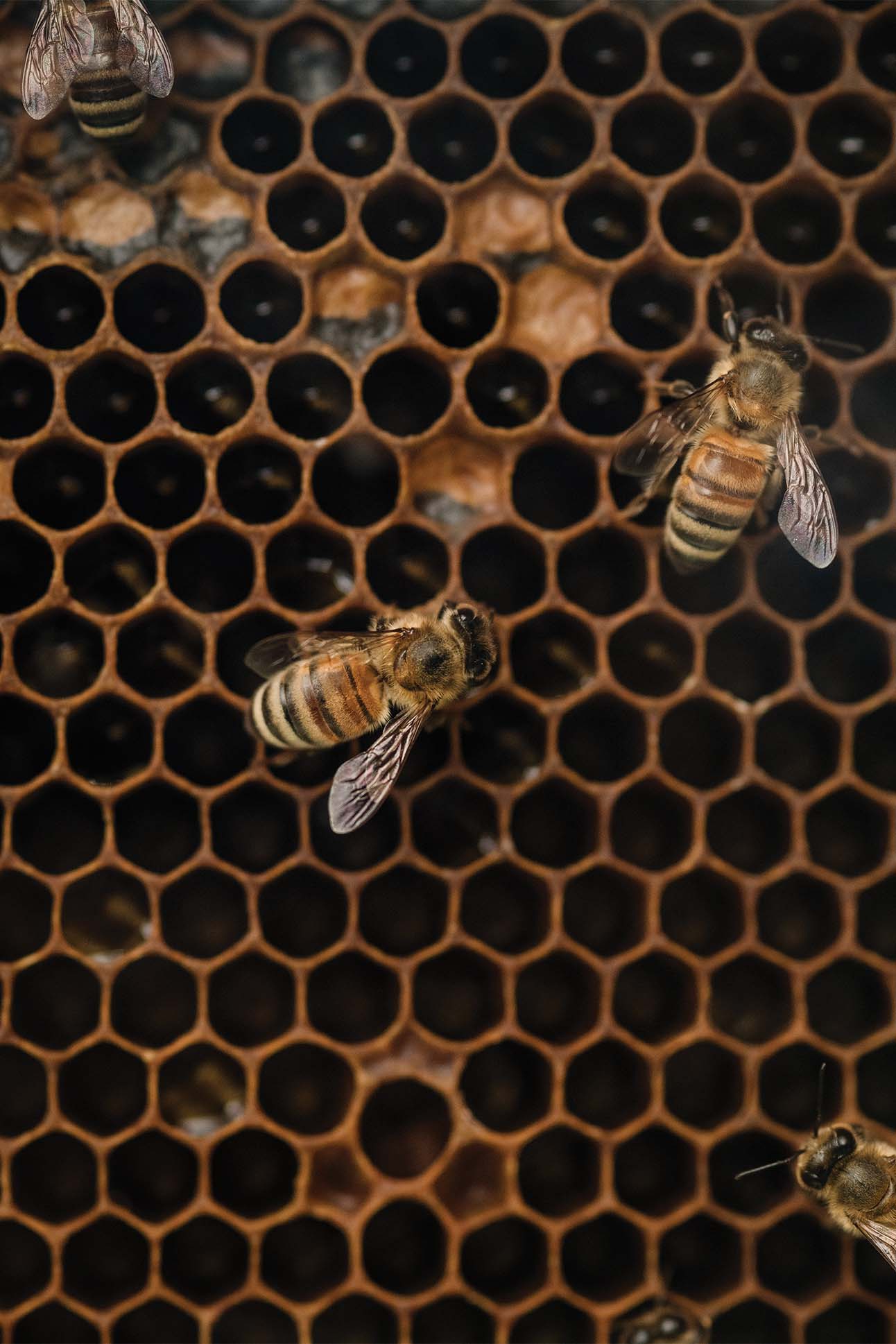
At one end of the farm, opposite a grove of Christmas berry trees, six wooden beehives are stacked in a clearing. During their introduction to beekeeping, tour groups meet the queen bee, learn the role of drones (male honey bees whose primary function is to mate with the queen) and worker bees (female bees that forage for nectar, defend and clean the hive, and care for the queen and larvae), and discover the beekeeper’s secret for preventing bee stings. Surprisingly, it isn’t the head-to-toe jumpsuits, although they will certainly make you feel more comfortable among the roughly 60,000 bees that live there.
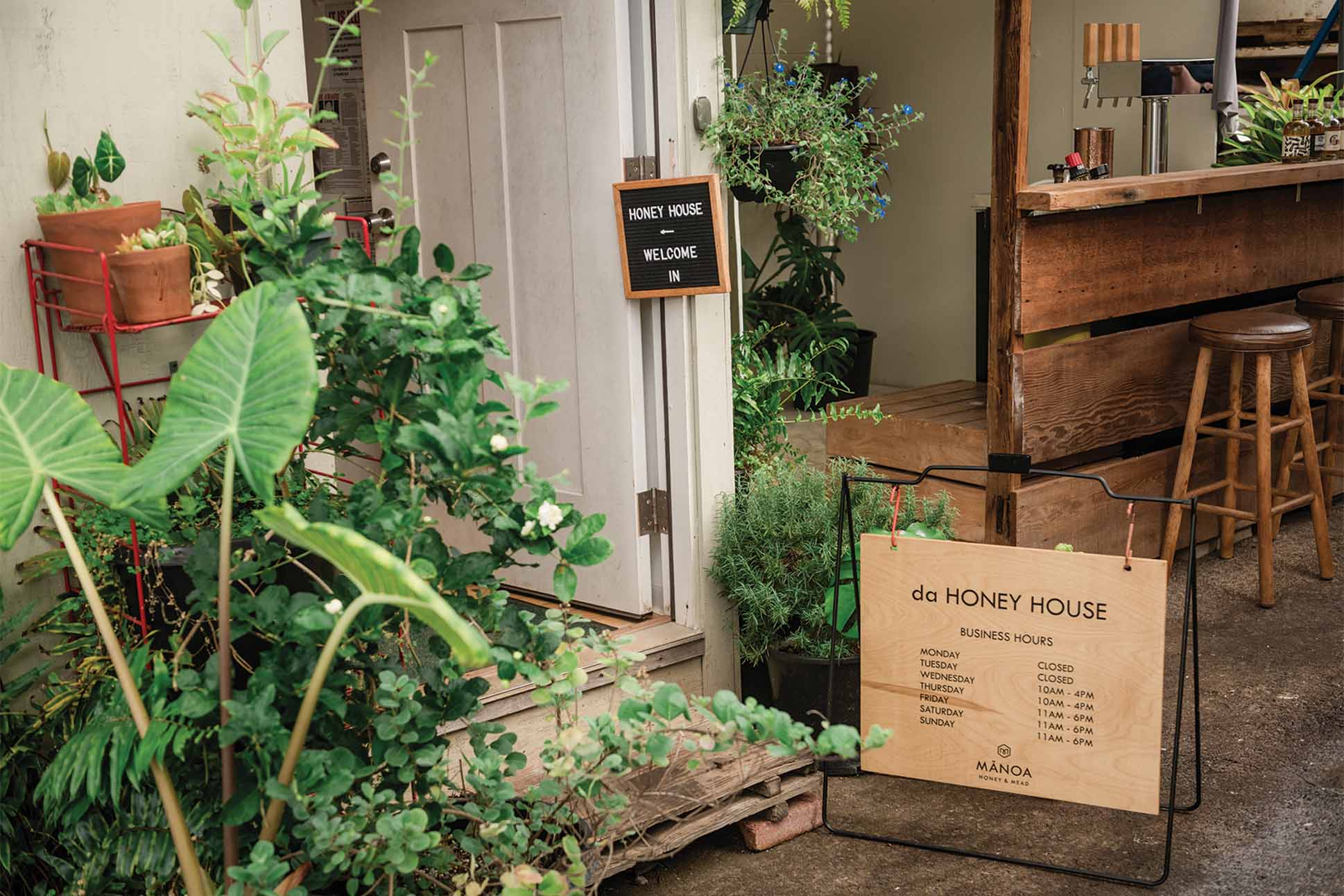
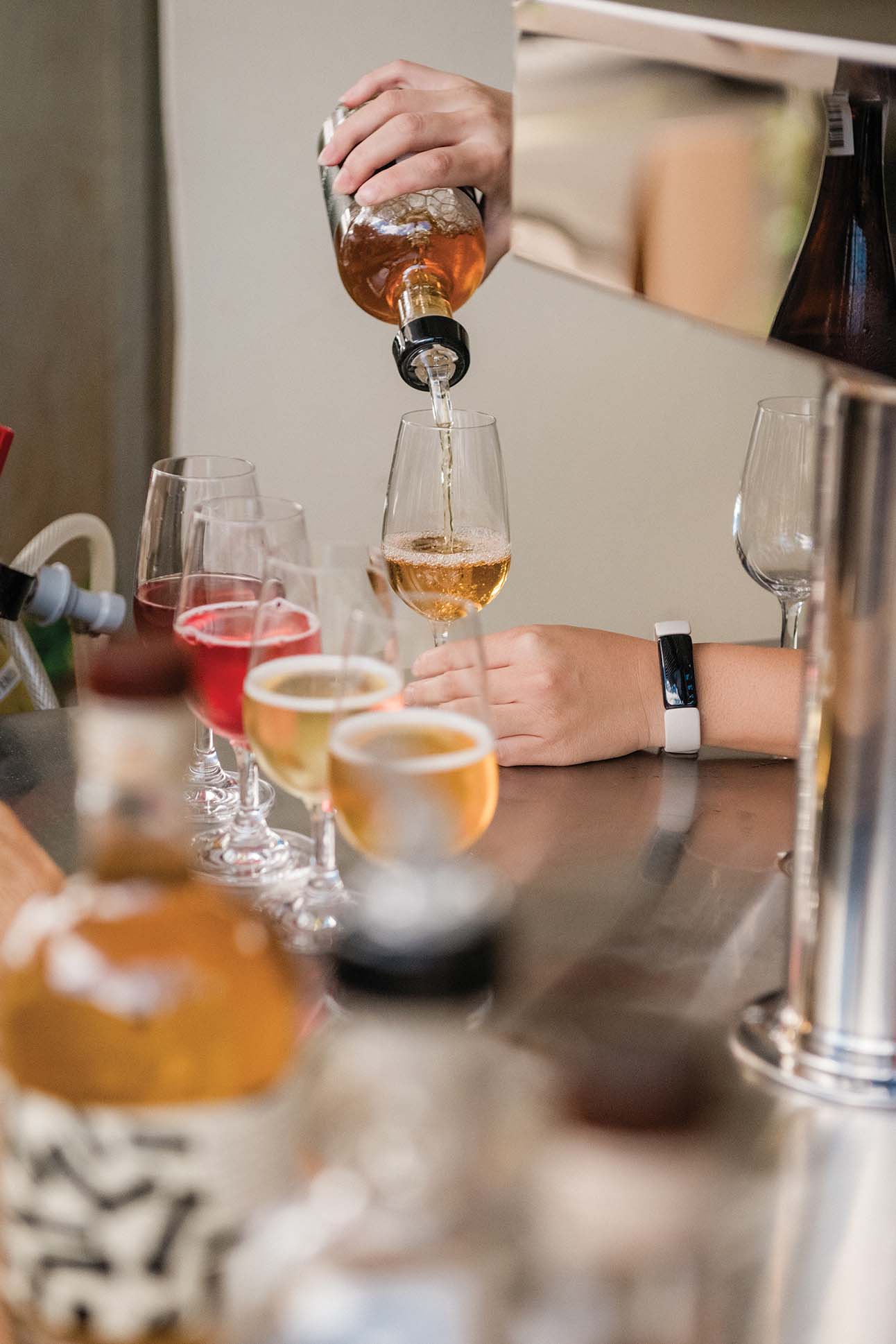
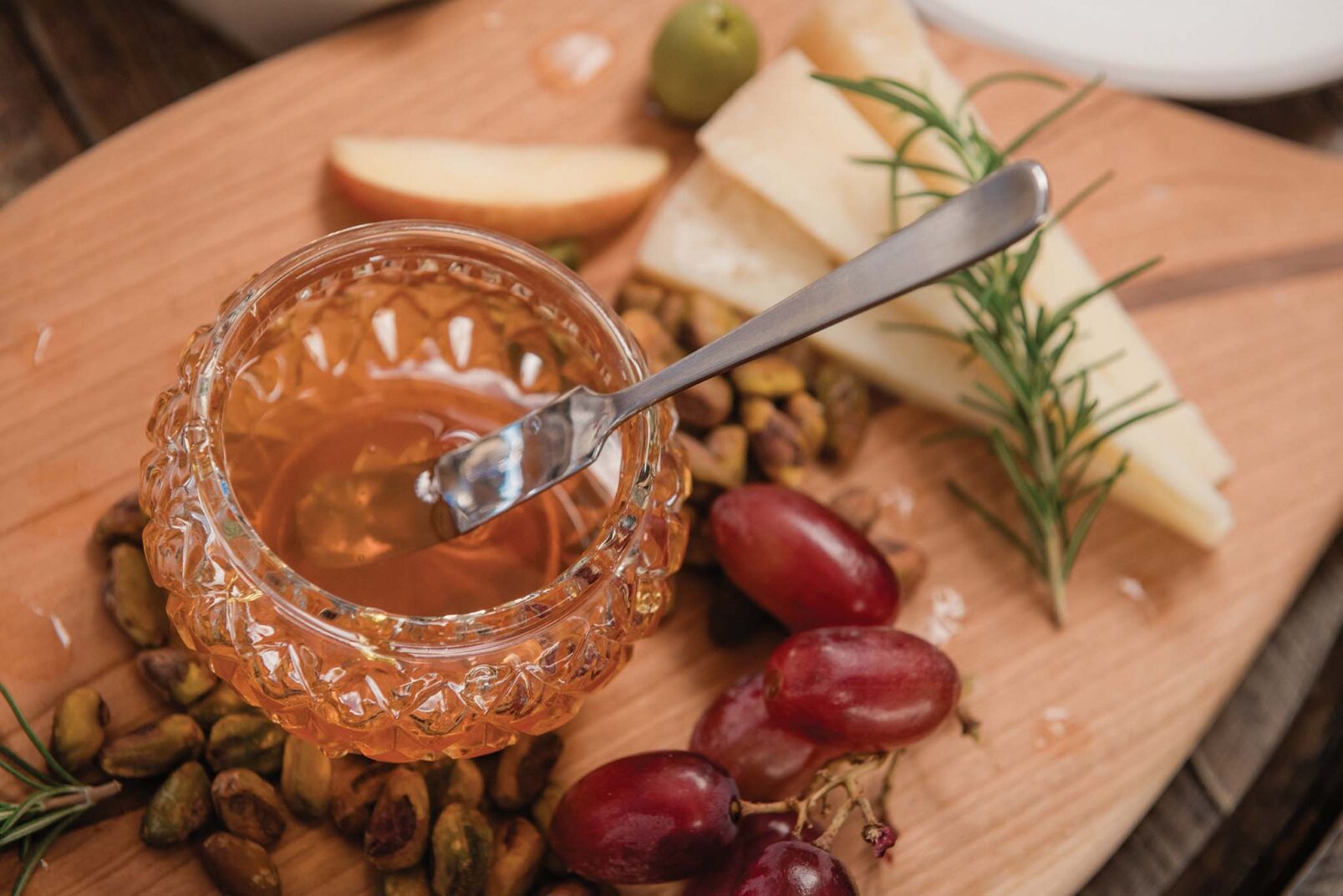
The tour ends back at the meadery, where guests are led through the distillery and into the shaded, greenery-filled courtyard outside the Honey House to sample a snack board of fruit and crackers, along with goat cheese produced down the road at Sweet Land Farm. The accompanying mead is a medley of expressions ranging from light and effervescent to rich and caramelized.
The fizzy signature meads include lively flavors known as Pineapple Sour, Lilikoi Session, Ginger Honey Hopper and Punch 4, a blend of dragonfruit, lime, mango, and liliko‘i. Seasonal varieties have included flavors of durian, guava lavender, orange rosemary, yuzu, and Java plum, an invasive ingredient that is too astringent to enjoy on its own but, made into a mead, takes on a tart and peppery quality.
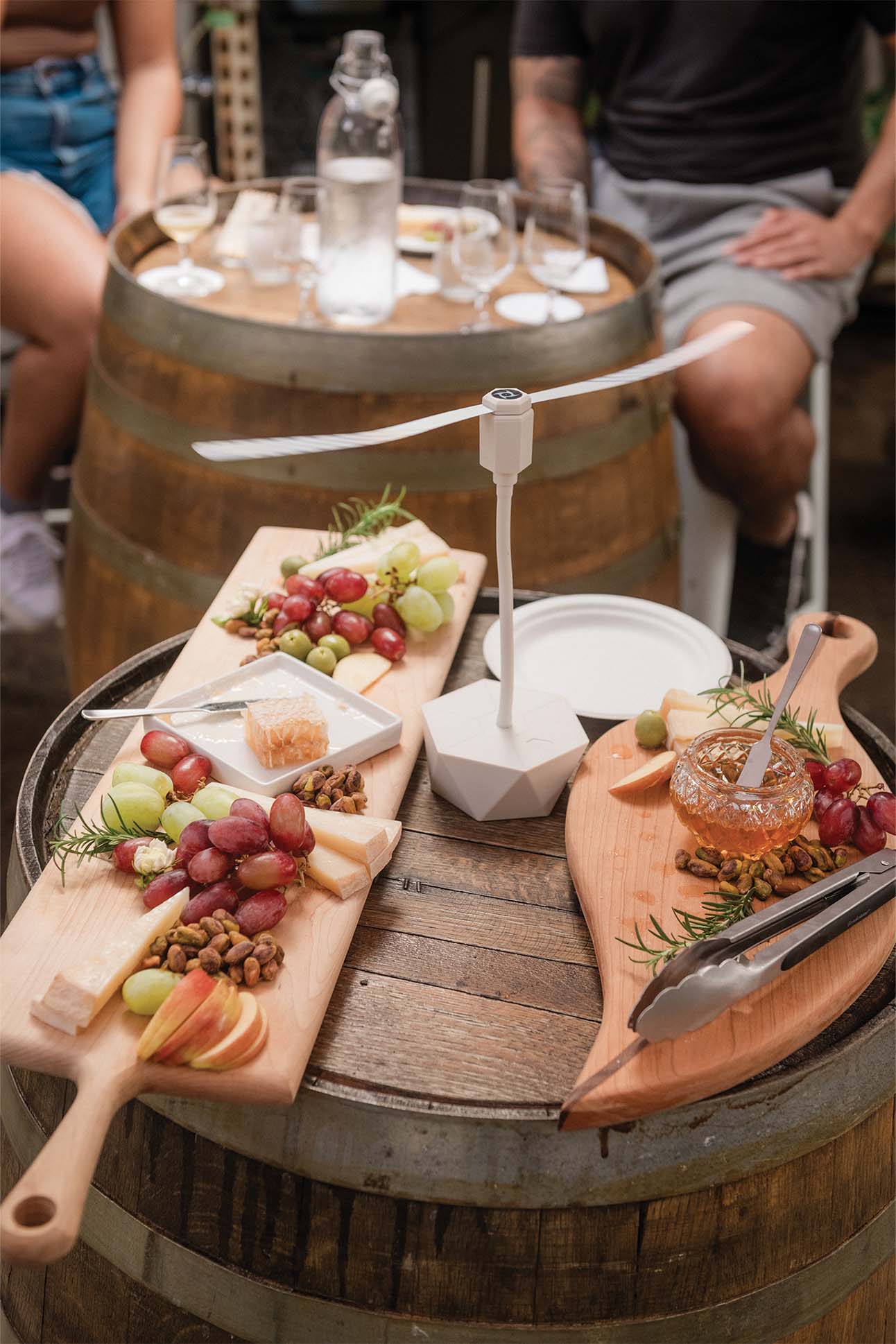
For a more traditional style of mead there is Pō, aged one year in rum barrels. Perhaps the most impressive is the Honey Spirit, which is distilled like a brandy and aged two years in American oak. It sips like an elegant scotch: more smooth than smoky, with just a hint of honey. There is also a Pō fortified with Honey Spirit, a dessert mead that tastes like sherry.
In tending bees, Uzuhashi found the answer to a question that had long occupied him as an artist. “I was keen to discover what beauty means,” he says. “What’s the beautiful thing instead of making a sculpture? And I thought, actions. Any kind of action can become an art.”
